
The Himalayas are among the most extraordinary mountain systems on Earth. They are home to Mount Everest, thousands of glaciers, some of the world’s highest peaks, and an enormous network of rivers that supports hundreds of millions of people across Asia.
But the Himalayas are also among the most geologically active and environmentally fragile regions on the planet.
From the catastrophic Kedarnath disaster in 2013 to the Chamoli disaster in 2021, Himalayan communities have repeatedly witnessed the destructive combination of heavy rainfall, landslides, glacier-related hazards, floods and unstable terrain. Climate change and rapid infrastructure development are adding new pressure to an already fragile mountain system.
So, what has changed? Why are the Himalayas becoming increasingly dangerous?
The Himalayas Were Once Covered by an Ocean
The story of the Himalayas begins hundreds of millions of years ago.
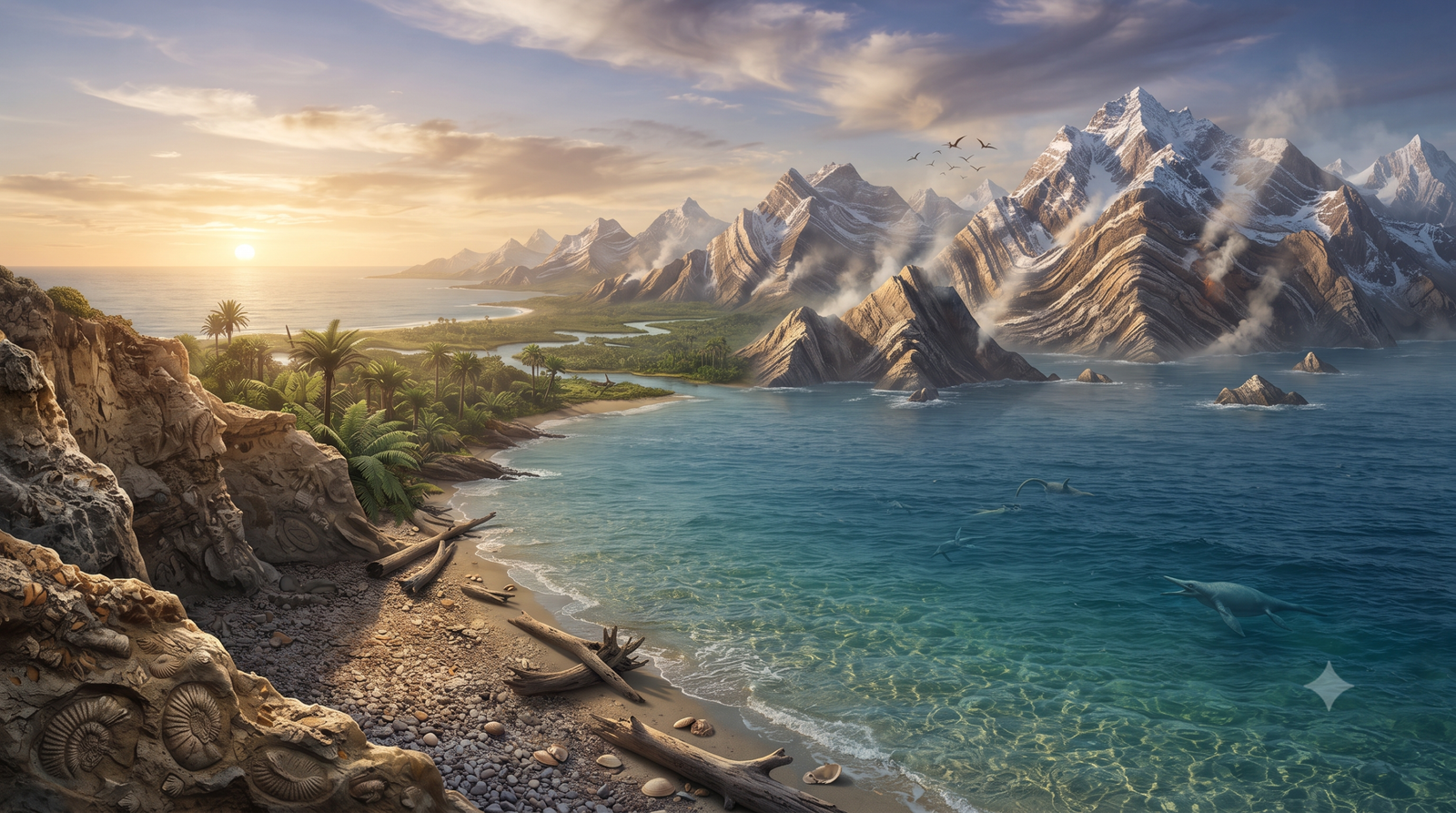
Around 200–250 million years ago, the Indian landmass was part of the supercontinent Gondwana. Between the Indian plate and the Eurasian landmass lay the ancient Tethys Ocean.
Over millions of years, the Indian tectonic plate moved northward. Eventually, it collided with the Eurasian plate. The enormous pressure generated by this collision pushed layers of rock upward, gradually creating the Himalayan mountain range.
The major phase of Himalayan mountain building began roughly 50 million years ago, and the process has not stopped.
The Indian plate continues to move northward by several centimetres each year. This ongoing collision makes the Himalayas a geologically young and active mountain system.
That is one reason earthquakes and landslides are persistent threats in the region.
The Himalayas Are Still Rising
Unlike many older mountain ranges, the Himalayas are still being shaped by tectonic forces.
The Indian and Eurasian plates continue to converge, causing parts of the Himalayan region to rise. At the same time, erosion, landslides, weathering and earthquakes constantly reshape the landscape.
Mount Everest itself is not completely static. Geological forces continue to influence its elevation, while erosion and changing snow and ice conditions also affect the mountain.

This combination makes the Himalayas both spectacular and unstable.
The same geological processes that created the world’s highest mountains also contribute to its vulnerability.
Why the Himalayas Are So Important
The Himalayas are far more than a spectacular mountain range.
They form one of Asia’s most important water towers. Snow and glaciers store enormous quantities of freshwater and feed major river systems, including the Ganges, Brahmaputra and Indus.
These rivers support agriculture, drinking-water supplies, hydropower, ecosystems and communities across India, Nepal, Bhutan, Pakistan, Bangladesh and China.
The Himalayas also influence the Asian monsoon.
The mountain range acts as a major climatic barrier, affecting the movement of atmospheric moisture and helping shape rainfall patterns across the Indian subcontinent.
For India in particular, the Himalayas are strategically and environmentally important. Their difficult terrain has historically influenced transportation, settlement and military strategy along the northern frontier.
In other words, the stability of the Himalayas matters far beyond the mountains themselves.
Climate Change Is Adding a New Risk
The Himalayas are now facing another major challenge: a rapidly changing climate.
Rising temperatures are affecting snow cover, glaciers, permafrost and precipitation patterns.
Glaciers are shrinking in many parts of the Hindu Kush Himalaya region. As ice melts, some glacial lakes can expand behind unstable natural dams made of rock and debris.
These lakes can become dangerous when water suddenly escapes.
Such events are known as Glacial Lake Outburst Floods, or GLOFs.
A GLOF can send enormous quantities of water, rocks and debris downstream within a short period. Communities, bridges, roads, hydropower facilities and settlements located in valleys can be particularly vulnerable.
Climate change does not create every Himalayan disaster, but it can increase the likelihood or severity of several hazards.
Glacial Lakes: A Hidden Danger
One of the major concerns for Himalayan countries is the growth of potentially dangerous glacial lakes.
As glaciers retreat, meltwater can accumulate in depressions near their former ice margins. When unstable moraine dams hold back these lakes, sudden failure can trigger catastrophic flooding.
The danger increases when combined with heavy rainfall, avalanches, landslides, or earthquakes.
This is why scientists increasingly emphasize glacier monitoring, satellite observation and early-warning systems in vulnerable Himalayan valleys.
Detecting changes before a disaster occurs can give communities valuable time to evacuate.
Earthquakes and Landslides: A Naturally Unstable Region
The Himalayas sit directly above one of the world’s major tectonic collision zones.
The Indian plate continues to push beneath the Eurasian plate, accumulating enormous geological stress. When that stress is released, earthquakes can occur.
Earthquakes can trigger secondary disasters, including landslides, avalanches, river blockages and infrastructure failures.
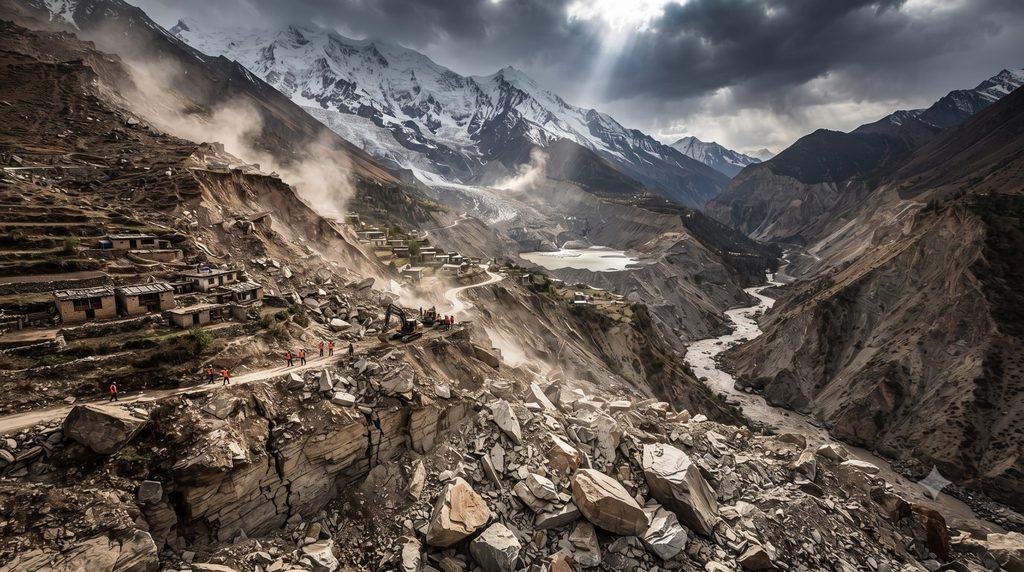
Even without earthquakes, Himalayan slopes are naturally vulnerable to landslides because of steep terrain, fractured rocks, intense rainfall and ongoing geological deformation.
During extreme rainfall, water can penetrate mountain slopes and weaken the material holding them together.
The result can be sudden landslides capable of burying roads, damaging villages and blocking rivers.
Human Development Is Increasing the Pressure
Natural hazards are only part of the story.
Rapid development is transforming many Himalayan valleys.
Road construction, hydropower projects, tunnels, tourism facilities, urban expansion and other infrastructure are essential for economic development and connectivity. However, poorly planned construction can disturb slopes and drainage systems.
Cutting into mountain slopes for roads can reduce their stability. Removing vegetation can increase erosion. Construction near rivers can expose infrastructure to flooding.
The problem is not development itself.
The real challenge is how development is planned and where it takes place.
In a fragile mountain ecosystem, infrastructure designed without detailed geological, hydrological and environmental assessments can unintentionally increase disaster risk.
Lessons From Kedarnath and Chamoli
The 2013 Kedarnath disaster became one of the most devastating Himalayan disasters in modern Indian history. Extreme rainfall, flooding, landslides and the release of water and debris caused enormous destruction and loss of life.
In 2021, a major rock-and-ice avalanche in Uttarakhand’s Chamoli district triggered destructive flooding and caused extensive damage to infrastructure and hydropower facilities.
These disasters demonstrated an important reality: Himalayan hazards rarely occur in isolation.
A single event can trigger a chain reaction.

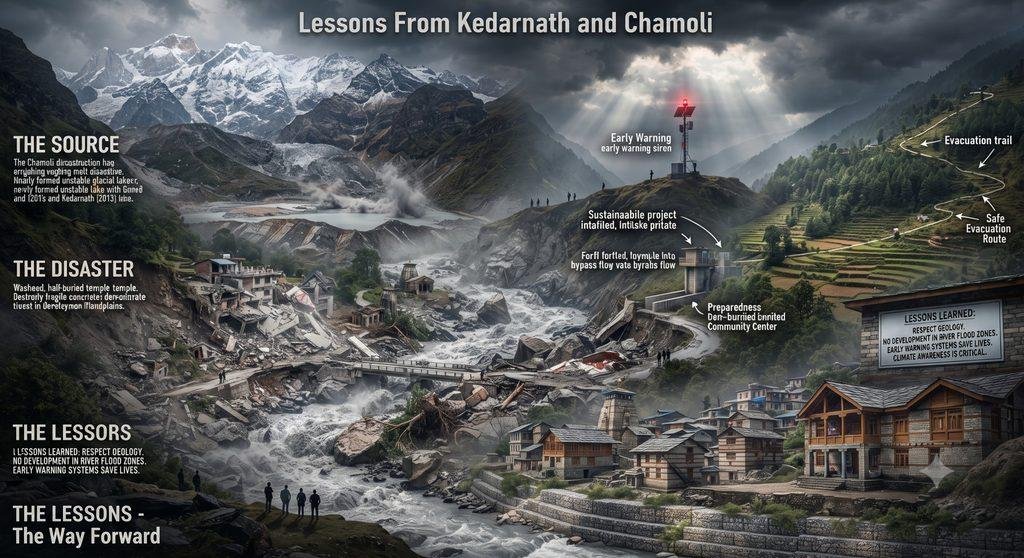
An avalanche can cause a flood. A flood can trigger landslides. A landslide can block a river. A blocked river can create another flood.
This cascading nature makes disaster management in the Himalayas particularly challenging.
Can the Himalayas Be Protected?
The Himalayas cannot be stopped from moving, rising or experiencing earthquakes. These are fundamental geological processes.
However, the risks to people can be significantly reduced.
Three measures are particularly important.
1. Better Data Sharing and Monitoring
Countries sharing the Himalayan region need stronger cooperation in collecting and sharing information about glaciers, rainfall, earthquakes, landslides and glacial lakes.
Satellite technology, sensors, drones and artificial intelligence can improve hazard monitoring.
2. Climate-Resilient Infrastructure
Roads, bridges, dams, hydropower projects and settlements should be designed according to the geological and climatic realities of mountain environments.
Environmental impact assessments should not be treated as a formality. They should help determine whether a project is safe and appropriate for a particular location.
3. Stronger Early-Warning Systems
Early warnings can save lives.
Communities living downstream of dangerous glacial lakes and flood-prone valleys need reliable systems capable of detecting sudden changes and rapidly communicating evacuation instructions.
Local communities should also receive disaster-preparedness training and participate in emergency planning.
Conclusion: Protecting the Mountains That Protect Us
The Himalayas are young, powerful and constantly changing.
Their formation began with the collision of enormous tectonic plates, and that collision continues today. But the mountains now face pressures beyond geology.
Climate change is accelerating glacier loss and changing water and weather patterns. At the same time, poorly planned construction and expanding human activity can make naturally hazardous landscapes even more dangerous.
The answer is not to stop development. It is to make development compatible with the limits of the mountain environment.
The Himalayas have supported civilizations, rivers, ecosystems and economies for thousands of years. They influence the climate and water security of a huge part of Asia.
The question we face today is therefore not simply whether the Himalayas will survive.
The mountains will continue to evolve.
The more important question is whether our societies are prepared to live safely with a changing Himalayas.
If the mountains become increasingly unstable and we fail to adapt, the consequences will extend far beyond the valleys. Protecting the Himalayas ultimately means protecting the people, water systems, ecosystems and economies that depend upon them.