
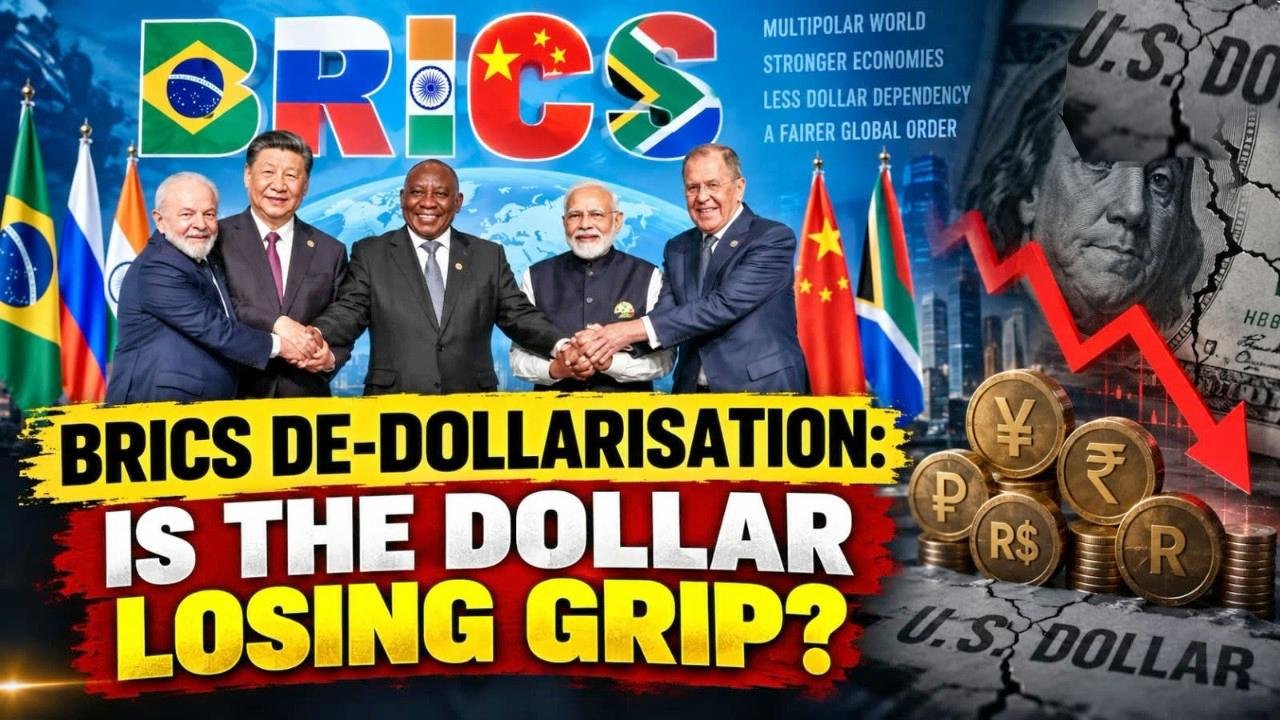
How does the US effortlessly earn billions from this? Eighty percent of global trade is conducted in US dollars, allowing the US to reap massive profits without active effort. Recently, BRICS nations decided to focus on settling payments among themselves using local currencies—a move seen as an attempt at “de-dollarization,” or reducing the dollar’s dominance. This raises the question: do Russia, China, India, and other BRICS nations intend to challenge the US dollar, and can they actually succeed? Let’s explore the full story of how the dollar became the global currency. How did it happen? The first phase was the era of the British Pound. The Gold Standard was introduced in the 1870s, meaning countries backed their currency issuance with equivalent gold reserves. Britain was the world’s leading power then, and most global trade was conducted in pounds. The second phase saw the rise of the dollar. Following the two World Wars, European nations were mired in debt. After the Gold Standard failed, 44 nations—including India and China—agreed in 1944 to adopt the dollar as the base currency, largely because the US held the world’s largest gold reserves and commanded global trust. Subsequently, in 1974, the US struck a deal with oil-producing nations, including Saudi Arabia, to conduct oil trade exclusively in dollars. This meant the world needed dollars to purchase oil; this “petrodollar” system cemented the dollar’s status as the world’s premier currency.

Today, approximately 58% of global payments and 57% of foreign exchange reserves are held in dollars. Now, let’s understand how the US makes billions from this. Consider two countries trading with each other; they require a system to settle payments. Most international payments globally are routed through the US dollar and the American banking system. A prime example is the SWIFT network; launched in 1973, it now connects over 11,000 banks across more than 200 countries. When one country trades with another, payments often pass through the US banking system. This yields three major benefits for the US. Secondly, nations invest their dollar reserves in US bonds, effectively allowing the US to borrow money from the world at very low interest rates. And thirdly… The dollar strengthens the US and its development, yet many countries are now attempting to reduce their reliance on it. In 2016, the dollar accounted for approximately 65% of global foreign exchange reserves; this figure has since dropped to around 57%. Russia, for instance, is conducting nearly 90% of its trade with China in the yuan. China launched its own payment system, CIPS, in 2015 as an alternative to the dollar-dominated SWIFT network, while Russia developed the SPFS system; efforts are now underway to create a new BRICS payment platform by integrating these systems. Additionally, the BRICS bloc’s own institution—the New Development Bank (NDB)—is promoting lending in local currencies. However, a major question remains: do BRICS nations intend to eliminate the dollar by introducing a new currency? Currently, that is not the case; several BRICS countries, including India, have clearly stated that creating a common currency is not an easy task. Nevertheless, efforts to reduce dependence on the dollar continue—focusing on increasing trade in local currencies, integrating digital payment systems, and facilitating direct transactions between nations. The push to expand trade in rupees and rubles between India and Russia is part of this strategy. Establishing the necessary trade infrastructure poses a significant challenge; even when BRICS nations trade using national currencies, the dollar often serves as the benchmark for valuation. Consequently, even if BRICS countries establish a new payment system, it would likely lead to a reduction in dollar usage rather than complete de-dollarization.
Why is it impossible to breach Russian President Vladimir Putin’s security cordon, and who protects him?
Russian President Vladimir Putin is visiting India to attend the 18th BRICS summit. He is arriving in India ahead of the summit, which is scheduled to take place on September 12–13 at Bharat Mandapam in New Delhi. Kremlin spokesperson Dmitry Peskov stated that another bilateral meeting between the Russian President and the Indian Prime Minister is expected during this visit. At approximately 73 years of age, Vladimir Putin is serving his fifth term as President. Amidst all this, Putin’s security remains a constant topic of discussion. Russian President Vladimir Putin is visiting India to attend the BRICS summit scheduled for September 12 and 13 at the Bharat Mandapam in New Delhi; he is arriving ahead of the event. Kremlin spokesperson Dmitry Peskov stated that a bilateral meeting between the Russian President and the Indian Prime Minister is expected during

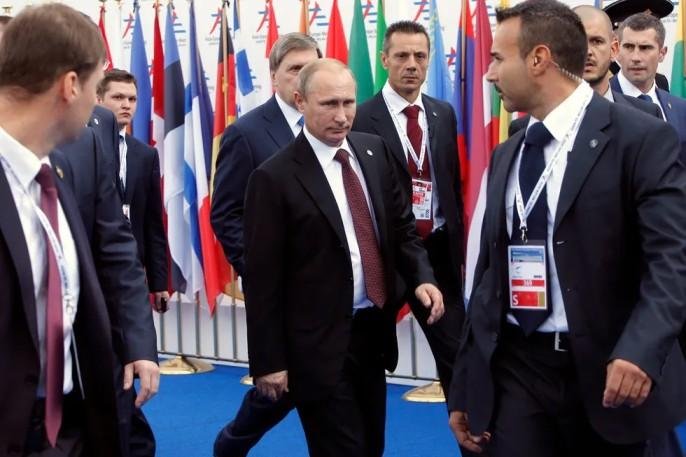
this visit, scheduled for Friday, September 11. Peskov mentioned that, as always, the two nations would discuss the bilateral agenda. He added that certain issues cannot be discussed publicly because some countries are attempting to hinder the expansion of their cooperation; consequently, these matters are being addressed confidentially yet constructively. At approximately 73 years of age, Vladimir Putin is serving his fifth term as President. Amidst this, there is constant discussion regarding Putin’s security. Who protects President Putin, and why is his security perimeter considered impenetrable? Today’s lead story focuses on this topic. Fernando Paul wrote an article in 2022 regarding Putin’s security; according to the piece, hundreds of bodyguards—who remain with him around the clock—meticulously monitor his every move. Putin’s meals are prepared discreetly, and his closest aides are aware of everything he consumes. Senior officials from Russia’s intelligence agencies are well-versed in the threats surrounding Putin. One of Russia’s various security services is dedicated specifically to the protection of the President and his family; this unit is known as the Presidential Security Service, or SBP.

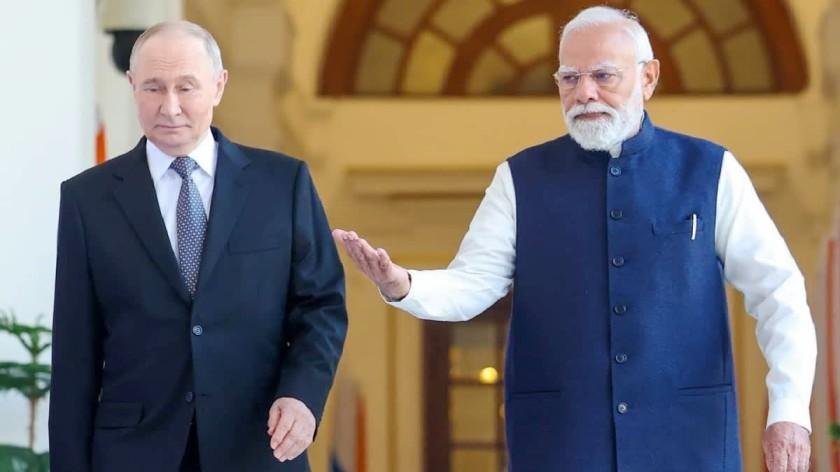
This unit reports to Russia’s Federal Protective Service (FSO), which was formed from the KGB. SBP guards—dressed in black suits and wearing earpieces—shadow the leader day and night. According to Russia Beyond, a state-owned media outlet, these agents organize themselves into four concentric circles when accompanying Putin abroad. The first and innermost circle consists of his personal bodyguards; the second comprises guards who operate discreetly, away from public view; the third secures the perimeter of the crowd, preventing unauthorized individuals from approaching; and the fourth and final circle consists of snipers stationed on the rooftops of nearby buildings. Mark Galeotti, a Russian security expert and director of the consulting firm Mayak Intelligence, told the BBC World Service that Putin dislikes helicopters and usually travels in a large motorcade featuring motorcycle outriders and numerous vehicles. This often entails banning drones from the airspace and halting traffic along the route. The Russian Presidential Security Service (SBP) is supported by the Russian National Guard (Rosgvardiya)—an entity some describe as the president’s personal army. Although distinct from the Russian Armed Forces—with an official mandate to secure borders, combat terrorism, and maintain public order—its most critical practical function is protecting Putin from threats. The National Guard is currently led by Viktor Zolotov, a former bodyguard of Putin and a trusted presidential ally. While the full extent of the measures taken to protect Putin remains obscure, the Kremlin and Russian security agencies have shed some light on the matter. Putin’s security detail is most stringent regarding his food; according to Mark Galeotti, the fear of poisoning has led to the appointment of a personal food taster who inspects everything served to the president. He told the BBC that this practice reflects a style that contrasts with that of a modern president… He comes across like a medieval emperor; furthermore, whenever he travels, his security team inspects everything he uses. Mark Galeotti explains that the team vets all the food and drink Putin consumes; for instance, at official events involving champagne, Putin drinks only from the specific bottle brought by his team, never from others. Another security measure involves restricting smartphones within the Kremlin; the Russian President himself has confirmed that he does not use these devices. He admitted this during a 2020 interview with the Russian news agency TASS, noting that if he needs to contact someone, there is a dedicated official line for that purpose. His advisors have also corroborated this; Kremlin spokesman Dmitry Peskov has repeatedly stated that Putin does not use a mobile phone simply because he lacks the time. However, the reality is that Putin avoids them because he does not trust the internet. In the past, he has hinted that the internet is essentially a project of US intelligence agencies. He has even urged Russians to avoid using Google Search, believing that the US monitors all information.