
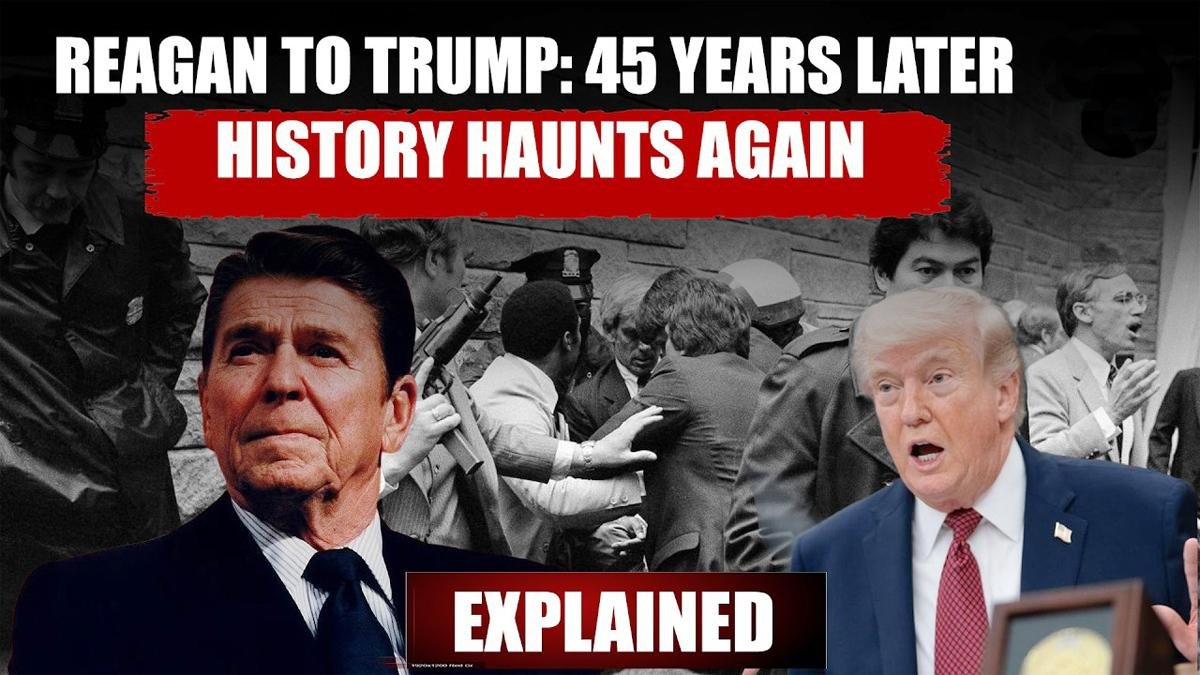
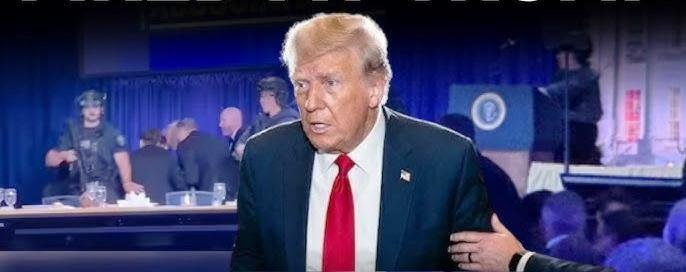
Gunfire erupted during an event in Washington, D.C. Present at the gathering were Donald Trump, his wife, Melania Trump, and Vice President Mike Pence. Suddenly, an assailant opened fire just outside the very hall where Trump and Pence were seated; approximately five to eight shots were fired. The moment the shooting began, chaos ensued, and attendees scrambled to take cover beneath their tables and chairs. The attacker also shot a United States Secret Service agent; however, the agent’s life was saved thanks to his bulletproof vest. Following the incident, Secret Service agents safely escorted Trump away from the scene. The Secret Service is the agency responsible for the security of the U.S. President, Vice President, and other high-ranking officials, much in the same way that India’s Special Protection Group (SPG) protects the Prime Minister.

The image generating the most discussion regarding the attack on Trump is one showing a Secret Service agent stepping directly in front of President Trump the instant the first shot was fired. Standing like a human shield, the agent positioned himself firmly before Trump to ensure that no one could attack him—and that if a shot were fired, he would be the first to take the bullet. The agent remained at his post until the rest of the team had safely escorted Trump out of the area. Now, let us look at who carried out this attack on Trump. The assailant was a 31-year-old man named Colt Thomas Allen. An American citizen, he was apprehended by the Secret Service. This attacker is neither a professional criminal nor a terrorist; he holds a degree in engineering and currently works as a teacher, instructing students at a local coaching institute. In 2017, the attacker completed his studies in Mechanical Engineering at the renowned California Institute of Technology—better known as Caltech. Caltech is widely regarded as one of the most prestigious and finest academic institutions in the United States, attracting students from all over the world who travel to America specifically to study there.

You could consider this a homegrown incident. This attacker earned a Master’s degree in Computer Science in 2025; he was also a part-time teacher and, in 2024, was even awarded the “Teacher of the Month” honor at the very institution where he taught. Now, the big question is: why would such a highly educated individual attempt to attack the President of the United States? Approximately 10 minutes before the attack, the assailant sent a message to his family stating that his targets were members of the Trump administration. Perhaps this individual harbored resentment and anger stemming from Trump’s policies or decisions, which is why he sought to attack Trump or high-ranking officials within his administration. However, President Trump asserts that he is being punished for the good work he has done for America. “Expected, but incredible. The Secret Service is known for its dedication to freedom of speech. I was supposed to be bringing together members of the press—and in a way, I did. Because the fact is, you just unified us. The room was totally unified; in one sense, it was a very beautiful thing to witness. A man charged through a security checkpoint armed with lethal weapons and was taken down by some very brave members of the Secret Service. They acted very quickly. The people who do the most—the people who make the biggest impact—are often the ones targeted. That is just how it is. I want you to look at these people; whether the attempt is thwarted or successful, the targets are always highly impactful figures. America’s capital…”
How did America’s 4 Billion Dollar security shield fail?
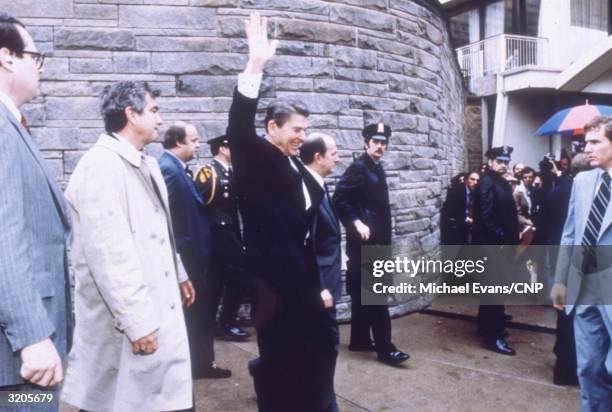
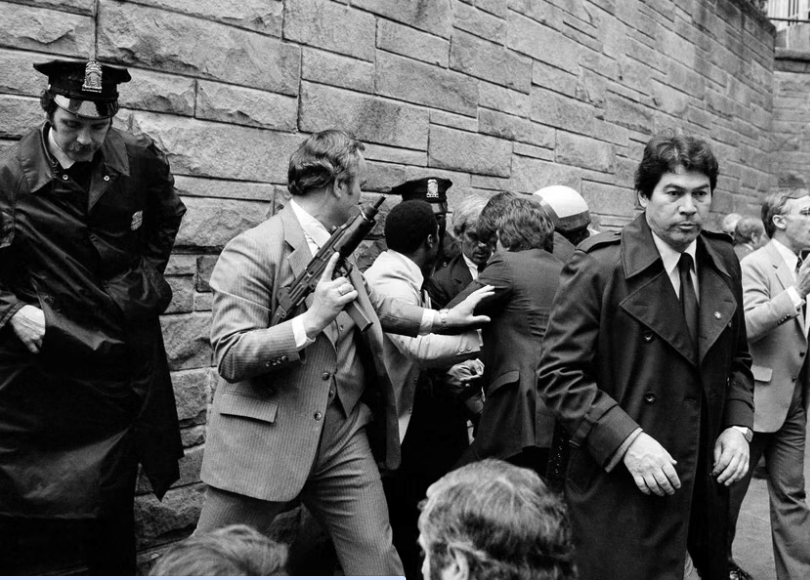
How Did the Shooter Get Inside Despite the Presence of the Secret Service? The agency responsible for protecting President Trump—known as the United States Secret Service—has been allocated a budget of approximately ₹33,000 crore for the year 2027; it stands as one of America’s most critical security agencies. The Secret Service was originally established in 1865 with the mandate to combat currency counterfeiting. However, following the assassination of then-President William McKinley in 1901, the agency was officially entrusted in 1902 with the full-time responsibility of providing security to the U.S. President and other high-ranking officials. Additionally, the agency investigates financial crimes and employs a workforce comprising approximately 8,300 agents, officers, and staff members. Its primary objective remains the protection of the U.S. President from any threats. On March 30, 1981, outside a hotel in Washington, D.C., an assailant named John Hinckley fired six shots at then-President Ronald Reagan, one of which struck the President. The moment the shots rang out, a Secret Service agent immediately positioned himself as a human shield to protect President Reagan; although the agent was wounded in the process, the President’s life was ultimately saved. Secret Service agents undergo rigorous training designed to ensure that, in the event of a threat to the President, they instinctively step forward to place themselves directly in front of the President, thereby shielding and saving them.

This photograph dates back to 1981, when U.S. President Ronald Reagan was attacked; it captures how Secret Service agents immediately surrounded him, shielding him with their own bodies and taking the incoming bullets upon themselves. The same scenario unfolded during the recent attack on Donald Trump: agents from the U.S. Secret Service encircled him from all sides, with one agent positioning himself directly in front of the President to ensure that, should any shots be fired, he would take the bullet with his own body.

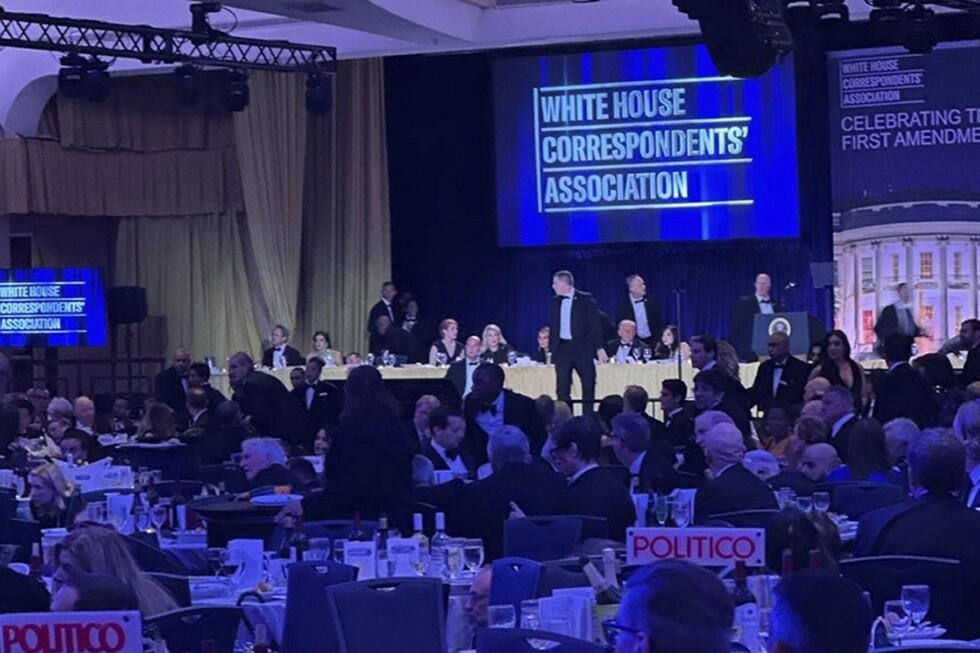
Observe how a Secret Service agent sprinted into action, positioning himself directly in front of where President Trump was seated. This is the Secret Service in action. One reason for the prevalence of such attacks in the U.S. is that the country’s Constitution explicitly grants citizens the right to bear arms. Consequently, encountering an individual carrying a gun in the United States is not considered an unusual or remarkable occurrence. In countries like India, for instance, carrying a firearm in a public place is extremely difficult, as gun licenses are notoriously hard to obtain; however, this is not the case in the U.S. America has possessed a distinct “gun culture” since its inception; indeed, past U.S. Presidents and prominent political leaders have often been pictured alongside rifles and firearms, and the government itself has historically continued to promote this gun culture. As a result, it is not considered extraordinary for an ordinary citizen in the U.S. to possess a firearm—even state-of-the-art weaponry. The individual who opened fire in this incident is an engineering graduate from a prestigious university—a major institution—and currently works at a coaching center; yet, he possessed a gun and utilized it to carry out this attack. He is an engineer educated at Caltech, an institution where gaining admission and studying is considered a monumental achievement. The CCTV footage is before you; this is the individual in question, identified as Thomas Allen.
putin ke kareebee ka luxury ship paabandee ke baavajood hormuj stret se kaise guzara ? amerika-eeraan tanaav aur hormuz stret par kadee naakaabandee ke beech roosee arabapati ka lagzaree suparayot ‘nord’ is sumadree raaste se gujarakar charcha mein aa gaya hai. yah suparayot, dubee se omaan tak pahuncha hai. Aakhir ye jahaaz kisaka hai aur ye kis tarah hormuz stret se hote hue apanee manzil tak pahuncha, is par savaal khade ho rahe hain roosee raashtrapati vlaadameer putin ke ek pramukh sahayogee se juda ek lagjaree ship yaanee supar yot hormuz stret se hokar gujara hai. yah lagjaree ship dubee se omaan ke maskat tak gaya. haal ke maheenon mein hormuz stret se gujarane vaale yah chand jahaajon mein se ek hai. amerikee naakaabandee ke baavajood is ship ke hormuz stret se gujarane kee kaaphee charcha ho rahee hai. eeraan ne bhi daava kiya hai ki Hormuz par uska poora kontrol hai aur bina uski ijaazat ke yahan se koi jahaz nahin guzar sakta. amerika aur eeraan mein hormuz stret ko lekar chal rahe tanaav ke beech beete dinon eeraan ne roos ke saath haee leval meeting kee thee. vaise agar is supar yot kee baat karen to yah 142 meetar yaanee 465 pheet lambee hai. isaka naam nord hai. bataaya ja raha hai ki yah yot pratibandhit roosee arabapati eleksee murdaashok ka hai. putin ke kareebee maane jaane vaale murdaashok ka naam roosee jhande vaale is ship ke aupachaarik maalik ke roop mein darj nahin hai. haalaanki onaraship ke rikord bataate hain ki ise 2022 mein unakee patnee ke svaamitv vaalee ek kampanee ke naam par rajistard karaaya gaya tha. nord kee anumaanit keemat $50 karod yaanee lagabhag ₹4700 karod hai.
How Did a Luxury Ship Linked to a Putin Ally Pass Through the Strait of Hormuz Despite Sanctions?
Amidst tensions between the U.S. and Iran, and a strict blockade on the Strait of Hormuz, the luxury superyacht ‘Nord’—owned by a Russian billionaire—has made headlines after traversing this vital maritime route. The superyacht traveled from Dubai to Oman. Questions are now being raised regarding the true ownership of this vessel and how, exactly, it managed to navigate through the Strait of Hormuz to reach its destination.
A luxury vessel—specifically a superyacht—linked to a key ally of Russian President Vladimir Putin has successfully passed through the Strait of Hormuz. This luxury ship traveled from Dubai to Muscat, Oman. It is one of the few vessels to have transited the Strait of Hormuz in recent months. The fact that this ship managed to pass through the Strait of Hormuz despite the U.S. blockade has become a subject of intense discussion. Iran, too, has asserted that it maintains complete control over the Strait of Hormuz and that no vessel can pass through the area without its explicit permission. Amid ongoing tensions between the U.S. and Iran over the Strait of Hormuz, Iran recently held high-level meetings with Russia.
As for the superyacht itself, it measures 142 meters—or 465 feet—in length. It is named ‘Nord.’ Reports suggest that this yacht belongs to the sanctioned Russian billionaire Alexey Mordashov. Mordashov, who is considered a close associate of Putin, is not listed as the formal owner of this Russian-flagged vessel in official records. However, ownership records indicate that the yacht was registered in 2022 under the name of a company owned by his wife. The estimated value of the ‘Nord’ stands at $500 million—approximately ₹4,700 crore.

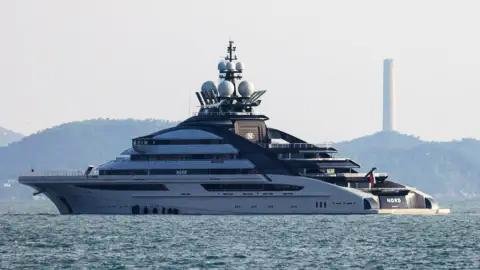
The ‘Nord’ departed from Dubai on Friday night and arrived at Al Mouj Marina in the Omani capital on Sunday morning. This information was derived from data provided by the Marine Traffic platform. The route displayed on the tracker is the same one typically utilized by vessels transiting with Iran’s consent. However, it remains unclear whether the ‘Nord’ had, in fact, obtained permission from Iran to traverse this specific route. According to SuperYachts magazine, the ‘Nord’ features amenities such as a swimming pool, a submarine, and a helipad.
Following Russia’s invasion of Ukraine in 2022, Western nations—including the United Kingdom, the United States, and the European Union—have imposed sanctions on Alexey Mordashov.
In March 2022, Italian police seized another, smaller vessel belonging to Mordashov—the ‘Lady M’—at the port of Imperia.
As for Alexey Mordashov himself, he amassed a significant portion of his wealth through the steel and mining conglomerate ‘Severstal.’ With an estimated net worth of approximately $37 billion, he has been listed by the American business magazine Forbes as the wealthiest Russian citizen.
In response to U.S. and Israeli strikes that began on February 28, Iran has imposed strict restrictions on maritime traffic passing through the Strait of Hormuz. Earlier this month, Iran issued a warning stating that any vessel approaching the vicinity of Hormuz would be targeted. Subsequently, the United States announced that its military would intercept or turn back any vessels bound for, or departing from, Iranian ports. As a result of this conflict, maritime traffic through the Strait of Hormuz has dwindled significantly. Concurrently, global oil prices have experienced a sharp surge. Peace negotiations between Iran and the United States have also currently stalled; consequently, it appears that Iran has now shifted its focus toward strengthening its ties with its ally, Russia. On Monday, Putin hosted an Iranian delegation in St. Petersburg, where Iran’s Deputy Foreign Minister Abbas Araqchi lauded the strategic relations between the two countries. According to Russia’s state-run news agency TASS, Putin told Araqchi that the Iranian people are bravely fighting for their sovereignty amidst American and Israeli pressure.
Is Iran Boosting Its Military Capabilities by Reverse Engineering Unexploded US Missiles?
There is talk in Iran regarding the reverse engineering of unexploded American and Israeli bombs and weapons. Reverse engineering entails deciphering the underlying technology to replicate it.
Iranian media and analysts view the weaponry recovered during recent conflicts as a significant opportunity, asserting that it could be utilized to enhance the country’s military capabilities.

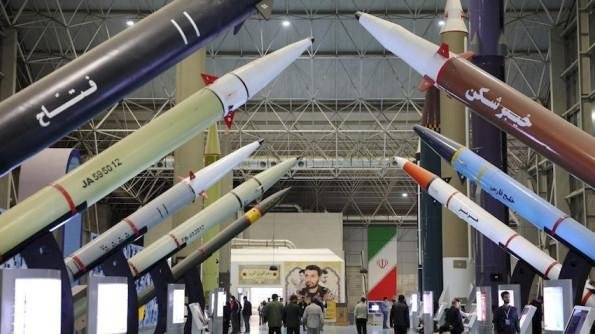
Meaning of Reverse Engineering: The process of fully comprehending a technology in order to replicate it. Recovered Weaponry: The IRGC has neutralized more than 15 heavy American missiles—including GBU-57 bunker-buster bombs—in Hormozgan province. Strategic Opportunity: Iranian analysts believe that these weapons could be utilized as a “research laboratory” to enhance the country’s military capabilities and develop new technologies. Historical Context: Iran has previously demonstrated its mastery of reverse engineering through technologies such as American HAWK missiles and the RQ-170 drone seized in 2011. Expert Opinion: Analyst Ehsan Taqaddousi states that this poses a significant challenge for the United States, as it may compel them to exercise greater caution in their military operations.
Conflict Erupts Once Again Between Iran and the US: What Now for the Peace Deal?
The United States has claimed to have carried out airstrikes on military bases in Iran. It stated that this action was taken in response to Iranian attacks on US vessels in the Strait of Hormuz. Conversely, Iran asserts that it fired missiles because an Iranian oil tanker had been attacked first. Ultimately, amidst a ceasefire, why has a confrontation now arisen between these two nations, and what will become of the peace deal? While passing through this region, Iranian military forces launched an attack using multiple missiles, drones, and small boats. Conversely, Iran’s top military command has accused the United States of violating the ceasefire. Iran’s state broadcaster, IRIB, stated in a release issued on Telegram that the U.S. attacked an Iranian oil tanker heading toward the Strait of Hormuz; its armed forces immediately retaliated by striking a U.S. military vessel, inflicting heavy damage upon it. Meanwhile, U.S. President Donald Trump told reporters on Thursday evening—or early Friday morning, according to Indian time—that the United States is engaged in dialogue with the Iranians. “I will tell you: they want to start it. I think that’s what you want to hear—a solution. What do you want to hear? A different talk? The only thing they understand is force; they don’t understand anything else. We had three destroyers pass through the Strait today. Under these circumstances, no other country would have done that; it would have been too stupid. For two minutes, their tanker was spinning in circles; they should not have done that today. We thought they might [attack]; we didn’t know for sure, but we were prepared. They fired, but every missile missed.”
The Strait of Hormuz is bordered by Iran on one side and by Oman and the United Arab Emirates on the other. The Trump administration initiated a blockade of Iranian ports within the Strait of Hormuz last month. The U.S. took this action after Iranian forces announced that they would intercept or turn back any vessels traveling to or from the Iranian coast. The U.S. asserts that its objective is to limit the revenue generated from Iran’s oil exports to exert pressure on the regime. This is not the first instance of such skirmishes occurring since the ceasefire appeal was issued in early April. On Monday, the U.S. Central Command reported that several U.S. destroyers had transited through the Strait of Hormuz as part of “Operation Freedom.” The stated purpose of this initiative was to keep maritime trade routes open. CENTCOM also noted that two U.S. Navy destroyers—the USS Truxtun and the USS Mifflin—had to fend off coordinated attacks. Despite entering the Persian Gulf, these attacks—which involved small Iranian boats, missiles, and drones—resulted in no damage to any U.S. vessels, according to the U.S. Navy. The Navy further stated that it destroyed six small Iranian boats and shot down several cruise missiles and drones. Meanwhile, however, Trump announced that “Project Freedom” would be temporarily suspended, citing significant progress toward reaching an agreement with Iran. The specific details of this proposed agreement between the two nations have not yet been disclosed; however, Iran’s Foreign Ministry stated on Wednesday that the new U.S. proposal is currently under review. Previously, Iran had warned that it would target U.S. vessels in the region and had even opened fire on U.S. warships in an attempt to impede their passage. Iranian authorities have issued a warning that decisive action will be taken against any vessel attempting to traverse the Strait of Hormuz that fails to adhere to the designated routes established by their officials.