A letter passes through the hands of a dozen people before reaching its destination; Why is Mustafa, the son of Iran’s Supreme Leader Ayatollah Ali Khan, missing from his father’s funeral? Is he even alive? If so, what is his condition, and is his life still in danger? These questions are pertinent because a massive crowd attended the funeral—people were weeping and beating their chests, and leaders from over a hundred countries were present. We will seek answers regarding Mustafa’s absence.
On February 28, 2026, Ayatollah Khan was at home with his family; his son Mustafa was also within the compound. Suddenly, several missiles struck in quick succession. The entire family, including the Supreme Leader, perished in the US-Israel attack. While the media claimed Mustafa had died, Iran stated that he had sustained only minor injuries. On March 9, Mustafa was named Iran’s new Supreme Leader; however, no photograph or video of him has surfaced since. US President Trump remarked that no one has seen him, which is unusual. Meanwhile, Israeli officials maintain that Mustafa is alive. If he is alive, what is his condition? In April, the British newspaper The Times published a report claiming Mustafa was unconscious and possibly in a coma. Conversely, The New York Times reported that while Mustafa was severely injured, his brain remained active and he was making decisions. He suffered a serious leg injury requiring three surgeries and has been fitted with a prosthetic; his face and lips were burned and require plastic surgery. However, the Iranian Health Ministry stated that although the Supreme Leader required several blood transfusions, his injuries were not critical. He is undergoing treatment in Moscow, Russia; Putin himself suggested the facility. He has undergone surgery and is recovering, possibly staying at a residence belonging to Putin. On the other hand, US media claims Mustafa is at a secret location within Iran. To prevent the location from leaking, even senior leaders and IRGC officials do not visit him. So, how does information reach Mustafa? The New York Times and Israeli newspapers… According to reports, a meticulous process is followed for this: messages or orders are never transmitted via phone or computer but are written on paper, sealed in an envelope, and delivered through a chain of a dozen trusted messengers. Instead of using main highways, they travel by motorbike through village and town routes to deliver messages to Mostafa; responses are received in the same manner.
The Israeli newspaper The Jerusalem Post, citing an Iranian official, reported that obtaining approval can sometimes take weeks. So, who is actually running Iran? Although Mostafa is the Supreme Leader, on the ground, the country is managed by a group of loyal advisors—including top IGC commanders, the Iranian President, and Speaker Ghalib. They make the decisions, and Mostafa simply grants them religious and constitutional legitimacy. Sanam Vakil, Director of the Middle East Programme at the British think tank Chatham House, notes that Iran operates under a system where multiple figures hold command and vie for influence. Iran expert Arash Azizi explains that while crucial decisions may pass through Mostafa, he does not typically overturn the National Security Council’s rulings. Now that the conflict has subsided, is Mostafa still a target for Israel? Israeli Defense Minister Gallant had stated that the new Supreme Leader, Mostafa, is a target. Professor Mohammad Faisal Hashmi of Uppsala University in Sweden notes that Israel’s intelligence network is far superior to Iran’s; the moment Mostafa steps into the open, both the US and Israel would likely target him. Mostafa had also wished to attend his father’s funeral in India, but security concerns prevented it.
What is about to happen in the world that the children of billionaires are learning Chinese? From Trump’s Granddaughter to Musk’s Son
The children of global billionaires and world leaders—including Donald Trump, Elon Musk, Mark Zuckerberg, and the British Royal Family—are learning Mandarin, China’s language. But why? What is the strategy behind this? Let’s find out in today’s explainer. Hello, I am Aditya. When Chinese President Xi Jinping visited the US in 2017, US President Trump’s six-year-old granddaughter, Arabella, sang a song in Chinese. Trump’s daughter, Ivanka, can also speak and understand Chinese herself. Similarly, Tesla and SpaceX founder Elon Musk revealed via a tweet that his six-year-old son was learning Mandarin; Musk had even taken him along on a visit to China.
When Khomeini Fell from His Coffin and His Shroud Was Torn Apart: Why Will More Than 30 Million People Gather for Khamenei’s Funeral? Why Is Mourning So Important in Shia Islam?
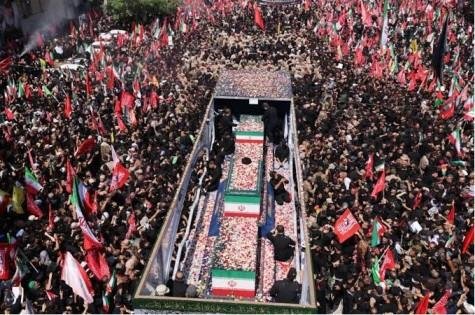
On June 3, 1989, nearly 10 million people gathered along a 32-kilometer route in Tehran to bid farewell to Ayatollah Ruhollah Khomeini. Amid the massive crowd, chaos erupted. Khomeini’s coffin broke open, his body fell to the ground, and even his son Ahmad Khomeini was pushed over by the crowd. Security forces fired warning shots into the air, and helicopters were called in, but people even tried to cling to the helicopters. Eventually, the body was taken back and quietly buried later.
Now, from July 4, the final farewell to Ayatollah Ali Khamenei has reportedly begun. More than 30 million people and leaders from over 100 countries are expected to participate in the funeral ceremonies. Why is mourning so central to Shia Islam? And why is Khamenei’s death being compared to the martyrdom of Karbala?
The Origins of the Shia-Sunni Split
The story begins in 632 CE. After returning from his final pilgrimage, the Prophet Muhammad stopped at a place called Ghadir Khumm. Standing before the gathered, he held the hand of his son-in-law, Hazrat Ali, and declared: “For whoever I am his Mawla (leader or master), Ali is also his Mawla.”A few months later, the Prophet passed away, and a dispute arose over who should succeed him. One group believed that the Prophet had not appointed a successor and that the community should choose its leader based on merit. They accepted Abu Bakr, the Prophet’s father-in-law, as the first Caliph. These followers later became known as Sunni Muslims. The other group believed that the Prophet had designated Hazrat Ali as his rightful successor at Ghadir Khumm. They supported Ali and became known as Shia Muslims, meaning the “Party of Ali.”
The Road to Karbala
In 656 CE, after the rule of Abu Bakr and two other Caliphs, Ali became Caliph. However, Muawiyah, the governor of Damascus, refused to recognize Ali’s authority. In 661 CE, Ali was assassinated. His eldest son, Hasan, reached a peace agreement with Muawiyah and withdrew from political leadership, returning to Medina.
After Muawiyah’s death, his son Yazid declared himself the new Caliph. Ali’s younger son, Imam Husayn, refused to pledge allegiance to Yazid. Accompanied by his family and around 72 loyal followers, Husayn set out toward Kufa in present-day Iraq. Before reaching the city, Yazid’s forces intercepted them on the plains of Karbala. During the battle, Husayn’s six-month-old son, Ali Asghar, was killed before his eyes. Imam Husayn and nearly all of his companions were martyred, while the surviving members of his family were taken captive.
Why Mourning Is So Important in Shia Islam
Every year, Muharram commemorates the martyrdom of Imam Husayn. On the 40th day after his death, one of the Prophet’s companions reached Karbala, and Husayn’s family, having been released from captivity, also returned there. This event gave rise to the tradition of Arbaeen, the world’s largest annual pilgrimage, during which millions of Shia Muslims walk to Karbala in remembrance of Imam Husayn’s sacrifice. The soil of Karbala is considered so sacred that many Shia Muslims use tablets made from its clay during prayer, and some accounts even describe it as having symbolic importance beyond Earth.
Why Is Khamenei’s Funeral Being Linked to Karbala?
According to this account, the emotions surrounding Khamenei’s funeral are being presented as similar to those associated with Karbala. The reported schedule is:
- July 6: A mourning procession involving around 20 million people.
- July 7: Ceremonies in Qom, one of Shia Islam’s most important religious centers, followed by visits to Najaf and Karbala in Iraq.
- July 9: Burial in Khamenei’s birthplace, Mashhad.
- Political Interpretation
According to Professor Hooman Majd (as quoted in the text), the mourning ceremonies are being portrayed as a counter-spectacle to the celebrations marking the 250th anniversary of American independence, placing Iran’s national mourning alongside America’s celebrations. Dr. Lakshman Singh Dev, who served as India’s Ambassador to Iran from 2021 to 2024, is quoted as saying that despite years of pressure from the United States and Israel, Iran remains resilient and is attempting to portray Donald Trump as a modern-day Yazid, while presenting Khamenei in a role symbolically comparable to Imam Husayn, to generate sympathy across the Muslim world—just as sympathy historically lay with Husayn after the tragedy of Karbala.
“We Have India”: Why Did Netanyahu Give This Reply to J.D. Vance? The Story Behind the Strong India–Israel Friendship
Whether it was India’s wars with Pakistan or gathering intelligence on Pakistan’s nuclear facilities, Israel has often stood by India. When U.S. Vice President J.D. Vance reportedly said that Donald Trump is the only leader of a major power who truly sympathizes with Israel, Israeli Prime Minister Benjamin Netanyahu replied:
“We have India.”What is the story behind this friendship? It can be understood in four chapters.
Chapter 1: When India Was in Trouble, Israel Came to Help
According to documents in the Israeli archives, on October 20, 1962, China attacked India during the Sino-Indian War. Seven days later, Prime Minister Jawaharlal Nehru wrote to Israeli Prime Minister David Ben-Gurion, seeking military assistance. Because India did not want Arab countries to be upset, it requested that Israel send weapons on ships without the Israeli flag. Ben-Gurion reportedly replied: “No flag, no weapons.”As a result, weapons were shipped to India on vessels flying the Israeli flag.
During the 1971 India–Pakistan War
The United States was largely supportive of Pakistan. Some documents suggest that Israel secretly supplied India with mortars and ammunition to avoid provoking the United States.
During the 1999 Kargil War
Pakistani forces were entrenched on high mountain peaks, making them difficult to target. India urgently needed laser-guided bombs and advanced navigation systems for precision strikes. The United States reportedly declined to provide them. Israel stepped in once again. According to Dutch foreign policy expert Nicolas Blarel in his book The Evolution of India’s Israel Policy, Israel supplied:
- Laser designator pods for the Indian Air Force’s Mirage 2000 aircraft
- Laser-guided bombs
- Surveillance drones
- Satellite imagery of the Kargil region
These resources helped India identify enemy positions and played a significant role in recapturing Tiger Hill and Point 4875.
Chapter 2: Under Prime Minister Modi, India Became One of Israel’s Strongest Partners
Israel became an independent country on May 14, 1948. India officially recognized Israel in September 1950, but full diplomatic relations were established only 42 years later, in 1992. A new phase in bilateral relations began after Prime Minister Narendra Modi took office in 2014. In 2017, Modi became the first Indian Prime Minister to visit Israel. The following year, Netanyahu visited India. During this period, the term “de-hyphenation” became popular. Foreign policy experts argue that India began treating its relationships with Israel and Palestine separately instead of viewing them as inseparable issues.
After the Hamas Attack in October 2023
India condemned Hamas’s attack on Israel. Foreign Ministry spokesperson Arindam Bagchi stated: “India sympathizes with Israel. We do not support any proposal that fails to condemn the Hamas attack.”Later, when several resolutions criticizing Israel’s military operations in Gaza were introduced at the United Nations, India abstained from voting on many of them. Even during the recent tensions involving Israel, the United States, and Iran, India maintained a balanced diplomatic position.
Chapter 3: Trade, Technology, and Defense Cooperation
India and Israel are major partners in:
- Technology
- Defense
- Innovation
- Agriculture
Between 2000 and 2025, Indian companies invested approximately $443 million in Israel.Israeli companies invested around $334 million in India. The Adani Group, in partnership with an Israeli company, acquired Haifa Port, which is now managed by the Adani Group.India is also Israel’s largest defense customer. According to a report by the Stockholm International Peace Research Institute (SIPRI), between 2020 and 2024, India accounted for 34% of Israel’s total arms exports.
These purchases include:
- Drones
- Barak missile systems
- Radars
- Precision-guided bombs
- Assault rifles
- Derby air-to-air missiles
- Python-5 missiles
Chapter 4: What Does Netanyahu’s Statement Mean?
Strategic affairs expert Brahma Chellaney says that there is considerable goodwill toward Israel among many Indians, but this support is not limited to Netanyahu’s government. He argues that Netanyahu’s recent remarks should not necessarily be interpreted in the context of India, the United States, or any other country. Instead, they should primarily be viewed through the lens of Israeli domestic politics. Netanyahu is facing ongoing court cases and political challenges ahead of elections. According to this interpretation, he wants to project the message that Israel is not internationally isolated and continues to have the backing of important partners such as India.
Why Is Russia, Which Sells Oil to India, Now Forced to Buy Oil? Has Ukraine Destroyed All of Russia’s Refineries?
Russia, which supplied oil to India during difficult times, is now facing its own fuel crisis. But why is this happening? And is India helping Russia? Let’s understand in today’s explainer. Since the start of the Russia–Ukraine war, Ukraine has continuously targeted Russia’s oil infrastructure. According to the text, from March 2026 until now, Ukraine has carried out attacks on more than 50 Russian oil refineries. Eight of Russia’s ten largest refineries have reportedly been damaged.
According to Ukrainian sources:
- Around 42.7% of Russia’s refining capacity has been affected.
- More than 60 oil storage facilities have been destroyed.
- Since August 2025, Russia has suffered losses of approximately ₹1.286 trillion (about ₹128,600 crore).
Because of these attacks, Russia’s oil production has reportedly fallen by 17% this year. Restrictions on the sale of petrol and diesel have been imposed in 55 of Russia’s 83 regions. According to the Russian state news agency TASS, fuel prices at private petrol stations have also increased.
Is India Helping Russia?
The answer given in the text is yes. Private Indian oil company Nayara Energy reportedly shipped around 60,000 metric tonnes of petrol to Russia on July 1 using two tankers. However, Nayara Energy has not officially confirmed the shipment. India’s Petroleum Minister Hardeep Singh Puri said that neither government-owned nor private Indian companies are directly exporting fuel to Russia. He added that Russia may be purchasing fuel of Indian origin through international commodity traders rather than directly from Indian companies.
Where Else Is Russia Buying Fuel?
To meet domestic demand, Russia is importing approximately 400,000 tonnes of petrol every month. The largest supplier is Belarus. Russia is also importing oil products from:
- Kazakhstan
- Japan
At the same time, Russia has reduced its exports of jet fuel from 30,000 barrels per day to around 13,000 barrels per day. A complete ban on gasoline exports remains in effect until July 31. The Russian government is also considering banning diesel exports. In several regions, limits have been placed on fuel purchases, meaning that a vehicle cannot buy more than 20–30 liters of petrol in a single purchase.
What Does Russia Say?
Russian President Vladimir Putin says that compared with last year, the country’s petrol reserves have declined by only 4%. He also stated that:
- Russia has strengthened its air defense systems against Ukrainian drone attacks.
- Repairs to damaged refineries will begin soon.
What Do Experts Say?
According to Chris Weafer, CEO and analyst at the global business consultancy Macro-Advisory Ltd., Russia has enough fuel in storage. However, the challenge is transporting fuel to regions facing shortages, which can take weeks. He also notes that repairing damaged refineries is difficult. Oil market analyst Gary Ross argues that:
Unless Ukraine stops attacking Russian refineries or a ceasefire agreement is reached, repairing damaged facilities makes little sense because they could simply be attacked again.
Why Can’t Russia Stop These Attacks?
The explanation given is straightforward. Ukraine possesses long-range drones, which it uses to penetrate deep into Russian territory and strike oil refineries.
These drones are:
- Small in size
- Relatively inexpensive
- Easy to deploy across Russia’s border
- In contrast, Russia often has to use surface-to-air missiles costing hundreds of thousands or even millions of dollars to intercept them. Another major challenge is Russia’s enormous geographical size. Protecting such a vast territory makes defending every refinery and fuel storage facility extremely difficult.
Why Are Iran and the United States Clashing Again? Was the Peace Agreement Just a Façade, with Something Else Happening Behind the Scenes?
The funeral of Iran’s Supreme Leader was marked by an atmosphere of anger and mourning. On July 6, Iran reportedly fired missiles at three ships passing through the Strait of Hormuz. The United States reacted furiously and launched strikes on 170 Iranian targets. U.S. President Donald Trump declared
“The peace agreement is over.”But why did Iran attack even after signing a peace agreement? How costly could this become? Has the war started again? The Peace Agreement A few days earlier, President Trump and the Iranian President had signed a 14-point agreement.According to the text, the three most important provisions were:Iran would not develop nuclear weapons, and within seven days both sides would decide what to do with Iran’s enriched uranium.Iran would ensure safe passage for all ships through the Strait of Hormuz for seven days without charging any fees.The United States, together with Gulf countries, would provide Iran with an economic package worth $300 billion.
Why Did Iran Attack Ships?
According to the text, the biggest reason was Iran’s fear of losing control over the Strait of Hormuz. After the peace agreement, shipping through the strait resumed.
However, many of the main shipping lanes were reportedly still mined. As a result, Iran initially directed ships through what it described as safer routes. Then, on June 24, Oman announced another alternative shipping corridor that passed close to Oman’s coastline. Iran objected, saying it had not been consulted before this route was introduced. According to maritime traffic monitoring company Kpler, traffic through the Strait of Hormuz fell dramatically: Previously, more than 100 ships passed through daily.
- After the new arrangements, the number reportedly dropped to around 30 ships per day.
- About half of those used Iranian-controlled waters, while the other half traveled through Omani waters.
Against this backdrop, Iran’s Islamic Revolutionary Guard Corps (IRGC) reportedly attacked three ships near the Strait of Hormuz on July 6–7. Iran reportedly declared: “We will maintain control, or every single one of us will die for it.” Other Reasons Behind the Attack The text gives two additional explanations.
1. Regional Influence – Iran fears that the United States is trying to reduce Tehran’s influence in Lebanon. Iran believes Washington wants to weaken its regional position while strengthening its own.
2. Economic Assistance – According to the article, Iran has so far received promises of only $150 billion for reconstruction, even though the total package was supposed to be $300 billion. The report says Gulf countries remain skeptical of Iran, creating obstacles to releasing the full amount.
What Do Experts Say? – Vali Nasr, a professor at the Johns Hopkins School of Advanced International Studies, is quoted as saying: Iran had begun to see the agreement as an illusion. He argues that Iran believed the United States was trying to pressure it by creating an alternative shipping route through the Strait of Hormuz and by promoting peace arrangements involving Lebanon and Israel. Meanwhile, the Director of the Middle East Programme at the British think tank Chatham House says: Iran’s objective is to create fear. However, she argues that this strategy is ultimately harming Iran itself. She compares it to: “Cutting off the branch on which you are sitting.”
Was the Peace Agreement Only for Show? – The text argues that genuine peace agreements normally contain clear and detailed terms.In this case, many crucial issues remained unresolved. A geostrategy expert at the Center for Strategic and International Studies (CSIS) says that both sides merely agreed to pause hostilities without resolving the core disputes, including:
- Iran’s nuclear program
- Control of the Strait of Hormuz
- Iran’s missile program
- As a result, the agreement collapsed very quickly.
What Happens Next? – According to the text, the situation has become a cycle of limited retaliatory strikes—an “eye for an eye.”, President Trump reportedly claimed that Iran had reached out to resume negotiations. The article concludes that if negotiations do not restart, the consequences could become much more serious for the entire world.
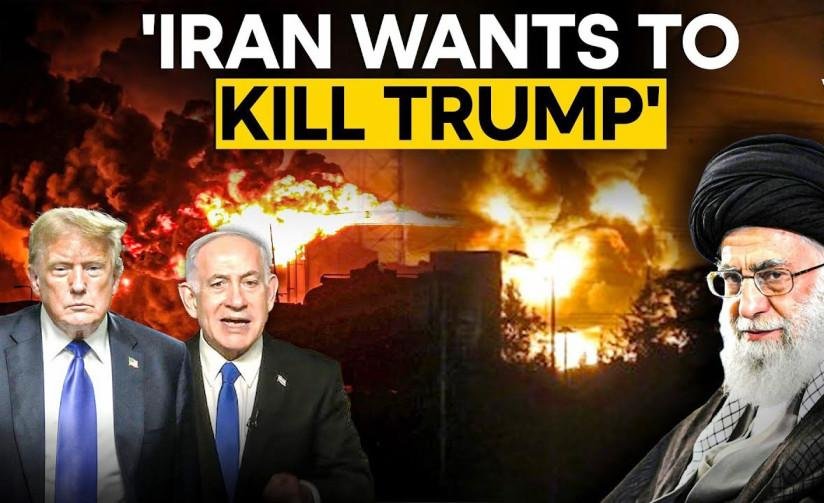
“Iran is going to kill Trump”: Israeli intelligence input, and the U.S. strikes again — what game is Netanyahu playing?
A shocking claim has emerged that Iran has prepared a plan to assassinate U.S. President Donald Trump. Israel has reportedly made this claim and submitted an intelligence report to the United States. But is this report actually credible, or is it part of a new strategy by Benjamin Netanyahu? Is this the reason the U.S. launched another attack on Iran? Let’s examine all the layers.
On July 8 and 9, the United States reportedly carried out airstrikes on 170 targets in Iran. Later, when Trump was returning to the U.S. from Turkey, he reportedly chose to leave the Air Force One aircraft provided by Qatar and instead traveled on his older presidential aircraft, which was considered more secure. According to CNN, this decision was made because of rising tensions with Iran.On July 8, Trump said:
“I saw today that I’m on every one of their lists. They want to eliminate me. So far I’ve been a little lucky. That may not last forever. These are evil people. We have to wipe this cancer out at its roots.”These remarks suggested that Trump was referring to intelligence reportedly received from Israel.
On July 9, Trump and Netanyahu spoke by phone. Netanyahu is expected to visit the United States soon to meet Trump. Now the question is whether Israel is deliberately trying to push Trump toward another attack on Iran. According to The Times of Israel, Netanyahu is waiting only for Trump’s approval before launching another strike on Iran. However, relying on Israeli assessments and attacking Iran again could come at a high cost for the United States. According to the report, the first six days of the Iran conflict alone cost the U.S. around ₹1 lakh crore (approximately US$12 billion). Several defense analysts estimate that the total cost of the war could exceed ₹10 lakh crore (roughly US$120 billion). The report also claims that the U.S. lost 42 aircraft, including four F-15 fighter jets, 30 MQ-9 Reaper drones, F-35 fighter jets, and THAAD and Patriot air defense systems.
Because of the Iran conflict, Trump’s approval rating among Americans reportedly fell from 52% to 39%. Before launching the war, Trump had set three major objectives, but according to the report, none of them were achieved. Now, is Iran really plotting to assassinate Trump? Apart from Israeli reports, there is currently no independently confirmed evidence supporting this claim. However, after the 2020 killing of Iran’s top general, Qasem Soleimani, Iran repeatedly threatened retaliation against Trump. There have also been reports of alleged plots targeting him. Mohammad Larijani, who has been described as a senior Iranian adviser, reportedly said:
“Trump has done something that makes it impossible for him to safely enjoy life. At any moment, a small drone could strike him.” An Iranian website also reportedly launched a campaign called “Blood Pact”, aiming to raise US$100 million, with a statement that read: “We pledge to support those who avenge the enemies of God and those responsible for killing people who posed a threat to Khamenei.”