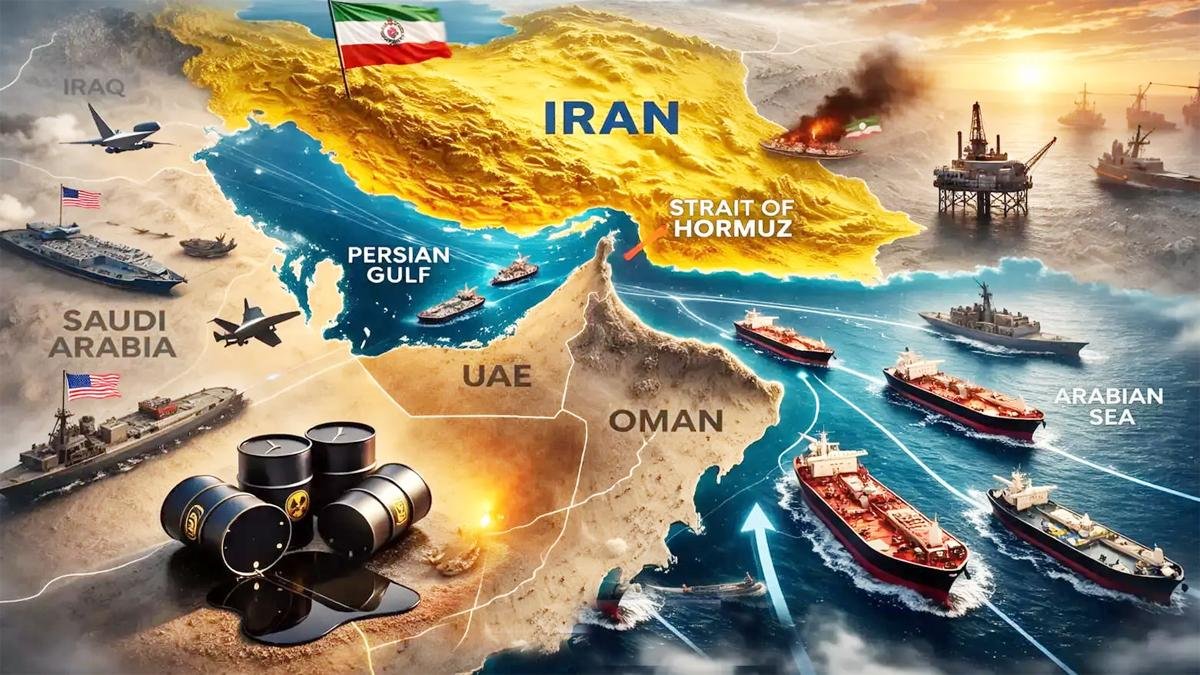
U.S. President Donald Trump clearly stated that the ceasefire agreement had effectively come to an end. Iran, however, argued that it was not the United States but others who had caused the greatest damage to the agreement. Meanwhile, Pakistan, which had acted as a mediator between the two sides, has continued urging both parties to honor the agreement. However, it is no longer a secret that this dispute is not just between two countries. At its core lies one of the world’s most strategically important maritime routes—the Strait of Hormuz.
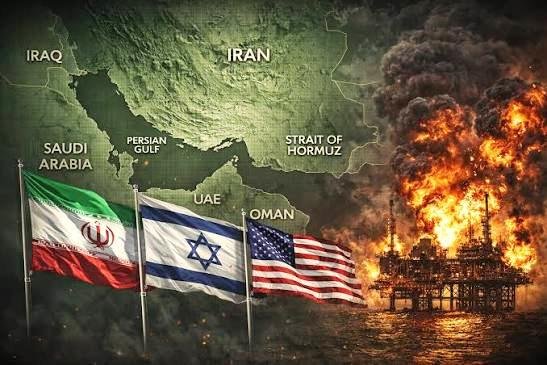
Nearly one-fifth of the world’s crude oil and liquefied natural gas (LNG) passes through this narrow waterway. As a result, any tension in this region extends far beyond the Middle East and has significant consequences for the global economy. According to this account, the current dispute began on February 28, when the United States and Israel launched military strikes against Iran. In response, Iran effectively closed the Strait of Hormuz, creating a major disruption to global energy supplies. Iran maintains that the ceasefire agreement recognized its authority over the Strait of Hormuz. However, the United States and the Gulf countries reject this interpretation. They argue that the agreement merely required Iran to ensure the safe passage of ships through the strait and not impose any transit fees or restrictions.
The following day, however, the United States appeared to distance itself from that understanding, saying that maritime security in the Gulf should instead be ensured through trade and investment agreements with its Gulf partners. Just a few hours later, the United States launched another major strike against Iran. This showed that diplomacy and military conflict were unfolding simultaneously. The impact of this confrontation has not remained confined to the battlefield. At the beginning of July, Brent crude oil prices began rising again. The price increased to around $73 per barrel, and for countries like India, the effective cost rose to nearly $85 per barrel. This has direct economic consequences. India imports a large share of the oil it consumes, so rising crude oil prices affect far more than just petrol and diesel prices. The country’s import bill increases, leading to a wider trade deficit. Higher import costs put pressure on the government’s finances, contribute to inflation, raise production costs for industries, and ultimately increase the financial burden on ordinary people.
This confrontation has also sparked a new debate over India’s foreign policy
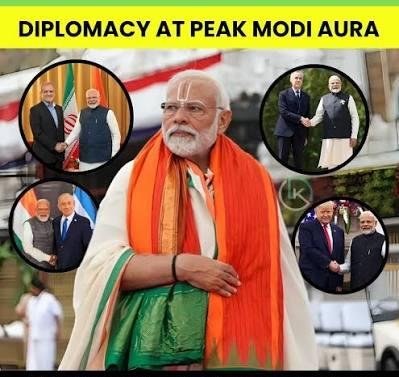
Prime Minister Narendra Modi’s absence from the funeral of Iran’s Supreme Leader Ali Khamenei, along with India’s steadily growing ties with Israel, has triggered fresh debate. Although India describes its current foreign policy as “multi-aligned,” critics argue that in recent years India’s strategic alignment has become more visible than before.
Pakistan’s role is also evolving. Throughout this crisis, Pakistan’s diplomatic importance has increased because of its mediation efforts between the United States and Iran, and its relations with Iran appear to be stronger than ever. This conflict is no longer just a military confrontation between the United States and Iran. Its impact is increasingly being felt across the world. The biggest question is: if this confrontation continues for a long time, how much will India have to pay for it? Rising inflation will affect government spending as well as the lives of ordinary people, but how much additional burden will it place on petrol and diesel prices? are three distinguished experts on the Middle East: Ashraf Zaidi, former Indian Ambassador to Washington, Navdeep Suri, and journalist Seema Sirohi.
Mr. Zaidi, when you visited Iran, what kind of mood did you observe among the people? Every day we hear different reports and opinions coming from there.
Look at the atmosphere in Iran. After the war ended and the Memorandum of Understanding (MOU) was signed, we reached Iran. As journalists, we spoke with many ordinary people. The most striking thing we observed throughout the funeral procession was anger. There was anger on people’s faces, in their hearts, and in their minds. They were driven by a desire for revenge. Everywhere we went, people were shouting the same slogan. Everyone said that they wanted revenge for the assassination of their leader. What should Iran do now? Is there any public dissatisfaction with the government? Are people unhappy because the government has been unable to achieve a ceasefire or a negotiated settlement? Is there any anger directed toward the Iranian leadership
When you look at Iran’s government and officials, you can clearly see that there is public unrest. The question in everyone’s mind was whether the government had acted too quickly. People believed that Iran had the upper hand among the public and should have continued pressing its advantage. The public expected the government and the armed forces to continue confronting the United States. Many believed that if necessary, the entire region could be devastated rather than allowing America to dictate the outcome. People are upset with the leadership and the negotiators because they believe they rushed into signing the MOU. They ask why Iran signed an agreement when the United States was not lifting sanctions in any meaningful way.
When the United States carries out attacks or targets Iranian facilities, ordinary civilians are also affected. Their daily lives suffer. Is there any public acceptance that this conflict should end through negotiations? Or do people believe that only armed resistance can succeed, even against a superpower like the United States?
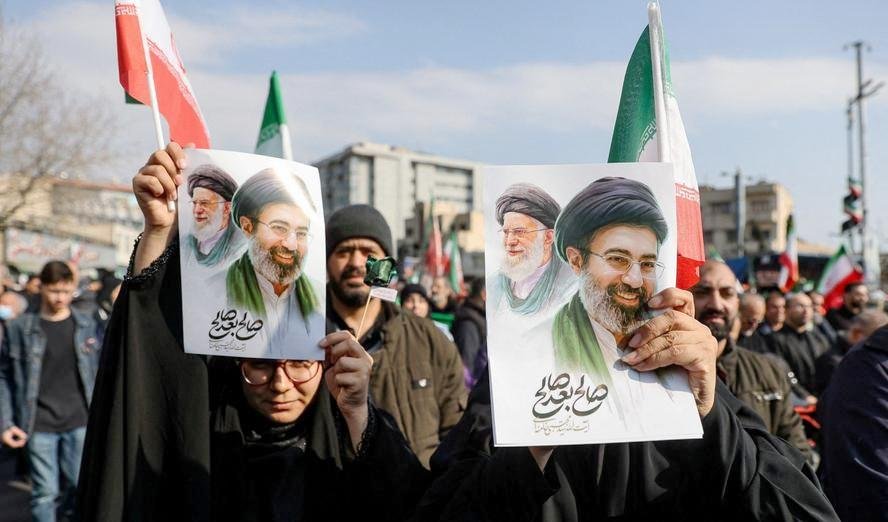
Many people believe that Iran can stand up to a great power like the United States and continue fighting, even if it suffers losses. During the funeral procession, the slogans reflected this sentiment. People shouted slogans calling for revenge. We repeatedly heard people saying that they wanted retaliation. Later, a message from Iran’s Supreme Leader reinforced these feelings. The message was essentially: “They may have killed our leaders, but the nation demands revenge, and that demand will be fulfilled.”Because of this, many people believe the country is prepared for a larger war. They feel that the United States will not stop exerting pressure unless it is confronted with force. You mentioned the funeral and the enormous crowds. How politically significant was that gathering? Ashraf Zaidi: It was considered a historic funeral in Iran. Reports suggested that between two and four million people participated. The crowds were not limited to one city. Tehran, the capital, witnessed massive public participation over three days. I was there myself during that period. The weather was extremely hot, yet people filled the streets. The funeral procession stretched for roughly 11 to 20 kilometers through the city. In neighboring Iraq as well, particularly in the holy cities of Najaf and Karbala, millions of people gathered in solidarity. The events were broadcast across international media, although, according to some observers, not all aspects of the gatherings received equal attention in global news coverage.
Do you see any concerns or alternatives regarding this? In Iran, people seem very satisfied with their leader, and they want him to remain in power.
This is about your survival, your security, and the future of the country. During a war, the leader mustn’t expose himself unnecessarily. Even though he has not appeared publicly, I noticed a unique sentiment among the people. There is a deep reassurance in their hearts that their leader is alive. For them, it does not matter whether he appears in public or not. What matters is that his messages continue to reach the people, and they accept and act upon them.
If he tells people to remain on the streets, they are prepared to do so. If Supreme Leader Ayatollah Khamenei says revenge will be taken, the public echoes his words. People say, “Yes, we want justice. Revenge must be taken.” They are ready to make any sacrifice necessary. Were there any voices opposing the war? Did anyone think it should be stopped? Yes, I met many people. Some said war is terrible and should never happen. But they also asked, “What should a country do when war is forced upon it?” If war is imposed, you have no choice but to fight. Otherwise, what can you do? Many people do not want war, but they believe that the United States has forced this conflict upon Iran. They feel that if they do not fight, their country could be divided and foreign powers could take control.
Former Indian Ambassador to the United Arab Emirates, Egypt, and Australia, Navdeep Suri, has now joined us. Thank you for being with us. My first question is: How did what appeared to be a Memorandum of Understanding (MoU) escalate into a serious conflict so quickly? Navdeep Suri: I wouldn’t call it a Memorandum of Understanding. I’d call it a “Memorandum of Misunderstanding.” There were too many issues left unresolved. The current dispute revolves around Iran’s declaration that any ship passing through the Strait without coordinating with them—whether carrying oil or containers—could be targeted. They have acted on this, and Indian citizens have also suffered losses. The United States says such actions are illegal and has warned Iran that if it continues, it will respond militarily. However, the fundamental issues behind this conflict remain unresolved. Military strikes and sanctions have not addressed the core problems. President Trump repeatedly says that Iran wants a deal. Has the situation reached that point? Or does Iran still believe it has strategic leverage because it controls the Strait of Hormuz? Navdeep Suri: Within Iran itself, there is a debate.The hardliners argue that no agreement should be made with a country that has killed their Supreme Leader, other senior leaders, and over 150 children. They insist the fight must continue until victory. The more pragmatic voices argue that Iran cannot realistically defeat the United States militarily. Every war ultimately ends through diplomacy. Both sides therefore want a negotiated settlement, but the terms remain far from being agreed. The objective now is simply to return to the situation that existed before 28 February, when ships could pass freely through the Strait of Hormuz without restrictions or additional fees. If Iran continues threatening to impose tolls or restrictions on shipping through the Strait of Hormuz, it risks losing international sympathy. The Strait is an international waterway, and restricting it would affect not only Gulf countries but also major economies including Japan, South Korea, China, the Philippines, Thailand, and Vietnam. Iran does not want to become internationally isolated. Such actions would make it increasingly unpopular because they violate accepted international norms. Moreover, if one country starts restricting a major maritime chokepoint, it sets a dangerous precedent. Imagine if Turkey blocked the Bosporus, Morocco interfered with the Strait of Gibraltar, or Indonesia restricted one of its strategic waterways. The entire global trading system would be disrupted. From India’s perspective, how can India balance its strong ties with Iran, its strategic partnership with the United States, its relationship with Israel, and the presence of millions of Indians in Gulf countries? Navdeep Suri: That is precisely what diplomacy is about. India has faced such dilemmas before. During the Cold War, India maintained relations with both the United States and the Soviet Union. Similarly, India has traditionally maintained good relations with the Palestinians, Arab countries, Israel, and Iran simultaneously. India purchases defence equipment from Israel while also cooperating with Iran on the Chabahar Port project. But hasn’t something changed this time? Yes, I have said this myself on several occasions. This time, during the conflict, it appeared that India leaned more toward Israel and the United States. When the United States attacked Iran on the 28th, India did not openly criticize the action. This may have somewhat reduced India’s credibility as an independent diplomatic actor. Perhaps because India appeared to take a side instead of maintaining its traditional balance, Pakistan was able to gain some diplomatic advantage during this period. Recently, there was considerable discussion over Prime Minister Narendra Modi not attending the funeral of Iran’s Supreme Leader. (The transcript incorrectly refers to “former Supreme Leader and Prime Minister Ali Khamenei”; Ayatollah Ali Khamenei is Iran’s Supreme Leader and, as of my knowledge cutoff, is not a former Prime Minister.)
Do you think it would have been better, from a diplomatic perspective, if the Prime Minister had attended, or was the current approach more appropriate?
The decision that was taken was probably the right one, but I believe the Prime Minister had already committed to another schedule. It may have been difficult for him to travel, but in such situations we often send the Vice President, since that is also a senior and significant constitutional position. Perhaps we should have ensured representation at that level.
If I look at the current level of participation, it may not have been high enough. We should have sent someone at a higher level. Another issue I would like to understand is that this new phase of the conflict has begun again. For India, the biggest immediate concern is the energy crisis. The crisis is worsening, so what more should India do in this conflict? What role can it play effectively, and how can the country avoid the worst effects of this crisis? If we compare India with countries such as Bangladesh, Pakistan, Vietnam, Thailand, the Philippines, and others, we see that many of them imposed restrictions due to energy shortages. Some adopted a four-day workweek, others reduced office hours, and some shifted schools to online classes. India, however, did not experience such disruptions.
Looking at the situation objectively and with maturity, it appears that it has been managed well both diplomatically and from an energy perspective. Because of the relationships India has built, it was able to diversify its energy sources quickly. That was a significant achievement. During the first three or four days, there was some shortage of LPG, and people were concerned. But after that, the system stabilized. We did not see long queues at petrol pumps or widespread shortages. The government diversified supplies and involved private participation where necessary. I believe these were good steps. However, looking ahead, India needs to strengthen its own strategy. We should expand our strategic petroleum reserves, perhaps even double or triple them. Countries like Japan and China have reserves sufficient for three or four months, allowing them to continue functioning even if they do not receive oil or gas imports.
Despite all these efforts, petroleum product prices have increased in India, affecting ordinary people. Secondly, in recent days we have seen incidents involving Indian sailors in which lives were lost. This has led to considerable discussion about India’s response to the situation. How do you view India’s reaction and the losses the country has suffered? When oil prices become extremely volatile—for example, rising from around $100 per barrel to $120 per barrel in a single day—it naturally affects consumers worldwide, including those in the United States, Canada, and Japan. Governments cannot keep subsidizing fuel indefinitely. Doing so would increase their fiscal deficits. Initially, the Indian government tried to keep fuel prices stable. Companies such as Indian Oil, Hindustan Petroleum, and BPCL absorbed much of the losses. But once the immediate crisis eased, fuel prices were increased. If these companies continue losing thousands of crores of rupees every day, they cannot remain financially viable. Therefore, I do not object to fuel prices increasing in such circumstances because this is not entirely under the government’s control—it is driven by global economic factors.
Regarding Indian sailors, this is now a reality of the global shipping industry. Indian sailors work on ships owned by companies from different countries. The government cannot control every vessel or where it sails. The best it can do is issue advisories warning Indian sailors not to work on ships that may pass through high-risk areas such as the Gulf. However, the ownership of the ship and employment decisions are ultimately beyond the government’s direct control. Sometimes political statements are made about such incidents, but I do not take those statements very seriously. My final question is: given these circumstances, what should India’s broader role be in this conflict, considering both its national interests and its position in global governance? India should strongly support international law. Whenever any country violates international law—even if it is the United States—we should be willing to say that it is wrong. If Israel acts in violation of international law, we should say so, even if Israel is our friend. Similarly, if Iran attacks the UAE, Qatar, or Oman, that is also wrong. Unless India speaks up consistently, I believe its international standing and influence will gradually diminish. Going forward, I hope India reassesses its approach. While national interest must always remain the top priority, there should also be room for morality, principles, and respect for international law. If we abandon these values, we may not achieve the international role and status we aspire to.
After the Memorandum of Understanding (MoU) between the United States and Iran was signed, what suddenly caused such a sharp escalation? The MoU was negotiated and concluded very quickly, so many of its details were never fully clarified. When Iran attacked ships heading toward the Omani coast about a week earlier, Iran argued that those ships were operating contrary to the terms of the MoU. According to Iran, the agreement stated that ships passing through the area would do so under arrangements coordinated with Iran. That disagreement became the starting point of the latest escalation. The United States then carried out strikes on around 170 Iranian command-and-control targets. More recently, however, Iran appears to have signaled some willingness to return to diplomacy. Iran’s chief negotiator, General Ghalibaf, said that while Iran would always defend itself, it also believes in diplomacy and negotiations. At present, it seems both sides are looking for a way to return to negotiations after the recent escalation.
Given the current situation, what is America’s ultimate objective? Is it regime change in Iran? Is it still preventing Iran from becoming a nuclear power? Or has reopening the Strait of Hormuz now become the primary objective? The United States’ immediate objective is to reopen the Strait of Hormuz so that oil prices come down and commercial shipping can resume normally. The nuclear issue has become somewhat secondary for now and will likely be addressed in later negotiations. At present, reopening the Strait of Hormuz is the top priority. When a country is engaged in war or conflict, its leader often experiences one of two outcomes: either public support rallies behind the leader, or approval ratings decline because people become dissatisfied. In a country like the United States, where military casualties and the financial costs of war are major political issues, what impact is this renewed conflict with Iran having on Donald Trump’s popularity? This war is highly unpopular in the United States. Public support for it is very low. Trump’s approval rating has fallen to about 39%, one of its lowest points. Midterm elections are approaching in November, so he is under pressure from multiple directions. Americans are also experiencing higher petrol prices and inflation, so they are directly feeling the economic effects of the conflict. Trump’s advisers are aware of this and are trying to bring both sides back to the negotiating table and end the conflict. If the conflict comes to an end, what should India’s next steps be? India has significant stakes in this situation because a large number of Indian nationals work in international merchant shipping. The developments surrounding the Strait of Hormuz directly affect India’s trade, energy security, and the safety of Indian seafarers.