
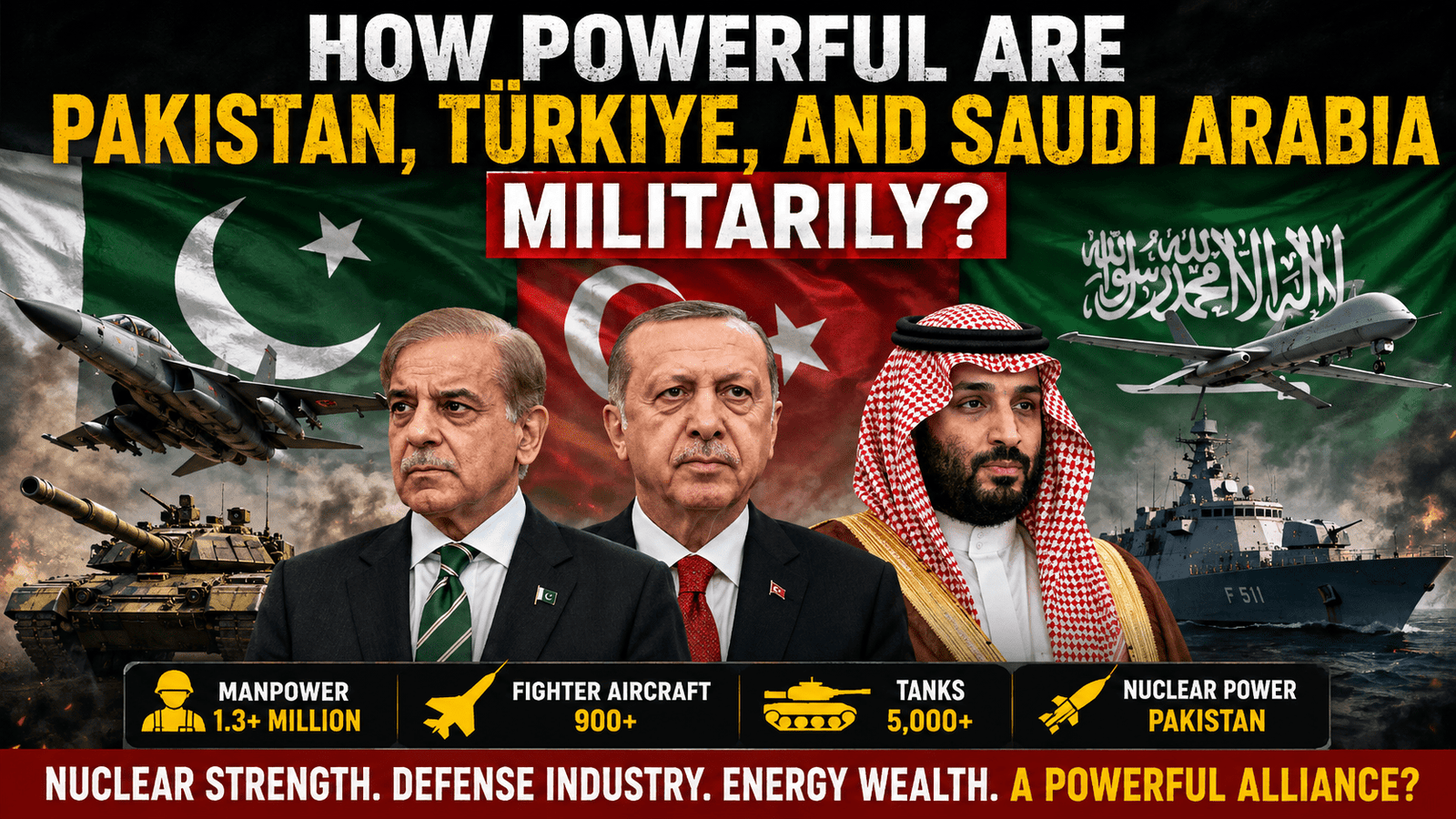
The signing of the Makkah Joint Defence Agreement by Pakistan, Saudi Arabia, and Türkiye on August 7, 2026, has created a new strategic partnership spanning South Asia and the Middle East. The agreement states that an attack on one member will be treated as an attack on all three. However, the detailed military commitments have not been made public, so it would be premature to describe the pact as a fully integrated NATO-style alliance.
The agreement’s importance lies partly in the different strengths each country brings. Pakistan contributes nuclear deterrence and a large, experienced military. Türkiye contributes a powerful conventional force and an increasingly advanced defence industry. Saudi Arabia brings enormous financial resources, energy wealth, strategic geography and access to sophisticated imported weapons.
Pakistan: Nuclear Power and a Large Military
Pakistan has one of the largest standing armies among the three countries, with a long history of military operations and significant combat experience.
Its most important strategic advantage is its nuclear capability. The Federation of American Scientists estimates that Pakistan had around 170 nuclear warheads at the beginning of 2026. Exact numbers are not publicly known because nuclear arsenals are closely guarded secrets.

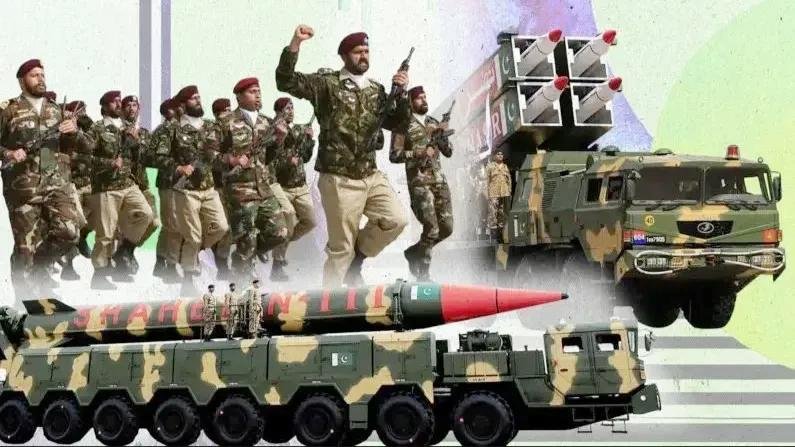
Pakistan also possesses ballistic and cruise-missile systems capable of supporting its nuclear deterrent. Its defence relationship with China has become increasingly important, supplying Pakistan with aircraft, missiles, naval platforms and other military technology.
The country’s main weakness is its comparatively limited defence budget. Pakistan spent about $11.9 billion on its military in 2025, according to SIPRI. That is substantially below Saudi Arabia’s and Türkiye’s spending.
Nevertheless, Pakistan’s combination of manpower, missiles, military experience and nuclear weapons makes it the most strategically significant nuclear power in this three-country group.
Türkiye: The Strongest Conventional Military
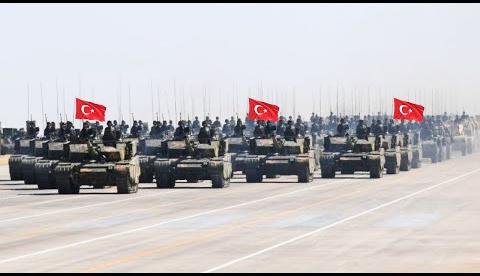
Türkiye is arguably the strongest of the three in terms of overall conventional military capability.
It has a large army, a substantial air force and an increasingly capable navy. More importantly, Türkiye has spent years developing its own defence industry rather than relying entirely on foreign suppliers.
Turkish companies produce combat drones, missiles, armoured vehicles, naval vessels, electronic-warfare systems and aerospace equipment. Turkish drones such as the Bayraktar TB2 have become internationally recognised and have been used in several conflicts.

Türkiye’s NATO membership also provides access to a major military alliance, established standards, intelligence cooperation and interoperability with Western armed forces.
Its defence industry has become an important source of national power. Turkish defence and aerospace exports have crossed the $10 billion level, demonstrating that the country is increasingly capable of supplying both itself and foreign customers.
Türkiye does face limitations. It does not possess its own national nuclear arsenal, and its exclusion from the F-35 programme has limited access to America’s newest generation of fighter aircraft. Nevertheless, its domestic defence production helps reduce dependence on foreign suppliers.
Saudi Arabia: The Financial Heavyweight
Saudi Arabia has a very different military profile.
Its armed forces are smaller than those of Pakistan and Türkiye, but the kingdom has one of the world’s largest defence budgets. SIPRI estimates that Saudi Arabia spent about $83 billion on its military in 2025, making it one of the world’s biggest military spenders.
Saudi Arabia has invested heavily in advanced Western military equipment, including fighter aircraft, air-defence systems, armoured vehicles, missiles and naval equipment.


Its enormous financial resources allow it to purchase sophisticated weapons and maintain a large defence infrastructure. Its geographical position is also strategically important because it sits beside the Red Sea and Persian Gulf and controls territory close to major global energy routes.
However, spending does not automatically translate into military effectiveness. Saudi Arabia has fewer troops and less combat experience than Pakistan and Türkiye. Developing highly trained personnel, independent military institutions and domestic defence production remains an important challenge.
What Do the Three Countries Have Together?
The strategic value of the Makkah agreement comes from complementarity.
Pakistan brings:
- Nuclear deterrence
- A large standing army
- Missile capabilities
- Extensive military experience
- Close defence cooperation with China
Türkiye brings:
- Strong conventional forces
- A sophisticated defence industry
- Combat drones
- Missile and naval capabilities
- NATO interoperability
Saudi Arabia brings:
- Huge financial resources
- Energy wealth
- Modern imported weapons
- Strategic Middle Eastern geography
- Significant investment capacity
In simple terms, the partnership combines Pakistan’s strategic deterrence, Türkiye’s military technology and Saudi Arabia’s financial power.
That combination could become significant if the three countries develop joint exercises, intelligence-sharing arrangements, defence production and compatible command systems.
But there is an important distinction between combined potential and actual combined military power. The three countries currently operate different weapons systems, command structures and strategic priorities. Building a genuinely integrated military force would require years of planning, training, logistics and investment.
Which Country Is the Most Powerful?
There is no single answer because military power has several dimensions.
1. Overall Conventional Power: Türkiye
Türkiye has the strongest combination of conventional military size, defence technology, domestic arms production and operational experience.
2. Nuclear and Strategic Deterrence: Pakistan
Pakistan is clearly the strongest in this category because it is the only nuclear-armed state among the three. Estimates place its arsenal at roughly 170 warheads.
Türkiye is not a nuclear-armed state, although US nuclear weapons are reported to be deployed at Incirlik under NATO’s nuclear-sharing arrangements. Saudi Arabia has no publicly acknowledged nuclear weapons stockpile.
3. Defence Spending: Saudi Arabia
Saudi Arabia is the clear financial leader. Its 2025 military expenditure was several times larger than Pakistan’s and substantially higher than Türkiye’s.
4. Defence Industry: Türkiye
Türkiye has the strongest indigenous defence-industrial base among the three. Its ability to develop and export drones, missiles, ships and other systems gives it an advantage that cannot be measured simply by defence spending.
The Combined Military Strength
Taken together, Pakistan, Türkiye and Saudi Arabia would represent a formidable strategic grouping.
Their combined military expenditure was roughly $125 billion in 2025, based on SIPRI figures for the three countries.
More importantly, the alliance would combine capabilities that complement one another:
Pakistan = nuclear deterrence and manpower
Türkiye = technology and conventional military power
Saudi Arabia = money, energy and strategic geography
This is why the Makkah agreement has attracted considerable international attention. The International Institute for Strategic Studies describes the pact as an important geopolitical realignment, while noting that its practical military structure remains an important question.
Is This an “Islamic NATO”?
It is too early to use that description literally.
The agreement does contain a collective-defence principle, but publicly available information does not show the existence of NATO-style integrated military command structures, a unified defence budget or permanent joint forces.
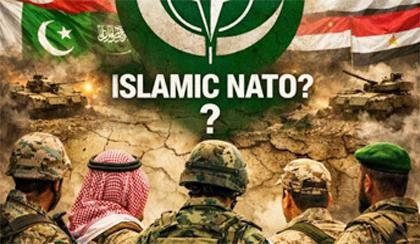
Pakistan’s government has also described the agreement as purely defensive, rather than an alliance directed against a specific country.
The real test will be what happens next. If the three countries establish regular joint military exercises, intelligence cooperation, missile defence coordination, defence-industrial partnerships and common operational procedures, the pact could become much more powerful than it is today.
Conclusion
Pakistan, Türkiye and Saudi Arabia each occupy a different position in the military balance.
Türkiye is arguably the strongest conventional military, thanks to its large armed forces, NATO experience and rapidly expanding defence industry.
Pakistan is the most strategically powerful in terms of nuclear deterrence, with an estimated 170 nuclear warheads and substantial missile capabilities.
Saudi Arabia is the financial heavyweight, spending dramatically more on defence and possessing extensive access to advanced Western weapons.
Individually, none of the three dominates every category. Together, however, their strengths are highly complementary. The Makkah Joint Defence Agreement therefore has the potential to create an important new security bloc—although its ultimate military significance will depend on whether the three countries turn political commitments into practical military cooperation.