
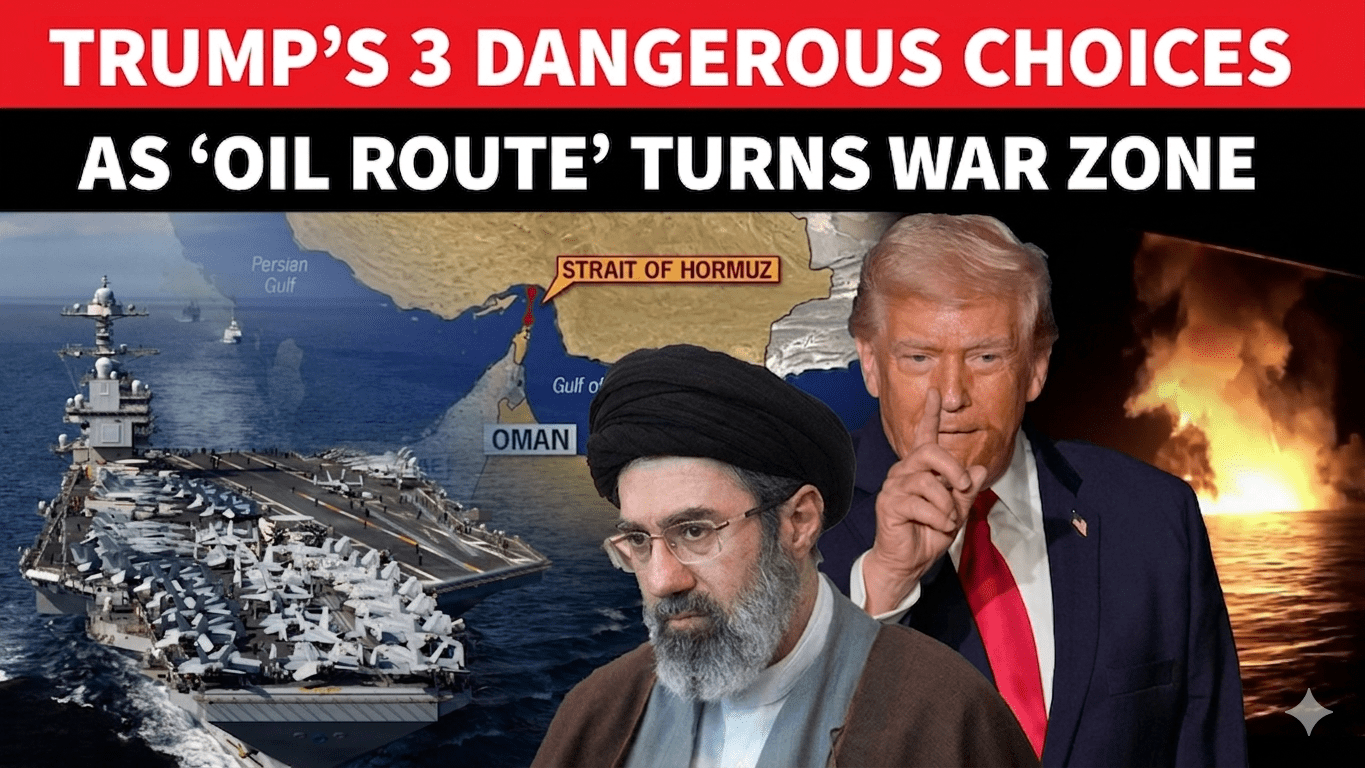
As the 21-hour-long negotiations between Iran and the U.S.—held in Pakistan—were drawing to a close, U.S. Vice President Mike Pence remarked upon his departure that this constitutes “very bad news for Iran.” Conversely, Iran maintains that the U.S. conditions were excessively stringent, which is why an agreement could not be reached. Ultimately, what exactly were the conditions set by both nations? Where did the real impasse occur? And will hostilities now resume? We explore these questions here.
On March 25, the U.S. had conveyed a proposed agreement plan to Iran—via Pakistan—which is currently displayed on your screen. In this document, the U.S. presented Iran with demands such as dismantling its nuclear program, curbing its missile capabilities, and severing its proxy networks.
The U.S.’s 11 Demands of Iran: 3 Benefits in Return
- Nuclear capabilities must be completely dismantled.
- A pledge must be made not to develop nuclear weapons.
- No uranium enrichment activities shall take place on Iranian soil.
- 450 kilograms of uranium enriched to 60% purity must be handed over to the IAEA.
- The nuclear facilities at Natanz, Isfahan, and Fordow must be dismantled.
- The IAEA must be granted full access and inspection rights within Iran.
- Proxy networks (such as Hezbollah, the Houthis, etc.) must be abandoned.
- Funding and arms supplies to proxy groups must cease.
- The Strait of Hormuz must be maintained as an open and free maritime corridor.
- The missile program must be curtailed.
- The use of missiles shall be strictly limited to self-defense purposes.
3 Benefits for Iran
- All international sanctions shall be completely lifted.
- U.S. assistance shall be provided for Iran’s civilian nuclear program (including the Bushehr plant).
- The “snapback” mechanism—the provision allowing for the automatic re-imposition of sanctions—shall be abolished.
Characterizing these demands as unrealistic and unjust, Iran put forward its own set of 10 counter-demands. Iran’s 10-Point Plan for the U.S.:
- A complete cessation of all forms of attacks or acts of aggression against Iran, Lebanon, and other nations.
- The withdrawal of U.S. military forces from bases located across the Middle East.
- Recognition of Iran’s sovereign right to enrich uranium.
- The lifting of all trade and economic sanctions currently imposed on Iran. 5. Lifting sanctions on companies trading with Iran.
- Revoking all United Nations Security Council resolutions against Iran.
- Revoking all resolutions by the nuclear agency (IAEA) regarding Iran’s nuclear program.
- A guarantee from the United States against any future attacks.
- Recognition of the control exercised by Iranian forces over the Strait of Hormuz.
- Payment of compensation to Iran for damages incurred during the war.
The proposed terms included provisions to prevent all forms of attacks, facilitate the withdrawal of US forces from the Middle East, acknowledge Iran’s right to uranium enrichment, lift sanctions, and provide guarantees that the US would never launch an attack against Iran again. On the morning of April 8, Trump stated that proposals coming from Iran had absolutely nothing to do with the actual scope of the agreement. According to reports, both nations were making maximalist demands in an attempt to demonstrate that they had emerged victorious from the conflict. Commenting on the failure to reach an agreement, Iran’s former Vice President, Ataollah Mohajerani, remarked that while the US itself had proposed negotiations, it sought to achieve at the negotiating table precisely what it had failed to accomplish on the battlefield. This raises the question: what specific points of contention ultimately prevented a US-Iran agreement? Some reports suggest that the US had shown willingness to compromise on issues such as lifting sanctions against Iran and unfreezing its assets; however, the negotiations stalled on three key issues. First was the halting of Iran’s nuclear program; the US demands that Iran completely abandon any efforts to develop nuclear weapons—a component Trump described as constituting 99% of the deal—whereas Iran refuses to relinquish its right to uranium enrichment. Second was control over the Strait of Hormuz; Iran seeks complete control over the Strait and the collection of tolls, while the US—under Trump—sought a share of the tolls levied on vessels passing through the Strait. Third was a ceasefire in Lebanon; Israel and the US sought to exclude Lebanon from any ceasefire arrangement, whereas Iran insisted that Lebanon be included as part of the ceasefire. Given this impasse, the question arises: Is there any remaining hope for an agreement regarding the Strait of Hormuz and the nuclear program? Middle East analyst Aaron David Miller observes that Iran possesses more options than the US; it holds enriched uranium and continues to maintain control over the Strait of Hormuz, and therefore, it is in no rush to agree. Experts, however, believe that the US is taking the prospect of a deal with Iran seriously, suggesting that negotiations between the two nations may well continue in the future. According to an analysis by the Institute for Peace and Diplomacy, the enrichment of uranium is a matter of national dignity for Iran, and its missile program is deemed essential for its national defense; consequently, reaching a consensus with the US on these specific issues remains extremely difficult. Finally, the question arises: was Israel the underlying reason for the failure to reach a US-Iran agreement? Israel fears that any such agreement might inadvertently empower Iran… To ensure that no agreement is reached regarding the nuclear program, Israel launched attacks on Lebanon even while negotiations concerning the JCPOA were underway. According to experts, Israel hopes that the JCPOA will collapse, thereby paving the way for renewed U.S. military strikes against Iran. A second contributing factor is that Israel was entirely excluded from this entire deal; an Israeli opposition leader described this exclusion as an act of political pressure. All of these developments are also impacting Netanyahu’s public image within Israel. So, will there now be a renewed attack on Iran? Sharing an article on social media, Trump wrote that if Iran fails to comply with his terms, it could face a naval blockade and military strikes. On the other hand, Iran has stated that it stands ready to defend its interests.
Are the lives of Iranian leaders in Pakistan at risk? Who will attend the meeting? And why, ultimately, does Israel not want an agreement?

A palpable sense of suspense currently hangs in the air over Islamabad, the capital of Pakistan. The city’s entry points have been sealed off, and approximately 10,000 security personnel have been deployed. A three-kilometer radius surrounding the iconic ‘C’ Hotel has been designated a “Red Zone.” It is here that talks between the United States and Iran are scheduled to take place on April 11. The Pakistani leadership is visibly anxious regarding this event. Who exactly will be participating in these talks on behalf of Iran and the U.S.? Why has Israel been excluded from the process? And does a genuine threat to the leaders’ security actually exist? We explore these questions here.
Representing the United States in these negotiations will be Vice President Jared Evans. He has been a staunch advocate for dialogue with Iran from the very outset, and Iran, too, regards him as the most trustworthy figure within the American delegation. Evans serves as the U.S. Special Envoy to the Middle East and is a close confidant of Trump. He was also actively involved in the negotiations for the nuclear deal between Iran and the U.S. on February 26, 2026. A renowned businessman, he served as a Senior Advisor to Trump from 2017 to 2021. Alongside Evans, Jared was also a key participant in the nuclear deal negotiations; he is the husband of Trump’s eldest daughter, Ivanka. Turning to the Iranian delegation, Foreign Minister Abbas Raji will play the pivotal role. He is widely regarded as a master negotiator when it comes to navigating complex agreements. It was Abbas who, on behalf of Iran, accepted Pakistan’s mediation efforts and ensured that the dialogue continued. The other key figure will be Mohammad Bagher Ghalibaf. He currently serves as the Speaker of the Iranian Parliament and is a prominent member of the National Security Council. Ghalibaf is considered a trusted ally of the Supreme Leader, Ayatollah Ali Khamenei. Let’s delve deeper into the details.
There are three major reasons why Israel was ultimately excluded from this meeting. First, the U.S. does not agree with Israel’s decisions. According to The Wall Street Journal, Israel received belated information regarding the ceasefire; furthermore, it was not consulted. Trump had merely telephoned Netanyahu shortly before the ceasefire went into effect. The second reason was to avoid getting entangled in the conflict. Israel had intensified its attacks to eliminate Hezbollah. However, at Trump’s behest, Israel subsequently agreed to engage in talks with Lebanon. Masood Khalid, Pakistan’s former ambassador, suggests that Israel seeks to create a situation—by attacking Iran—that would cause Iran to harden its stance, thereby making any future agreement impossible. Third, Israel does not trust Pakistan; relations between Pakistan and Israel are extremely strained, and Israel does not view Pakistan as a reliable party. On April 10, Pakistan’s Defense Minister, Khawaja Asif, wrote: “Israel is the epitome of evil and a curse upon humanity. Peace talks are underway in Islamabad while a massacre is unfolding in Lebanon. My prayer is that those who established Israel as a nation may burn in hell.” Khawaja Asif subsequently deleted the post. Now, the question arises: why is Pakistan so apprehensive regarding the security of the leaders participating in this meeting? According to The Wall Street Journal, Abbas Araqchi and Ghalib arrived in Islamabad as early as April 9—a claim, however, that Iranian state media has denied. Meanwhile, the American delegation is scheduled to arrive in Islamabad today. According to a report by Defense Security Asia, Pakistan established a secure air corridor spanning the entire flight path to transport the Iranian leaders. To this end, assets such as JF-17 and F-16 fighter jets, air defense systems, and electronic warfare systems were deployed. Pakistan harbored apprehensions that Israel—or a regional proxy network—might launch an attack against the Iranian delegation. Indeed, until just a year ago, Pakistan was diplomatically sidelined; if these negotiations were to fail now, it would constitute a major defeat. It would convey the message that Pakistan makes grand claims but is incapable of achieving tangible results, thereby undermining Pakistan’s credibility on the global stage. Furthermore, Pakistan’s economic interests are also inextricably linked to the ceasefire; with the Strait of Hormuz effectively closed, oil prices in Pakistan have already skyrocketed—a situation that demands immediate resolution. If the talks fail, the condition of its economy will deteriorate even further.