
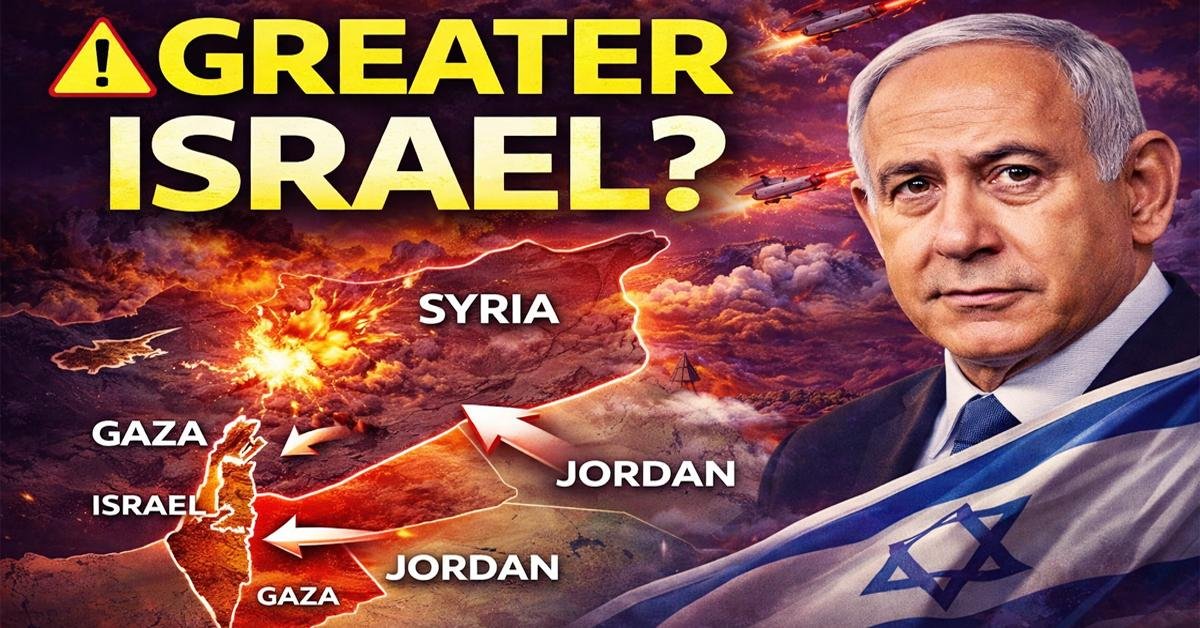
Does Netanyahu have his sights set on the entire Middle East?
Amidst escalating tensions with Iran, Israel has launched a ground offensive in Lebanon. In just 15 days, approximately 700 people have been killed, and 20% of the land in several regions has been cleared of its inhabitants; Israeli settlements are now being established there. Efforts are underway to turn the concept of ‘Greater Israel’ into reality—but what exactly is it?
‘Greater Israel’ is a concept envisioning a vast Jewish state stretching from the Nile River to the Euphrates River. References to this concept can be found in the biblical Book of Genesis, wherein God tells Abraham that this land will be bestowed upon his descendants. In addition to modern-day Israel and Palestine, this territory encompasses Jordan, Lebanon, Kuwait, Syria, and a significant portion of Iraq, as well as parts of Egypt, Turkey, and Saudi Arabia. Discussions regarding ‘Greater Israel’ intensified following the 1967 Arab-Israeli War, when Israel occupied the Gaza Strip and the West Bank. The idea of ’Greater Israel’ remains a widely discussed topic within Israeli society today. In an interview given to a television channel in August 2024, the Israeli Prime Minister stated, “I am on a historical and spiritual mission; I am deeply committed to the dream of Greater Israel.” God appeared to Abraham in a vision and promised to establish a great nation through his descendants. Abraham’s name was subsequently changed to ‘Israel,’ and it is from this point that his future generations came to be known as ‘Israelis.’ The Israelites endured a long period of slavery in Egypt before migrating to Canaan—the region corresponding to modern-day Israel and Palestine.

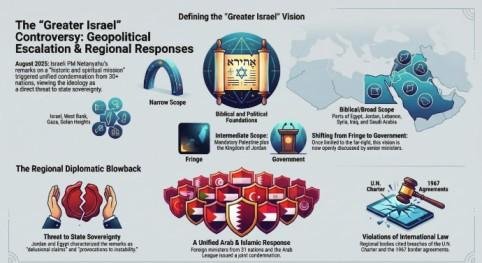
There, King Solomon commissioned the construction of the Jewish Temple in Jerusalem. Following his death, the kingdom fractured into two separate entities: the Kingdom of Israel and the Kingdom of Judah. Around 722 BCE, the Assyrian Empire launched an invasion of the Kingdom of Israel; the Temple was destroyed, and many… The Jews were forced to abandon their homeland after the state attacked Israel and Judea. The Temple was destroyed, and the Jews chose to kill one another rather than perish at the hands of the Romans. Subsequently, the majority of Jews migrated to Europe, where they were held responsible for the death of Jesus Christ. With the rise of nationalism in the 19th century, this animosity deepened even further. Witnessing the atrocities being committed against Jews worldwide, a decision was made to partition Palestine into two parts: 56% of the land was allocated to the Jewish state of Israel, while the remaining 44% was assigned to the Arab state of Palestine. Jerusalem was not granted to either nation; instead, it was declared an international zone. Israel was established on May 14, 1948; the very next day, several Arab nations launched an attack against it. During this conflict, approximately 750,000 Palestinians were displaced. On October 7, 2023, a new war erupted involving Israel. Now, on February 28, Israel—in conjunction with the United States—has launched an attack on Iran, a conflict that appears to be escalating as far as Lebanon. Many Arab nations oppose the concept of a “Greater Israel,” arguing that such a plan poses a threat to regional security in the Middle East and stands in violation of international law. As to whether a “Greater Israel” can be realized, experts suggest that, for now, it remains merely a theoretical concept. There are numerous significant obstacles standing in the way of its becoming a reality; its pursuit could exacerbate internal violence and instability, lead to increased civilian casualties, and result in a decline in international support, as nations such as the United States, European countries, and others may well oppose such a move.
Israel-US-Iran War: How is the conflict in the Middle East reaching as far as Asia? An Explainer
The events currently unfolding in Iran are having repercussions across the entire Middle East—and extending even further, to the rest of the world. Why, exactly, are so many nations being affected by the ongoing conflict between the US, Israel, and Iran? Let’s try to understand this with the help of maps. The events currently unfolding in Iran are having repercussions across the entire Middle East and the wider world. To understand how so many nations have been impacted—particularly in the context of potential attacks on Iran by the U.S. and Israel—we must examine a few maps. First, it is essential to recognize that Iran is a vast nation; with a population of nearly 90 million, its land area is large enough to accommodate three other countries combined: France, Germany, and Spain. Precisely because of its immense size, Iran serves as a vital link connecting various parts of Asia and the Middle East—acting as a key conduit for the world’s most critical waterways, as well as for agricultural trade and general supplies. Iran shares borders with seven other nations, and its relationships with these neighbors have frequently been strained. Relations with the United States, in particular, have remained highly tense ever since the Islamic Revolution began in 1979. This revolution completely transformed Iran; the religious leader Ayatollah Ruhollah Khomeini returned from exile and established an Islamic Republic within the country. This marked a pivotal turning point, after which Iran’s diplomatic ties deteriorated not only with its immediate neighbors but also with the United States and its close ally, Israel. The two sides subsequently became bitter adversaries. Iranian leaders have consistently denied Israel’s right to exist and have designated the United States as their primary enemy. Conversely, Israel and the U.S. have long opposed Iran’s nuclear program, asserting that Iran is actively attempting to develop a nuclear bomb. The Iranian government, however, repeatedly maintains that its nuclear program is entirely peaceful in nature and that it harbors no intentions of developing nuclear weapons. Now, let us revisit the map. The United States maintains a military presence across many of these Middle Eastern nations. Here, too, is Israel, situated approximately 1,000 kilometers away from its closest point to Iran. All of these regions fall well within the strike range of Iran’s missile capabilities—a diverse arsenal capable of covering distances ranging from a few hundred kilometers up to 3,000 kilometers. Furthermore, Iran possesses impressive drone technology, which it has effectively utilized in recent conflicts. However, Iran’s defense strategy is not limited solely to missiles and drones; ever since the Islamic Revolution, Iran has actively sought to propagate its ideology into other regions. Over time, it has extended its influence throughout this region… Iran expanded its influence by providing support to armed factions; collectively, these groups are referred to as the “Axis of Resistance.” Over time, this network of relationships grew to include Hamas in Gaza, Hezbollah in Lebanon, the Houthis in Yemen, as well as certain factions in Iraq and the Assad regime in Syria. Israel refrained from launching systematic, long-term strikes against Iran—simply because doing so would have triggered a massive retaliation from Hezbollah, potentially unleashing its arsenal of 100,000 rockets upon Israel. However, following the outbreak of the war in Gaza, Israel has significantly weakened several of these factions. Consequently, at the beginning of 2026, the regional dynamics appeared as follows—and then, this happened: The United States military initiated major combat operations against Iran to defend the American people by eliminating threats emanating from the Arabian region. Subsequently, the United States and Israel launched strikes against numerous Iranian targets and killed the Supreme Leader, Ayatollah Khamenei.

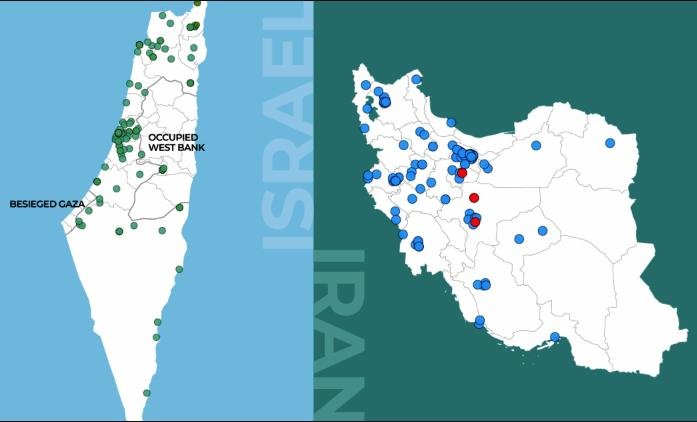
Iranian officials stated that a school was also targeted in a U.S. strike, resulting in the deaths of over 153 people, including many children. The U.S. military stated that it is investigating reports related to this incident. Iran has characterized these attacks by the U.S. and Israel as unprovoked, illegal, and unlawful. UN Secretary-General António Guterres has condemned the military actions and called for the restoration of international peace and security. In retaliation, Iran has launched attacks against Israel and those countries in the Middle East where a U.S. military presence exists. These attacks have not been limited solely to military bases; luxury hotels, shopping malls, airports, oil-related facilities, and residential buildings have also come under fire. These actions could destabilize the region’s nascent tourism industry and erode investor confidence, thereby exerting pressure on Gulf nations—which, in turn, may pressure the U.S. to rein in Iran. Iran has previously carried out limited retaliatory strikes against U.S. bases located in the Gulf states; however, an operation on this scale has never been witnessed before, and the conflict has now spread further across the Gulf region. For instance, the Israeli military and the Iran-backed Hezbollah are currently engaged in combat in Lebanon. Meanwhile, far removed from the immediate conflict zone—in the Indian Ocean—a U.S. submarine launched a torpedo attack on an Iranian warship, resulting in the deaths of at least 80 people.
Iran has also responded to these attacks in another way: by blocking the Strait of Hormuz. Often referred to as a “chokepoint,” this strait is a vital artery for global trade, utilized around the clock. Its narrowest section measures just 39 kilometers. Approximately 20% of the world’s oil and gas—as well as about 30% of the global urea supply—transits through this waterway. Iran is utilizing its military forces to disrupt traffic within this maritime corridor—a tactic it has employed in the past.
Arab Nations Tell US to Keep Attacking Until Iran’s ‘Destruction’. Why Don’t Saudi Arabia and the UAE Enter the War Themselves?
Eighteen days into the conflict between the U.S. and Iran, two major updates have emerged. First, Ali Shamkhani, Secretary of Iran’s Supreme National Security Council, appealed to Muslim nations for support, stating that most Muslim countries have failed to assist Iran in this conflict. He questioned whether this stance contradicts the teachings of Islam, asserting that the United States will never be a true ally to them. He argued that if all Muslim nations were to unite, security and progress across the entire region could be significantly strengthened. However, just a few hours later, Israel claimed to have killed Ali Shamkhani. The second update, citing news agency reports, indicates that Arab leaders have now urged the U.S. to completely neutralize Iran so that it can no longer pose a threat to them. What, ultimately, is the true nature of Middle Eastern politics, and why do Muslim nations remain hostile toward Iran? Let us explore the reasons.
The primary motivation appears to be the preservation of monarchies. Most Muslim nations in the Middle East—such as Saudi Arabia—continue to be governed by monarchical systems. Iran, too, was once a monarchy; however, following the Islamic Revolution of 1979, an Islamic regime led by Ayatollah Khomeini came to power. Dr. F. Gregory Gause, a professor of International Affairs at Texas A&M University, notes that in 1981, the powerful monarchies of the Middle East—specifically Saudi Arabia and Kuwait—established the Gulf Cooperation Council (GCC). To ensure their security, they subsequently deepened their ties with the United States.

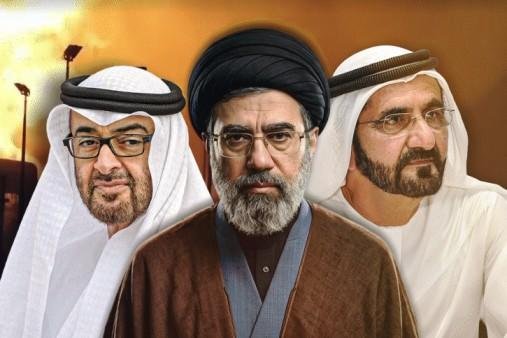
The second reason is the Shia-Sunni divide. Following the passing of the Prophet Muhammad, a schism emerged among Muslims regarding the succession of his leadership, resulting in the formation of two distinct sects: Shia and Sunni. Globally, approximately 85% of Muslims are Sunni, a community for which Saudi Arabia serves as the de facto leader; conversely, the Shia population constitutes about 10 to 15 percent of the global Muslim community, with Iran acting as its primary leader. This fundamental division frequently fuels tensions between the two camps.
The third reason is the struggle for a balance of power. In this contest for regional leadership, whenever one nation gains an advantage, the opposing nation attempts to restore the balance of power—often through proxy wars. For instance, Iran provides funding, weaponry, and training to the Houthis in Yemen, as well as to Hezbollah in Lebanon and Hamas in Palestine. Conversely, Saudi Arabia and the UAE actively work against these groups, providing financial and military support to the rebels opposing them. This rivalry has resulted in over 2,000 missile and drone attacks launched against neighboring Arab nations. While the United States is exerting pressure on Arab nations to join the conflict, the question remains: why are these very nations not directly engaging in the war against Iran themselves? In reality, no Gulf nation wishes to undertake military action unilaterally; they fear direct retaliatory strikes from Iran. Consequently, they are awaiting action from Saudi Arabia. Leaders of the Arab nations are apprehensive that the situation could escalate into a full-blown war. This scenario would undoubtedly heighten the risk of retaliatory attacks from Iran against its countries. For this reason, these nations are now adopting a balanced strategy; they do not wish to plunge into a conflict that they did not initiate and over which they have no control.
Is Netanyahu No Longer Listening Even to Trump? Differences Deepen for 3 Reasons: How the Objectives of the War Have Shifted for Both Sides
A major turning point occurred in the conflict with Iran: Israel launched an attack on the South Pars gas field in southern Iran—the world’s largest source of natural gas. Angered by this move, Trump stated that the attack had taken place without his prior knowledge. Netanyahu, it seems, occasionally takes actions that Trump deems inappropriate. Have the paths of the U.S. and Israel diverged regarding the conflict with Iran? What signs point to this, and what impact will it have on the war? Let us explore.
Signs of discord are emerging between Trump and Netanyahu regarding three key issues. First, Trump is displeased with the Israeli attack. Following the strike on the South Pars gas field, Trump expressed his displeasure, stating that Israel had launched a “deadly attack” on the gas field in a fit of anger. He further asserted that Israel would not launch any subsequent attacks on the South Pars field. This message was conveyed in writing—a method he typically employs to deliver such stern warnings. However, media reports suggested that a conversation had, in fact, taken place between Trump and Netanyahu before the attack. Second, the pressure stemming from the oil crisis falls squarely on the United States. Iran’s blockade of the Strait of Hormuz has caused crude oil prices to soar to approximately $110 per barrel. This places direct pressure on Trump, as it forces the U.S. to grapple with inflation.

Speaking at a press conference on March 19, Netanyahu stated that they would continue the campaign until Iran’s nuclear weapons and ballistic missile facilities are destroyed; furthermore, the aim is to create conditions conducive to freedom for the Iranian people. He also attempted to convey a message of unity, declaring, “Trump is the leader, and I am his ally.” Israel had previously acted unilaterally against the gas fields. Now, let us consider the potential impact of these disagreements on the war itself. Statements from both leaders make it clear that, for now, they lack a shared roadmap to end the conflict. However, Netanyahu maintains that victory is impossible without a ground offensive. The U.S. has urged Israel not to strike Iran’s oil installations. There is no fixed timeline for ending the war; the decision of when hostilities cease will ultimately rest with Trump. It may take a considerable amount of time for Israel to achieve its objectives; however, should an oil crisis emerge, Trump could potentially announce a halt to the war midway through the campaign. If this were to happen, Netanyahu’s ambition to effect regime change
Will Netanyahu launch a nuclear attack on Iran? Iran Launches Massive Attack on Dimona: What Does This Mean for the World?
Prime Minister Netanyahu stated, “Tonight is an extremely difficult evening for us.” Indeed, on the night of March 21st, Israel faced its largest-ever attack—one it had not anticipated. For the first time, long-range missiles were fired at Israel’s southern city of Dimona and the surrounding areas, resulting in injuries to at least 300 people. Iran has claimed that 100 people were killed in this incident. The targeted location lies in proximity to Israel’s Dimona nuclear facility. Following this attack, speculation is mounting that Israel may now launch a nuclear strike against Iran. The question arises: Does Israel truly have no alternative left other than a nuclear attack? Would such an action achieve Israel’s objectives—and how would it then deal with Iran?
Israel’s official nuclear policy is one of “nuclear ambiguity”—meaning Israel is a nation that neither confirms nor denies the possession of nuclear weapons. Rather than launching a nuclear strike, it primarily seeks to deter its adversaries through the threat of such an attack. However, Israel’s nuclear doctrine does include the “Samson Option.” Under this doctrine, if Israel’s very existence were to be threatened, it could—as a last resort—launch a nuclear strike even against a non-nuclear state, regardless of the consequences. Experts believe that Israel faces no immediate threat of a nuclear attack from Iran; therefore, instead of launching a massive nuclear strike against Iran, it might opt to deploy tactical nuclear weapons. Tactical nuclear bombs are smaller and possess lower yields—such as the U.S. B61 gravity bomb, a nuclear device weighing just 320 kilograms. In contrast, large-scale nuclear bombs weigh several thousand kilograms—much like the bomb dropped on Hiroshima, Japan, during World War II, which possessed an explosive yield of 15,000 tons and killed approximately 80,000 people. While large nuclear bombs are designed to target vast areas and inflict widespread destruction, tactical bombs are used to obliterate a specific, limited area within the context of warfare. Israel gains a tactical advantage in that it can deploy these bombs from all three domains—land, air, and sea. Would such a strike on Iran—executed by Israel and the U.S. in tandem—fulfill their respective objectives? The United States seeks to dismantle Iran’s nascent nuclear and ballistic missile development capabilities, whereas Prime Minister Netanyahu’s goal is regime change in Iran. Vivek Mishra, Deputy Director of the Strategic Studies Program at the Observer Research Foundation, notes that Israel is unwilling to abandon the conflict midway without having achieved its objectives. Although Israel’s air defense system is robust—making an immediate nuclear strike on Iran unlikely—if Iran’s aerial strike capabilities were to be neutralized, Israel and the U.S. could potentially attempt to seize Tehran by deploying ground forces. However, Rajan Kumar, an expert on foreign affairs, suggests that if the situation were to spiral beyond Israel’s control, it might resort to a tactical nuclear strike; yet, such a move would not result in the complete subjugation of Iran. The likelihood of a large-scale nuclear assault remains low, as both Russia and China would oppose such an action; nevertheless, in the event of a nuclear strike, Iran could be compelled to seek a negotiated settlement.
Why Is Iran Refusing to Surrender? Who Has Suffered How Much Loss in the 23-Day War? How Trump Is Seeking an Exit Strategy from the War
It has been 23 days since the outbreak of the Iran-Israel conflict, yet the fighting continues unabated. Initially, a massive Israeli offensive resulted in the deaths of several top Iranian leaders, leading to the assumption that Iran would be crippled. However, the situation has since shifted; Iran is now responding to Israel with a relentless barrage of missiles and drones. Far from ending, this war is becoming increasingly protracted and perilous. Who has suffered the greatest losses during these first 23 days? Who, ultimately, is gaining the upper hand? And what developments lie ahead?
First, let us assess the toll the war has taken on Iran. Over these 23 days, Iran has endured massive devastation, recording 1,444 fatalities—including 204 children. Supreme Leader Ayatollah Khan has been killed, and the economy has suffered a severe blow. On the other side, the conflict has so far resulted in 18 deaths and over 4,000 injuries in Israel. Additionally, the United States has incurred costs amounting to approximately 3 trillion rupees; 13 American soldiers have been killed, and 200 have been wounded. Iran has also launched attacks against targets in Oman, Qatar, and Saudi Arabia, claiming the lives of over 100 people. Furthermore, 16 aircraft systems were destroyed, and one F-35 fighter jet sustained damage. In this tactical war, the U.S. achieved several security objectives: it easily targeted and eliminated Iran’s top leadership, and it destroyed Iran’s missile launchers—moves aimed at dismantling the Islamic regime. However, despite the deaths of its top leaders, a new leadership has emerged, and the regime has become even more aggressive than before. Another objective was to dismantle Iran’s nuclear program; yet, despite the attacks, Iran still retains a stockpile of enriched uranium.

A further goal was to neutralize Iran’s missile capabilities; however, Iran continues to launch missile strikes against targets as far as 2,500 kilometers away in Georgia. In short, even after three weeks, none of these strategic objectives has been successfully achieved. Moreover, Iran has blockaded the Strait of Hormuz—a critical maritime choke point of immense global importance. Approximately 20% of the world’s oil and gas supply passes through this strait. Consequently, oil prices have surged from $72 to $108 per barrel, leading to a rise in petrol and diesel prices across 95 nations, while shortages are becoming increasingly apparent across Asia and Europe. Prices in the U.S. have also surged by 30%. An ultimatum was issued on March 22, giving a 48-hour deadline for the situation to be resolved. Iran’s strategy is simple: survive and increase the cost of war for the adversary. John Hoffman, a research fellow in foreign policy at a U.S. think tank, believes that while the U.S. may have initiated the conflict, it has ended up badly ensnared—not on the battlefield itself, but within the complex interplay of narratives and strategies. Iran is prepared for a protracted struggle and intends to wear the U.S. down. According to The New York Times, only 41% of Americans currently support an attack on Iran; this marks the first time in U.S. history that public support for a potential war has been so low. Furthermore, the U.S. faces upcoming elections in November.
How Trump Plans to Seize Kharg Island: 3,500 Commandos Have Arrived in the Middle East, More Are En Route. What Is the Full Plan for a U.S. Ground Assault?
While the U.S. is simultaneously attempting to engage in dialogue with Iran, it is also preparing for a final strike. 3,500 additional U.S. troops have already arrived in the Middle East, with more expected to follow. The Iranian newspaper *Tehran Times* has issued a stern warning: if American troops set foot in Iran, they will return home in coffins—”Welcome to Hell.” What, exactly, is the U.S. plan for this “final strike,” and how will Iran counter it? Although U.S. troops are already present in the Middle East, a deployment of over 10,000 additional soldiers is currently underway. Of these, 3,500 combat troops have already reached the region; another 2,500 are arriving aboard warships, while 3,000 more troops remain on standby, ready to be air-dropped at any moment. Although President Trump has not yet authorized a ground invasion of Iran, a force of this magnitude is sufficient to seize a specific, limited objective. In this context, the U.S. could potentially launch attacks on three specific ground targets within Iran. The primary objective would be to seize materials used for the production of nuclear weapons. According to the International Atomic Energy Agency (IAEA), Iran currently possesses 440 kilograms of uranium enriched to 60%—whereas 90% enrichment is required to produce a nuclear weapon.

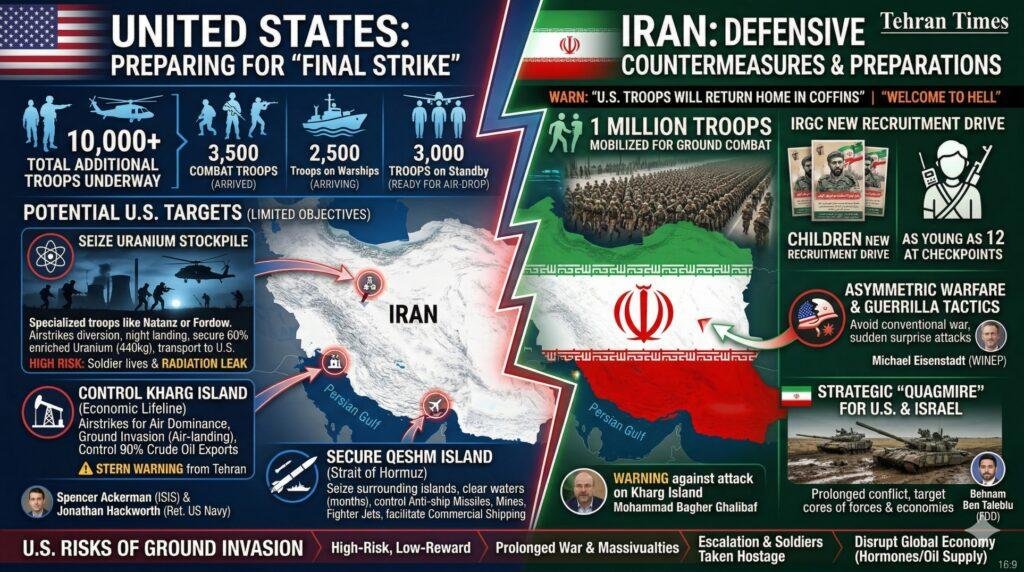
The U.S. previously bombed Iran’s nuclear facilities in June 2025; now, a military ground operation could be executed to seize the existing uranium stockpile. Spencer Ackerman, a senior researcher at the Institute for Science and International Security, along with retired U.S. Navy officer Jonathan Hackworth, has outlined the full operational plan: first, a series of airstrikes would be launched to divert and engage the Iranian military; subsequently, under the cover of darkness, ground troops would be landed to seize control of the nuclear site. Following this, specialized units would move in to neutralize the nuclear materials; any nuclear elements deemed safe for transport would then be shipped back to the United States. According to experts, this operation would be fraught with extreme danger, posing significant risks not only to the lives of the soldiers involved but also to the potential for a catastrophic radiation leak. The second potential target involves seizing control of Kharg Island—Iran’s economic lifeline. Kharg is an island situated approximately 26 kilometers off the southern coast of Iran; it is the hub from which nearly 90% of Iran’s crude oil is exported. To seize control of this island, the U.S. military would first launch airstrikes to establish air dominance, followed by an attempt at a ground invasion. This operation could potentially involve the aerial deployment (air-landing) of troops. The third objective is to secure control over Qeshm Island, located at the mouth of the Strait of Hormuz. Qeshm is the largest island in the Persian Gulf, and Iran has constructed an extensive network of underground tunnels there to house anti-ship missiles, naval mines, and fighter jets. To capture this strategic location, the U.S. military would first need to seize control of the smaller islands surrounding the Strait of Hormuz and clear the surrounding waters—a process that could take several months. Subsequently, the U.S. military would facilitate the safe passage of commercial shipping vessels while simultaneously maintaining attacks on Iran’s coastal areas to ensure continued control over the Strait of Hormuz. On the other hand, Iran has also completed its preparations to counter a potential U.S. attack. Citing military sources, Iran’s state-run news agency, Tasnim, reported that the country has mobilized one million troops for ground combat operations. The IRGC (Islamic Revolutionary Guard Corps) has also recently undertaken a new recruitment drive. Furthermore, at various checkpoints, children as young as 12 years old have been deployed to serve as guards. Michael Eisenstadt, a Middle East military expert at the U.S. think tank—the Washington Institute for Near East Policy—suggests that to counter the United States, Iran is likely to employ asymmetric warfare and guerrilla tactics; consequently, U.S. troops must remain prepared for sudden, surprise attacks. Mohammad Bagher Ghalibaf, the Speaker of the Iranian Parliament, has also issued a stern warning to the United States against launching an attack on Kharg Island. Behnam Ben Taleblu, a senior research analyst for the Iran Program at the U.S. think tank—the Foundation for Defense of Democracies—argues that by combining its various military assets and personnel, Iran is constructing a strategic “quagmire” designed to ensnare both the United States and Israel, forcing them into a protracted conflict that targets the very core of their military forces and economies. As for the United States, a ground invasion of Iran would constitute a high-risk, low-reward undertaking. Such a ground operation could drag the U.S. into a prolonged war, resulting in massive casualties and material losses. Moreover, a ground assault could further escalate the conflict, and there is a distinct possibility that Iran could capture U.S. soldiers and hold them hostage. The war could completely halt the flow of hormones, thereby disrupting the oil supply chain and impacting the global economy.
Trump will not reopen the Strait of Hormuz, nor will he seize the uranium used for nuclear bombs. What Lies Ahead in the Iran Conflict? 4 Major Indicators Emerge
US President Donald Trump began addressing the nation with a 19-minute speech that centered largely on the conflict with Iran. He stated, “We are going to hit them extremely hard over the next two to three weeks.” This address yielded key insights and analyses that shed light on what is likely to unfold in the near future.
US President Donald Trump addressed the nation in a 19-minute speech revolving around the Iran conflict, providing indications of what lies ahead in Iran. The first sign suggests that the conflict with Iran will not end anytime soon. Trump stated, “I am pleased that our strategic objectives have now been met,” implying that the mission in Iran is nearing completion—though he noted this process could take another two to three weeks. However, in his speech, Trump provided neither a specific date for ending the conflict nor a clear, definitive target. Consequently, it is widely believed that the conflict will not come to an immediate halt. Following Trump’s speech, fears of a prolonged conflict triggered sharp declines in the stock markets of several nations, including India, Japan, and China. Furthermore, crude oil prices surged, reaching $160 per barrel. The second sign indicates that the US will not intervene to reopen the Strait of Hormuz. Trump asserted that the US has no need for the oil passing through the Strait of Hormuz. He advised nations currently facing oil shortages due to the situation in Hormuz to either purchase oil from the US or take matters into their own hands and secure the Strait themselves; he made it clear that the US would not provide assistance and that these nations would have to fight their own battles. In other words, it is now evident that the US will not launch any military operations specifically to reopen the Strait of Hormuz—a task that nations like Britain have already begun to address at their own level. The third sign suggests that there will be no ground operations to seize enriched uranium. Trump stated, “We have attacked and destroyed Iran’s nuclear sites,” adding that US satellites are maintaining strict surveillance. He warned that if Iran attempts to extract uranium again, the US will launch further attacks. Trump indirectly signaled that the US would not deploy ground troops to seize enriched uranium. The fourth sign indicates that all Gulf nations will continue to fight alongside the US, a point Trump emphasized in his speech. He stated that they have come very close to a resolution. “I would like to thank Israel, Saudi Arabia, and Qatar; under no circumstances will we allow them to suffer harm or fail.” America’s security guarantees hold little significance; apart from the long-standing rivalry for regional hegemony between Saudi Arabia and Iran, no Gulf nation has any objective for engaging in war. Consequently, Trump desires these nations to place their trust in the United States and continue their resistance against Iran—yet none of them have agreed to do so. Through his speech, Trump was primarily addressing his own domestic audience and navigating the landscape of domestic politics; he was also under considerable pressure due to rising oil prices and inflation. Moving forward, the moment Trump finds a dignified opportunity, he will declare victory in the conflict and withdraw.
Is Trump an Eccentric or a Psychopath? Became a ‘Killer’ at His Father’s Behest; Insisted on Throwing a Friend Off the Roof. Now, he has called Iran a “bastard.”


First claiming victory in the war against Iran, only to declare the very next day that the conflict would drag on for another three or four weeks; mocking the President; or making statements about ending Modi’s political career—why exactly does Trump behave this way? In this series of episodes covering his life from childhood to the present day, we will delve into his complete psychological makeup. He was taught that there are only two types of people in the world: those who do what is necessary and those who are always right. At the age of 13, he was sent to a military school. Even there, he continued to bully others. Mark Fisher, who wrote Trump’s biography, recounts that on one occasion—following a minor altercation—Trump was on the verge of pushing a fellow student off the second-floor balcony of the dormitory. His family’s real estate business was originally named after his grandmother: “Elizabeth Trump & Son.” Upon taking charge of the business in 1973, Trump removed his grandmother’s name and rebranded it as “The Trump Organization.” He subsequently launched several new ventures under his own name, such as “Trump University.” He is quick to find fault with others but never admits to his own mistakes. To gain fame and celebrity status, Trump acquired three beauty pageants in 1996: Miss Universe, Miss USA, and Miss Teen USA. During this period, Trump met with over 4,000 models. He would frequently barge into the models’ dressing rooms, regardless of their state of undress. An American model recalls that on one occasion, Trump burst in so suddenly that no one had a chance to get dressed; some of the girls were wearing absolutely nothing. He later landed a reality TV show, The Apprentice, which he hosted for 14 years—making him a household name. Even after losing the U.S. presidential election in November 2020, Trump clung to power. He incited the crowds at his rallies, framing the situation as a battle to “save the country,” which ultimately sparked riots at the U.S. Capitol. In his second term, Trump appears even more volatile than before. His conduct toward world leaders also leaves much to be desired; he once remarked that French President Emmanuel Macron was still “recovering from a slap from his wife,” labeled Saudi Crown Prince Mohammed bin Salman a “flatterer,” and is now constantly flip-flopping on his statements regarding the conflict with Iran—going so far as to dub the “State of the Union” address the “State of Trump.” Given this context, the question arises: what exactly is Trump’s psychology? Richard Nixon, the 37th President of the United States, proposed a theory—his “Madman Theory”—before the 1968 election. According to this theory, if a leader behaves in a manner suggesting they are capable of doing anything, the rest of the world will eventually surrender to them. Trump, too, subscribes to this very theory. Numerous psychologists have analyzed Trump’s actions and behavior. His niece—a clinical psychologist—believes that he seeks validation and desires universal praise; while he craves this admiration, he makes no active effort to charm anyone.
Will the ceasefire collapse within just 48 hours? Netanyahu is no longer listening even to Trump. Why is Israel Wreaking Havoc in Lebanon?
A ceasefire was announced at 4:00 AM on the morning of April 8th. However, less than 24 hours later, Israel launched over 150 missile strikes on Lebanon, resulting in 254 fatalities. Iran has accused the United States of violating the terms of the ceasefire. Consequently, a crisis now looms over the meeting scheduled to take place in Islamabad on April 10th. Will the agreement collapse within just 48 hours? Why do the parties wish to continue the war? And if the ceasefire fails, what will be the impact on Pakistan? We explore these questions here.
The three specific ceasefire conditions that Iran accuses the U.S. of violating include: continuing attacks on Lebanon despite the ceasefire; sending an intrusive drone into an Iranian province; and reneging on the recognition of Iran’s right to enrich uranium for nuclear purposes. Israel, for its part, maintains that the ceasefire does not apply to Lebanon. On April 9th, in an interview, President Trump also characterized Israel’s attacks on Lebanon as merely an “isolated skirmish.” Conversely, the U.S. Vice President stated that the administration had presented three distinct proposals; therefore, it remains unclear upon which specific basis the negotiations will proceed. There are also reports that the Strait of Hormuz has been closed once again. Given this situation, is the ceasefire destined to fail? According to Brandon Beck, a former intelligence officer at the U.S. Department of Defense, the ceasefire between Iran and the U.S. is likely to hold; however, this does not currently appear to be the case across the broader Middle East. For the moment, restraining Israel poses a significant challenge for the United States. Yet, the question remains: why does the war persist? Prime Minister Netanyahu was directly involved in the ceasefire process. However, Israel’s opposition leader, Yair Lapid, remarked: “This is the first time in our history that decisions regarding critical issues—such as our national security—have been made without Israel even being present at the negotiating table.” Israel fears that any agreement reached with the U.S. might grant Iran certain concessions regarding its nuclear program. Consequently, Netanyahu seeks to use the attacks on Lebanon to scuttle the ceasefire, thereby triggering a resumption of U.S. military strikes against Iran. Netanyahu has three primary reasons for wishing to prolong this conflict. First, the objectives that initially prompted Israel to launch attacks against Iran have not yet been fully achieved. Netanyahu sought to bring about regime change in Iran and aimed to dismantle its nuclear and missile programs—an objective that remains unfulfilled, as one-third of Iran’s missile stockpile remains intact. Consequently, Netanyahu believes that by continuing these efforts, these targets can still be achieved. Secondly, Israel seeks to consolidate its regional influence by establishing buffer zones in Southern Lebanon and Syria. Thirdly, Netanyahu faces corruption charges within Israel that could carry a prison sentence of up to ten years; he has managed to evade trial thus far by citing the ongoing conflict, but once the war ends—and this justification ceases to exist—he could face imprisonment. Although Trump initiated the previous conflict under pressure from Netanyahu, experts believe it is highly unlikely that he would involve himself in such a conflict again. Furthermore, a breakdown of the ceasefire could constitute a diplomatic setback for Pakistan; having claimed credit for halting the hostilities, its credibility would be further undermined should the fighting resume. The conflict has already exacerbated conditions such as rising oil prices and inflation within Pakistan; consequently, if the war does not cease, the country’s economic situation could deteriorate even further. Moreover, should Saudi Arabia eventually enter the fray, Pakistan—bound by defense pacts—would be compelled to join the conflict as well. Finally, the ongoing hostilities could also trigger a refugee crisis within Pakistan.