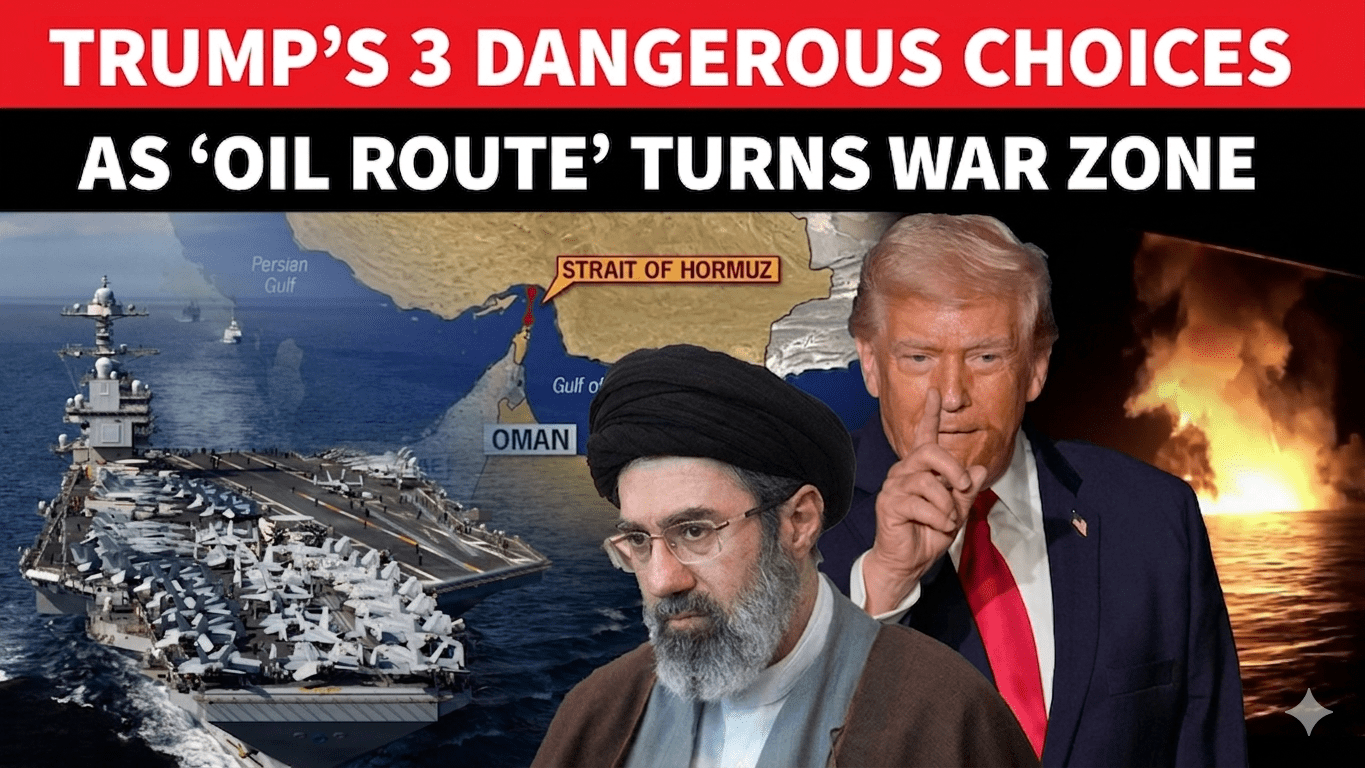
As the 21-hour-long negotiations between Iran and the U.S.—held in Pakistan—were drawing to a close, U.S. Vice President Mike Pence remarked upon his departure that this constitutes “very bad news for Iran.” Conversely, Iran maintains that the U.S. conditions were excessively stringent, which is why an agreement could not be reached. Ultimately, what exactly were the conditions set by both nations? Where did the real impasse occur? And will hostilities now resume? We explore these questions here.
On March 25, the U.S. had conveyed a proposed agreement plan to Iran—via Pakistan—which is currently displayed on your screen. In this document, the U.S. presented Iran with demands such as dismantling its nuclear program, curbing its missile capabilities, and severing its proxy networks.
The U.S.’s 11 Demands of Iran: 3 Benefits in Return
- Nuclear capabilities must be completely dismantled.
- A pledge must be made not to develop nuclear weapons.
- No uranium enrichment activities shall take place on Iranian soil.
- 450 kilograms of uranium enriched to 60% purity must be handed over to the IAEA.
- The nuclear facilities at Natanz, Isfahan, and Fordow must be dismantled.
- The IAEA must be granted full access and inspection rights within Iran.
- Proxy networks (such as Hezbollah, the Houthis, etc.) must be abandoned.
- Funding and arms supplies to proxy groups must cease.
- The Strait of Hormuz must be maintained as an open and free maritime corridor.
- The missile program must be curtailed.
- The use of missiles shall be strictly limited to self-defense purposes.
3 Benefits for Iran
- All international sanctions shall be completely lifted.
- U.S. assistance shall be provided for Iran’s civilian nuclear program (including the Bushehr plant).
- The “snapback” mechanism—the provision allowing for the automatic re-imposition of sanctions—shall be abolished.
Characterizing these demands as unrealistic and unjust, Iran put forward its own set of 10 counter-demands. Iran’s 10-Point Plan for the U.S.:
- A complete cessation of all forms of attacks or acts of aggression against Iran, Lebanon, and other nations.
- The withdrawal of U.S. military forces from bases located across the Middle East.
- Recognition of Iran’s sovereign right to enrich uranium.
- The lifting of all trade and economic sanctions currently imposed on Iran. 5. Lifting sanctions on companies trading with Iran.
- Revoking all United Nations Security Council resolutions against Iran.
- Revoking all resolutions by the nuclear agency (IAEA) regarding Iran’s nuclear program.
- A guarantee from the United States against any future attacks.
- Recognition of the control exercised by Iranian forces over the Strait of Hormuz.
- Payment of compensation to Iran for damages incurred during the war.
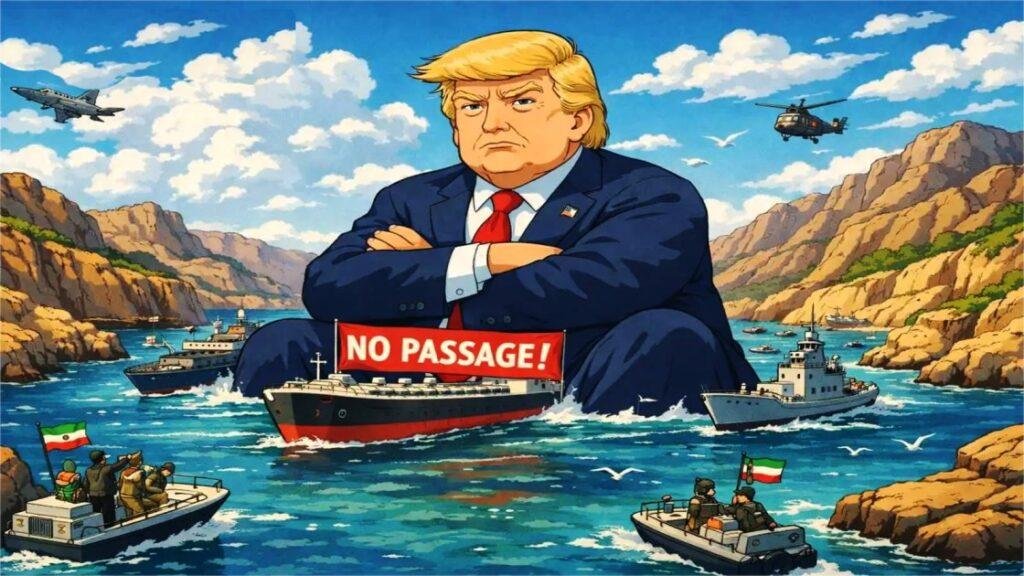
The proposed terms included provisions to prevent all forms of attacks, facilitate the withdrawal of US forces from the Middle East, acknowledge Iran’s right to uranium enrichment, lift sanctions, and provide guarantees that the US would never launch an attack against Iran again. On the morning of April 8, Trump stated that proposals coming from Iran had absolutely nothing to do with the actual scope of the agreement. According to reports, both nations were making maximalist demands in an attempt to demonstrate that they had emerged victorious from the conflict. Commenting on the failure to reach an agreement, Iran’s former Vice President, Ataollah Mohajerani, remarked that while the US itself had proposed negotiations, it sought to achieve at the negotiating table precisely what it had failed to accomplish on the battlefield. This raises the question: what specific points of contention ultimately prevented a US-Iran agreement? Some reports suggest that the US had shown willingness to compromise on issues such as lifting sanctions against Iran and unfreezing its assets; however, the negotiations stalled on three key issues. First was the halting of Iran’s nuclear program; the US demands that Iran completely abandon any efforts to develop nuclear weapons—a component Trump described as constituting 99% of the deal—whereas Iran refuses to relinquish its right to uranium enrichment. Second was control over the Strait of Hormuz; Iran seeks complete control over the Strait and the collection of tolls, while the US—under Trump—sought a share of the tolls levied on vessels passing through the Strait. Third was a ceasefire in Lebanon; Israel and the US sought to exclude Lebanon from any ceasefire arrangement, whereas Iran insisted that Lebanon be included as part of the ceasefire. Given this impasse, the question arises: Is there any remaining hope for an agreement regarding the Strait of Hormuz and the nuclear program? Middle East analyst Aaron David Miller observes that Iran possesses more options than the US; it holds enriched uranium and continues to maintain control over the Strait of Hormuz, and therefore, it is in no rush to agree. Experts, however, believe that the US is taking the prospect of a deal with Iran seriously, suggesting that negotiations between the two nations may well continue in the future. According to an analysis by the Institute for Peace and Diplomacy, the enrichment of uranium is a matter of national dignity for Iran, and its missile program is deemed essential for its national defense; consequently, reaching a consensus with the US on these specific issues remains extremely difficult. Finally, the question arises: was Israel the underlying reason for the failure to reach a US-Iran agreement? Israel fears that any such agreement might inadvertently empower Iran… To ensure that no agreement is reached regarding the nuclear program, Israel launched attacks on Lebanon even while negotiations concerning the JCPOA were underway. According to experts, Israel hopes that the JCPOA will collapse, thereby paving the way for renewed U.S. military strikes against Iran. A second contributing factor is that Israel was entirely excluded from this entire deal; an Israeli opposition leader described this exclusion as an act of political pressure. All of these developments are also impacting Netanyahu’s public image within Israel. So, will there now be a renewed attack on Iran? Sharing an article on social media, Trump wrote that if Iran fails to comply with his terms, it could face a naval blockade and military strikes. On the other hand, Iran has stated that it stands ready to defend its interests.
Are the lives of Iranian leaders in Pakistan at risk? Who will attend the meeting? And why, ultimately, does Israel not want an agreement?
A palpable sense of suspense currently hangs in the air over Islamabad, the capital of Pakistan. The city’s entry points have been sealed off, and approximately 10,000 security personnel have been deployed. A three-kilometer radius surrounding the iconic ‘C’ Hotel has been designated a “Red Zone.” It is here that talks between the United States and Iran are scheduled to take place on April 11. The Pakistani leadership is visibly anxious regarding this event. Who exactly will be participating in these talks on behalf of Iran and the U.S.? Why has Israel been excluded from the process? And does a genuine threat to the leaders’ security actually exist? We explore these questions here.
Representing the United States in these negotiations will be Vice President Jared Evans. He has been a staunch advocate for dialogue with Iran from the very outset, and Iran, too, regards him as the most trustworthy figure within the American delegation. Evans serves as the U.S. Special Envoy to the Middle East and is a close confidant of Trump. He was also actively involved in the negotiations for the nuclear deal between Iran and the U.S. on February 26, 2026. A renowned businessman, he served as a Senior Advisor to Trump from 2017 to 2021. Alongside Evans, Jared was also a key participant in the nuclear deal negotiations; he is the husband of Trump’s eldest daughter, Ivanka. Turning to the Iranian delegation, Foreign Minister Abbas Raji will play the pivotal role. He is widely regarded as a master negotiator when it comes to navigating complex agreements. It was Abbas who, on behalf of Iran, accepted Pakistan’s mediation efforts and ensured that the dialogue continued. The other key figure will be Mohammad Bagher Ghalibaf. He currently serves as the Speaker of the Iranian Parliament and is a prominent member of the National Security Council. Ghalibaf is considered a trusted ally of the Supreme Leader, Ayatollah Ali Khamenei. Let’s delve deeper into the details.
There are three major reasons why Israel was ultimately excluded from this meeting. First, the U.S. does not agree with Israel’s decisions. According to The Wall Street Journal, Israel received belated information regarding the ceasefire; furthermore, it was not consulted. Trump had merely telephoned Netanyahu shortly before the ceasefire went into effect. The second reason was to avoid getting entangled in the conflict. Israel had intensified its attacks to eliminate Hezbollah. However, at Trump’s behest, Israel subsequently agreed to engage in talks with Lebanon. Masood Khalid, Pakistan’s former ambassador, suggests that Israel seeks to create a situation—by attacking Iran—that would cause Iran to harden its stance, thereby making any future agreement impossible. Third, Israel does not trust Pakistan; relations between Pakistan and Israel are extremely strained, and Israel does not view Pakistan as a reliable party. On April 10, Pakistan’s Defense Minister, Khawaja Asif, wrote: “Israel is the epitome of evil and a curse upon humanity. Peace talks are underway in Islamabad while a massacre is unfolding in Lebanon. My prayer is that those who established Israel as a nation may burn in hell.” Khawaja Asif subsequently deleted the post. Now, the question arises: why is Pakistan so apprehensive regarding the security of the leaders participating in this meeting? According to The Wall Street Journal, Abbas Araqchi and Ghalib arrived in Islamabad as early as April 9—a claim, however, that Iranian state media has denied. Meanwhile, the American delegation is scheduled to arrive in Islamabad today. According to a report by Defense Security Asia, Pakistan established a secure air corridor spanning the entire flight path to transport the Iranian leaders. To this end, assets such as JF-17 and F-16 fighter jets, air defense systems, and electronic warfare systems were deployed. Pakistan harbored apprehensions that Israel—or a regional proxy network—might launch an attack against the Iranian delegation. Indeed, until just a year ago, Pakistan was diplomatically sidelined; if these negotiations were to fail now, it would constitute a major defeat. It would convey the message that Pakistan makes grand claims but is incapable of achieving tangible results, thereby undermining Pakistan’s credibility on the global stage. Furthermore, Pakistan’s economic interests are also inextricably linked to the ceasefire; with the Strait of Hormuz effectively closed, oil prices in Pakistan have already skyrocketed—a situation that demands immediate resolution. If the talks fail, the condition of its economy will deteriorate even further.
If Iran allows oil tankers to pass, the US will intercept them, so how, exactly, would a dual blockade of the Strait of Hormuz be executed? What Will India Do?
Two blockades have now been imposed on the Strait of Hormuz: one by Iran and the other by the United States. Even if an oil tanker manages to navigate through the Strait—either by evading Iranian naval mines or by paying a toll—the U.S. Navy will still block its path. This dual blockade will have its most significant impact on nations such as India, China, Russia, and Pakistan.
How, exactly, will this dual blockade of the Strait of Hormuz be implemented, and what steps will countries like India take to cope with it? Following the failure of U.S.-Iran peace talks in Islamabad, President Trump announced that the U.S. Navy would now blockade ships passing through the Strait of Hormuz. But how will this be executed? Experts outline several methods. The most direct approach involves the U.S. positioning its aircraft carriers—such as the USS Abraham Lincoln and the USS Gerald Ford—at the entry and exit points of the Strait of Hormuz. These carriers would be accompanied by the deployment of 12 destroyers and frigates. Nations engaged in conflict possess the “right of visit and search”; consequently, any private vessel passing through the Strait of Hormuz could be stopped and inspected. A second method relies on technology: the U.S. could utilize P-29 aircraft and fighter jets to monitor the movements of every vessel, while simultaneously jamming their communication and GPS channels. This would cause ships to lose their bearings or render them unable to proceed further. Foreign policy experts also suggest a third strategy: the U.S. could impose trade sanctions on vessels traveling to or from Iranian ports, or freeze the assets of the companies operating them. On April 13, the U.S. Navy stated that the blockade would specifically target vessels traveling to or from Iranian ports; ships traveling to or from other Gulf nations would not be intercepted. According to Bloomberg, two oil tankers carrying a total of 4 million barrels of crude oil have recently arrived in India from Iran. Under the current circumstances, if India attempts to purchase additional oil from Iran, the U.S. could intervene to prevent it. However, India sources the majority of its oil in the Middle East from Saudi Arabia, the UAE, and Iraq—all of which are U.S. allies. Furthermore, vessels traveling from nations such as Qatar, Kuwait, Saudi Arabia, the UAE, and Iraq are currently paying tolls to Iran in order to traverse the Strait; the U.S. may now take punitive action against these vessels as well. This raises the question… The question remains: what will India do to tackle this situation? The Indian Navy launched ‘Operation Urja Suraksha’ (Energy Security) on March 25, under which more than five warships—including destroyers and frigates—have been deployed. These vessels are escorting ships departing from the Strait of Hormuz through the Gulf of Oman. With this assistance, eight commercial vessels have successfully reached India so far. It is highly unlikely that the United States would block India’s oil tankers; nevertheless, should such a scenario arise, India would resort to diplomatic channels. Now, let us examine how much oil prices would rise if the Strait of Hormuz were blocked. As soon as news of a potential US blockade emerged, crude oil prices in the international market surged to $103 per barrel. According to a Bloomberg report, if the Strait of Hormuz remains closed for a few more months, crude oil prices could skyrocket to $170 per barrel. This would drive the inflation rate up to 5.4%. Fatih Birol, Executive Director of the International Energy Agency, states that the situation is poised to deteriorate further in the coming months; if a dual squeeze is applied to the Strait of Hormuz, it would trigger an oil market crisis of unprecedented magnitude.
Iran aur us mein naakaabandee kee jang, Strait of Hormuz mein ab kya ho sakata hai? amerikee nausena hormuz stret mein aane-jaane kee koshish karane vaale har jahaaz kee naakaabandee shuroo karegee. unhonne yah bhee kaha tha ki isamen doosare desh bhee shaamil honge. isase pahale eeraan ne amerika aur isarail ke saath jaaree jang mein hormuz stret ka istemaal kuchh jahaazon ko guzarane se rokane ke lie kiya tha. isase duniya ke baazaar mein tel kee keematen badh gaeen. eeraan isase guzarane vaale jahaazon se paise bhee vasool raha hai. savaal ye hai ki is aham raaste ke naakebandee ke baad ab aage kya hoga? Sanyukt Raashtr ke antarraashtreey samudree sangathan ne kaha hai ki hormuj jaladamaroomadhy ko avaruddh karana avaidh hai. This has been said for both Iran and America. Kaanoonee taur par kahen to antararaashtreey kaanoon ke mutaabik koee bhee desh apana raasta apana sakata hai ya antaraashay avaazaahee ke lie upayog kee jaane vaalee antarraashtreey sadakon mein archin lagaane ke lie adikaar nahin hai is beech pradhaanamantree narendr modee aur amerikee raashtrapati donaald tramp ke beech phon par baatacheet huee hai. Raashtreey sadakon par namaaz padhane ka koi adhikaar nahin hai. Is beech pradhaanamantree Narendra Modi aur amerikee raashtrapati Donald Trump se phone par baatacheet hui hai, peee Modi ne ek par post kar is baatacheet ki pushti ki hai. Maine likha ki mujhe mere mitr, raashtrapati Donald Trump ka phone aaya. hamane kaee kshetron mein apane dvipaksheey sahayog mein huee pragati kee sameeksha kee. vaheen amerika aur eeraan ke beech agale daur kee baatacheet kee ummeed abhee bhee banee huee hai. tramp ne nyooyork post ko bataaya hai ki do din mein baatacheet dobaara shuroo ho sakatee hai. yah sepaah nevee steshan hai. aapako turant apana maarg badalana chaahie aur turant hind mahaasaagar mein laut aana chaahie. yadi tum mere aadeshon ka paalan nahin karoge to tumhen nishaana banaaya jaayega 121 gathabandhan yuddhapot hain jo antararaashtreey kaanoon ke tahat paaragaman maarg mein hain. 121 aise hain jo antararaashtreey kaanoon ke tahat paaragaman maarg mein hain. lekin eeraan dvaara hormuj jaladamaroomadhy kee naakebandee se pareshaaniyaan badh rahee hain eeraan ne 2,000 tel tainkaron ko jaladamaroomadhy se nikalane se rok diya tainkaron se tol vasoolane kee dhamakee dee jabaki eeraanee tel tainkar aasaanee se aa sakate hain, javaab mein amerikee naakebandee ka dhyaan eeraanee bandaragaahon par hai jisase amerika apane maalavaahak jahaajon ko rokakar eeraan par dabaav banaane kee ummeed kar raha hai amerika ne eeraanee jahaajon ko jaladamaroomadhy mein pravesh na karane kee chetaavanee dee hai nahin to iraanee jahaajon ko amerikee nau sena sambhavata rok degee, daivart ya phir kaipchar kar legee hkam ho hamen is hisaab se taarget chunane honge jisase mishan ko kam khatara ho is baat ko sunishchit karana hoga ki taarget sahee hai hamen har jahaaj ko rokanee kee jaroorat nahin hamen bas paryaapt jahaajon ko jabd karana hai kabaje mein rakhana hai unaka kaarago lena hai aur jahaaj bhee soshal meediya par iraan kee hugoomat ke saportars ne ek post daala jisamen dikhata hai ki kaise amerikee raashpatee tram kee kaaravaee aur iraan kee pratikriy kriya se tel ke daam badh rahe hain
The Blockade War Between Iran and the US: What Could Happen Next in the Strait of Hormuz?
The US Navy is set to begin blockading every vessel attempting to navigate through the Strait of Hormuz. They have also stated that other nations will join them in this effort. Before this, amidst its ongoing conflict with the US and Israel, Iran had utilized the Strait of Hormuz to prevent the passage of certain vessels. This led to a surge in global oil prices. Furthermore, Iran has been levying fees on ships passing through the strait. The critical question now is: what will unfold following the blockade of this vital maritime route?
The United Nations’ International Maritime Organization has declared that blocking the Strait of Hormuz is illegal—a stance directed at both Iran and the United States. Legally speaking, under international law, no nation possesses the authority to obstruct or impede international shipping lanes used for transit. Meanwhile, a telephone conversation has taken place between Prime Minister Narendra Modi and US President Donald Trump. (Note: The sentence regarding the lack of a right to offer prayers on national highways appears to be an unrelated insertion in the original text.)
Prime Minister Modi confirmed the phone conversation with US President Donald Trump via a post on ‘X’ (formerly Twitter), writing: “I received a call from my friend, President Donald Trump. We reviewed the progress made in our bilateral cooperation across various sectors.” Concurrently, hopes remain alive for a fresh round of talks between the US and Iran. President Trump told the New York Post that negotiations could resume within two days.
“This is the Sepah Navy Station. You must alter your course immediately and return to the Indian Ocean at once. If you fail to comply with my orders, you will be targeted.” There are 121 coalition warships currently navigating the transit corridor in accordance with international law. However, complications are mounting due to Iran’s blockade of the Strait of Hormuz. Iran has prevented 2,000 oil tankers from exiting the strait and has threatened to levy tolls on them; meanwhile, Iranian oil tankers continue to pass through unhindered. In response, the U.S. blockade is now focusing its attention on Iranian ports.
Through this strategy—by interdicting Iranian vessels—the U.S. hopes to exert pressure on Iran. The U.S. has issued a warning to Iranian ships not to enter the strait; failure to comply could result in the U.S. Navy intercepting, diverting, or potentially even capturing the Iranian vessels. “We must select our targets in a manner that minimizes risk to the mission. We must ensure the accuracy of our targets. We do not need to stop every single ship; we need to seize—and take into custody—a sufficient number of vessels, confiscating both their cargo and the ships themselves.”
Meanwhile, supporters of the Iranian regime have circulated a post on social media illustrating how the interplay between U.S. President Trump’s actions and Iran’s countermeasures is driving up global oil prices.
Countdown to Iran War Part-2 begins? | | Hormuz US Blockade West Asia News
In the West Asia crisis, the Iran-America-Israel war enters a dangerous new phase after the ceasefire collapse and failure of the Islamabad peace talks. Today in the news, the United States has officially begun a naval blockade of Iranian ports in the Strait of Hormuz at 10 a.m. ET, marking a major escalation in West Asia tensions. President Donald Trump warned that Iran’s navy is “lying at the bottom of the sea” with 158 ships destroyed, and any fast attack ships approaching the blockade will be “immediately eliminated.” Iran spokesperson Esmaeil Baqaei questioned whether a “war of choice” could be won through revenge against the global economy, while Iran threatened retaliation against Gulf neighbors. Vessel trackers show traffic disruption in the Strait of Hormuz as oil markets react sharply. Brent crude jumped above $103, and physical oil prices in Europe surged near $150 per barrel, while OPEC lowered its second-quarter global oil demand forecast amid the Iran war. Experts warn the U.S. Blockade of Iran will be a major military endeavor, with NATO allies refusing to join Trump’s Hormuz blockade. The EU’s Kallas called for an international coalition as tensions grow. Pope Francis said he will continue to speak out against war after Trump’s remarks, while a U.S. judge dismissed Trump’s lawsuit against the Wall Street Journal over the Epstein story. Hungarian election winner Magyar pledged constitutional change after a landslide victory. Meanwhile, reports say the U.S. called Israeli Prime Minister Benjamin Netanyahu from Islamabad during talks. Oil flows face disruption, fuel prices, petrol and diesel rates, LPG prices, gold and silver price volatility, and global energy crisis fears intensify. In India, no Supreme Court relief for West Bengal voters was deleted in the SIR process. Workers’ protest in Noida prompted the UP government to form a high-powered panel, while SRH vs RR LIVE Score IPL 2026 saw Ishan Kishan overtake Vaibhav Sooryavanshi, receiving a standing ovation from Kavya Maran. FIFA World Cup 2026, vessel traffic, US Navy operations, and global market reaction remain in focus as tensions rise.
The United States has initiated a blockade of the route leading to the Strait of Hormuz, effective midnight (Indian Standard Time). Under this blockade, the U.S. military will no longer permit any vessel to pass through the Strait of Hormuz or to enter or exit any of Iran’s ports. Consequently, all shipping traffic to and from Iranian ports will be halted; however, ships from other nations may continue to utilize the Hormuz route and will not be intercepted. To illustrate, imagine a house with a single entrance; the police station itself at that door, and declare that no one shall enter the house, nor shall anyone leave it. This scenario constitutes a “blockade,” and precisely this situation is now unfolding with Iran.
Whether a vessel belongs to Iran or is merely linked to the country, the United States reserves the discretion to halt it—or to inspect it first—before allowing it to proceed. This action follows the failure of talks with Iran earlier this week; officials have stated that no agreement was reached regarding the cessation of hostilities between Iran and the U.S. A ceasefire between the two nations remains technically in effect until April 22nd, though there are now growing apprehensions that it, too, may collapse. Iran has issued a stern warning, asserting that if the U.S. persists in its actions regarding Hormuz—and specifically if threats are carried out against its ports—then no port across West Asia will remain unscathed. Iran has further declared that it will not permit vessels belonging to the United States or its neighboring nations to pass through the Strait of Hormuz; conversely, Iran itself expects no quarter to be given.
U.S. President Donald Trump recently took to social media to post an update, stating that the U.S. military has, to date, sunk 158 vessels belonging to the Iranian Navy. Trump claims that Iran possesses only a handful of small vessels remaining, and he has warned that should any of these ships approach the U.S. blockade, they will be destroyed.
Earlier, Trump had also stated that, at any cost, “very good things” were in store for Iran—that “great things” were about to happen to the country. His specific thought was simply that “very, very good things” were on the horizon. In particular, while efforts were previously made to grant waivers to Gulf nations, the U.S. is now pursuing a different path. If this course of action is maintained, it implies that Iran will no longer be able to sell its oil to any country; consequently, none of Iran’s ships will be able to depart from the region. Furthermore, China is the world’s largest purchaser of Iranian oil, with Iran selling approximately 90% of its total oil output to China. This constitutes an economic blockade imposed by the U.S. against Iran—a strategy employed by President Trump to isolate the nation. The objective is to debilitate Iran and curtail its oil supply economically.
By pressuring Iran to accede to U.S. demands, the greatest detriment would fall upon China, given its substantial reliance on large-scale oil imports from Iran. Iran, too, would suffer significant losses; specifically, its fleet of oil tankers would be effectively trapped and unable to exit the region. Let us now explain how such a blockade is typically executed. According to the U.S. Navy, a blockade involves an adversary—utilizing warships—impeding maritime traffic; specifically, entry into or exit from a designated port is prohibited. However, it remains unclear whether this prohibition would extend to foreign vessels as well.
If the U.S. attempts to enforce this blockade, would the U.S. military resort to striking or destroying vessels that attempt to breach it? Just recently, a military agency of the United Nations asserted that no single nation possesses the authority to block the Strait of Hormuz. The agency emphasized that, under the tenets of international law, no country is permitted to close off this vital waterway.
The United Nations has affirmed that international law grants every nation the right to utilize any maritime route. Moreover, this method of imposing a blockade is by no means novel; in fact, it is a very ancient practice. Blockades have been implemented during wars in the past as well; during the 1971 war, the Indian Navy similarly blockaded East Pakistan, preventing all supplies originating from West Pakistan from reaching it. However, that was a different era, and the intent behind it was entirely different.
Following that war, East Pakistan gained independence and subsequently emerged as a new nation known as Bangladesh. Going back even further—to ancient times—whenever a fortress was under attack, it would be besieged; at that time, such sieges would often last for many months, and sometimes even for years. Now, President Trump has asserted that other nations should also join in this blockade against Iran; however, the most significant point is that, except for Israel, no other country has done so thus far, nor are they supporting the United States’ sanctions.
Various nations have refused—even in their capacity as NATO members—to lend their support to the United States. British Prime Minister Keir Starmer has made it explicitly clear that, regardless of the pressure exerted upon Britain regarding the ongoing conflict with Iran, the country will not participate in this war, nor will it join the blockade of the Strait of Hormuz. The British Prime Minister stated that the paramount objective is to ensure that the route through the Strait of Hormuz remains fully open, as it constitutes a critical artery for the global oil supply. French President Emmanuel Macron took to social media to announce that France and Britain would jointly organize an international conference concerning the Strait of Hormuz.
Furthermore, this conflict must be resolved through diplomatic dialogue as swiftly as possible. In other words, France and Britain are collaborating on the issue of the Hormuz blockade—a development that constitutes bad news for President Donald Trump, given that his own country’s traditional allies are no longer standing with him. Before we proceed further, please listen to this statement from the British Prime Minister. Additionally, China has also asserted that the existing diplomatic framework must not be dismantled at any cost, and that the conflict involving Iran must now be brought to an end. The situation involving Iran must be closely monitored. Any disruption to supply chains—particularly those involving China—is having a severely adverse impact on everyone. Consequently, even if the conflict were to end, if the Strait of Hormuz remains closed, the repercussions would be felt by every individual and every family in India. However, there was also some good news for India today: Iran has stated that no tolls have been levied on Indian vessels transiting through the Strait of Hormuz. This clarification comes in response to an earlier statement by President Trump, who had warned that the U.S. would interdict any vessel paying tolls to Iran. Iran has now explicitly clarified that it has not collected tolls from anyone, specifically emphasizing that no such charges were imposed on Indian ships. Nevertheless, if this vital shipping lane remains closed, it constitutes bad news for India; the resulting disruption to supply chains will inevitably drive up inflation. As you know, rising inflation affects every household and family in India, significantly impacting everyone’s lives.
Iran-US High-Handedness in the Strait of Hormuz: What Do International Maritime Laws Say?
Following the outbreak of hostilities with Israel and the United States, Iran had closed the Strait of Hormuz to several nations. It asserts that it holds the sole authority to determine whether or not ships may traverse these waters—a stance that has triggered a fresh crisis in the region. Iran claims to possess absolute sovereignty over this strait and maintains the right to levy tolls. In response, the United States has imposed a naval blockade. This maritime route serves as the conduit for 20 percent of the world’s oil supply; consequently, any developments within the Strait of Hormuz are bound to have global repercussions. The critical question remains: amidst the arbitrary actions of various nations regarding this vital waterway, what exactly do international laws stipulate? A new crisis is brewing in the Strait of Hormuz. According to Iran, it possesses the sovereign right to decide whether or not to allow ships to enter the strait, and it also claims the authority to levy tolls. In response, the United States has imposed a naval blockade. This situation is poised to have a profound global impact, as approximately 20 percent of the world’s total oil supply passes through this waterway. Any developments here directly influence oil prices, inflation, and global energy security. Who controls the Strait of Hormuz? The narrowest section of the Strait of Hormuz measures just 33 kilometers across; at this point, Iran lies on one side and Oman on the other. Both nations exercise control over their respective territorial waters—extending approximately 22 kilometers from their coastlines—resulting in an overlap of their territorial claims in this region.
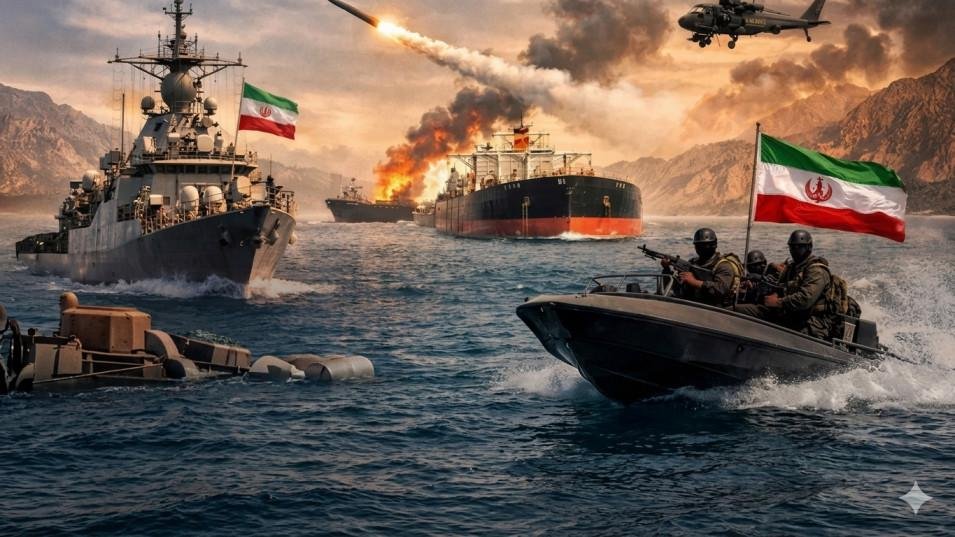
Can vessels continue to transit through these straits during times of conflict? International law explicitly states that global trade routes must not be obstructed, even during periods of conflict. During such times, non-military vessels are entitled to safe passage through these waterways, and military vessels are also permitted to transit through international straits. Under the UN Convention on the Law of the Sea (UNCLOS), no nation is permitted to completely block an international strait. Iran is a signatory to this convention, though it has not consistently adhered to its provisions. The critical question remains: what does the law say regarding naval blockades? From the perspective of maritime law, a naval blockade is a grave measure. Such blockades can be deemed legal, but only if specific rules and regulations governing the use of the waterway are strictly observed. A blockade must be formally declared, it must be enforced impartially and consistently, and it must not target civilian vessels. Vessels carrying humanitarian aid will not be obstructed; furthermore, if this blockade adversely affects trade between nations not involved in the conflict—such as Sri Lanka and Bangladesh—those countries may seek a resolution through diplomatic channels or by recourse to the law. But who enforces maritime law? There is, naturally, no global police force for the seas; consequently, the enforcement of such laws depends on a nation’s naval capabilities, diplomatic relations, and the exertion of political and international pressure. This implies that maritime law remains effective only if major powers choose to respect it; thus, the current crisis in the Strait of Hormuz serves as a true test of whether or not the international system actually works.
Asim Munir is dealing with Iran, Shahbaz brought Rs 18 thousand crore from Saudi Arabia. How is Pakistan taking advantage of both camps?
Pakistan’s top leadership is extremely busy these days. Prime Minister Shahbaz Sharif was in Saudi Arabia, brought two billion dollars in aid, then went to Qatar, and has now reached Turkey. Meanwhile, Field Marshal Asim Muni has arrived in Iran and met with top leaders there. Trump also said, “The Field Marshal and the PM are fantastic.” If a deal is signed with Iran in Islamabad, “I may also go.” How is Pakistan pursuing double diplomacy? Will it benefit economically? And how will it impact India?
First, learn the story of Pakistan’s double diplomacy. On one hand, Pakistan is close to Saudi Arabia as a Sunni-majority country and a defense partner. On the other hand, as a neighbor and the second most populous country, it also has relations with Iran. Even during the war, Pakistan condemned Saudi Arabia and expressed suspicion over the assassination of Iran’s Supreme Leader. Currently, Pakistan is perhaps the only country that can simultaneously confront Iran, Saudi Arabia, the United States, and China. Rashid Ali Janjua, Research Director of the Policy Research Institute, says this was a rare situation. Both Iran and the United States named Pakistan for mediation. These two could not rely on anyone else for Pakistan’s economic benefit. On April 15, the State Bank of Pakistan posted that it had received $2 billion, or approximately 18,000 crore rupees, from Saudi Arabia. In fact, this month, Pakistan is to return 3.5 billion rupees to the UAE. This money was necessary to balance its foreign reserves and avoid pressure from the IMF. Experts believe that this financial aid was given to Pakistan in exchange for the recent military aid sent to Saudi Arabia in the name of Jang Rukmini. Pakistan will benefit in other ways as well. Pakistan will continue to receive financial assistance from organizations like the US and the IMF. The IMF has provided Pakistan with $33 billion in aid since 2001. Pakistan wants to reduce its dependence on China for investment by improving relations with the US. China has given Pakistan a loan of more than $30 billion. Trump’s family also has a large investment in Pakistan’s crypto industry. American companies are also starting projects to mine Pakistan’s rare minerals, such as gold and tungsten. After the agreement, when the US lifts the ban on Iran, Pakistan will be able to establish a direct link between Iran and Pakistan. Projects like gas pipelines can also be started. Now the question arises as to what impact Pakistan’s increasing influence will have on India? At the international level, India has suffered a setback due to the separation of Pakistan. India has good relations with Israel, while Pakistan maintains separate alliances with China, America, and Iran. This will also impact India. Pakistan’s mediation is also being seen as a missed chance for India. Congress is continuously raising questions on the central government’s policy. Trump, on one hand, spoke to PM Modi 40 minutes later, and on the other hand, praised Asi Munir. The former political party says that Trump is playing a balancing act between PM Modi and Munir. This is putting Pakistan and India on the same scale, which India does not want. This role will not bring any lasting benefit in Asia because its administrative and military infrastructure are severely flawed. Trump is further weakening Pakistan’s democratic system by promoting Munir.
The hotels were booked, the plane was ready—so why did Iran not go to Islamabad for talks? Under What Compulsion Did Trump Extend the Ceasefire?
The stage was set for the second round of peace talks in Islamabad; U.S. Vice President Pence was preparing to depart. Efforts to persuade Iran to attend continued until the very last moment, but it did not show up. Then, Trump suddenly announced a ceasefire, stating: “Heeding Pakistan’s appeal, I have just ordered a halt to the attacks.” Why, ultimately, did Trump unilaterally declare a ceasefire? Why was Iran unwilling to participate in the peace talks? Let us understand the entire geopolitical game playing out behind the scenes.
Just a few hours earlier, Trump had declared that the U.S. would bomb Iran and that the military was fully prepared to do so. Why, then, did he suddenly announce an extension of the ceasefire? The White House maintains that the leadership in Iran is fractured; no Iranian leaders are presenting a unified proposal, which is why talks could not proceed. They stated, “We have taken this step at the request of the Pakistani government.” However, Trump’s ceasefire announcement lifts the veil on two other underlying issues. First is Trump’s attempt to mask his own failure. A senior fellow at the think tank Tensions Center suggests that Trump’s repeated ceasefire extensions are merely a tactic to conceal the failure of negotiations and to save face. He had intended to send Vice President Pence to Pakistan, but Iran refused to engage in talks. From the very beginning, the conflict has not unfolded according to America’s plans. The second reason is that Trump lacks a concrete strategy and is merely stalling for time. Trump did not specify how long this new timeframe would last; he simply stated that he was giving Iran more time to present a viable proposal to end the war. According to a report by CBS News, Democratic Party leader Adam Smith remarked that Trump still lacks a precise plan; his statements do not align with reality and are, in fact, making negotiations with Iran even more difficult. You may be wondering why Iran refused to participate in the talks in Pakistan. Iran alleges that while the U.S. is feigning interest in negotiations on one hand, it is simultaneously violating the ceasefire by maintaining a naval blockade on the other. On April 20, the U.S. Navy seized several Iranian vessels. Iran is deeply incensed by this action, declaring that no negotiations will take place until the U.S. lifts the blockade. Vali Nasr, a professor at Johns Hopkins University, observes that tensions had actually subsided following the first round of talks. Although events unfolded, Trump subsequently issued a statement indicating that the blockade would continue. This led Iran to believe that Trump was not serious about negotiations and was, in fact, preparing for war. Iran maintains that it will not accept such terms, viewing Trump’s objective as an attempt to turn the negotiation table into a platform for surrender; Iran asserts that it will not bow down under anyone’s pressure. Another reason behind Iran’s refusal to engage in peace talks is Pakistan’s perceived alignment with the United States. According to media reports, Iran has accused Asim Munir of acting on behalf of the U.S. Munir is reportedly urging Iran to sign a deal that would compromise its sovereignty. Local Iranian media outlets have gone so far as to describe Munir as someone merely “dancing to Trump’s tune.” So, will war erupt once again, or will the matter be resolved through dialogue? Experts believe that Trump’s inclination toward waging war against Iran has diminished, and he is keen to extricate himself from the situation as soon as possible. This is largely because the U.S. is facing midterm elections in November; given that Trump’s approval ratings have dipped in the wake of the conflict, he has signaled a preference for moving forward through negotiations. Iran, too, shares this stance. Mohammad Khatami, a political analyst based in Tehran, affirms that Iran also has no desire for a renewed conflict; he suggests that if the United States were to ease the blockade, a resolution could be reached through dialogue.
Discussion on Naval Mines Amidst US-Iran Tensions: How Are They Laid?
US President Donald Trump has stated that he has instructed the US Navy to immediately destroy any Iranian boat observed laying mines in the Strait of Hormuz. According to the US, Iran has laid between 5,000 and 6,000 mines in the Strait of Hormuz. So, what exactly are naval mines? How do they work? And just how dangerous are they?
What Are Naval Mines?
These are underwater explosive devices designed to destroy enemy ships and submarines, or to prevent them from entering a specific area. They are also referred to as “intelligent mines” because they are capable of distinguishing between tankers and warships.
These are underwater explosive devices designed to destroy enemy ships and submarines, or to prevent them from entering a specific area. They are also referred to as “intelligent mines” because they are capable of distinguishing between tankers and warships.
Types of Naval Mines
| Mine Type | Description |
|---|---|
| Contact Mines | Detonate only when a ship or submarine makes direct physical contact with the mine. |
| Influence Mines | Use sensors to detect a ship’s magnetic, acoustic, or pressure signature, detonating without direct contact. |
| Controlled Mines | Operated from a remote station (usually on shore); these are manually detonated when a target is in range. |