
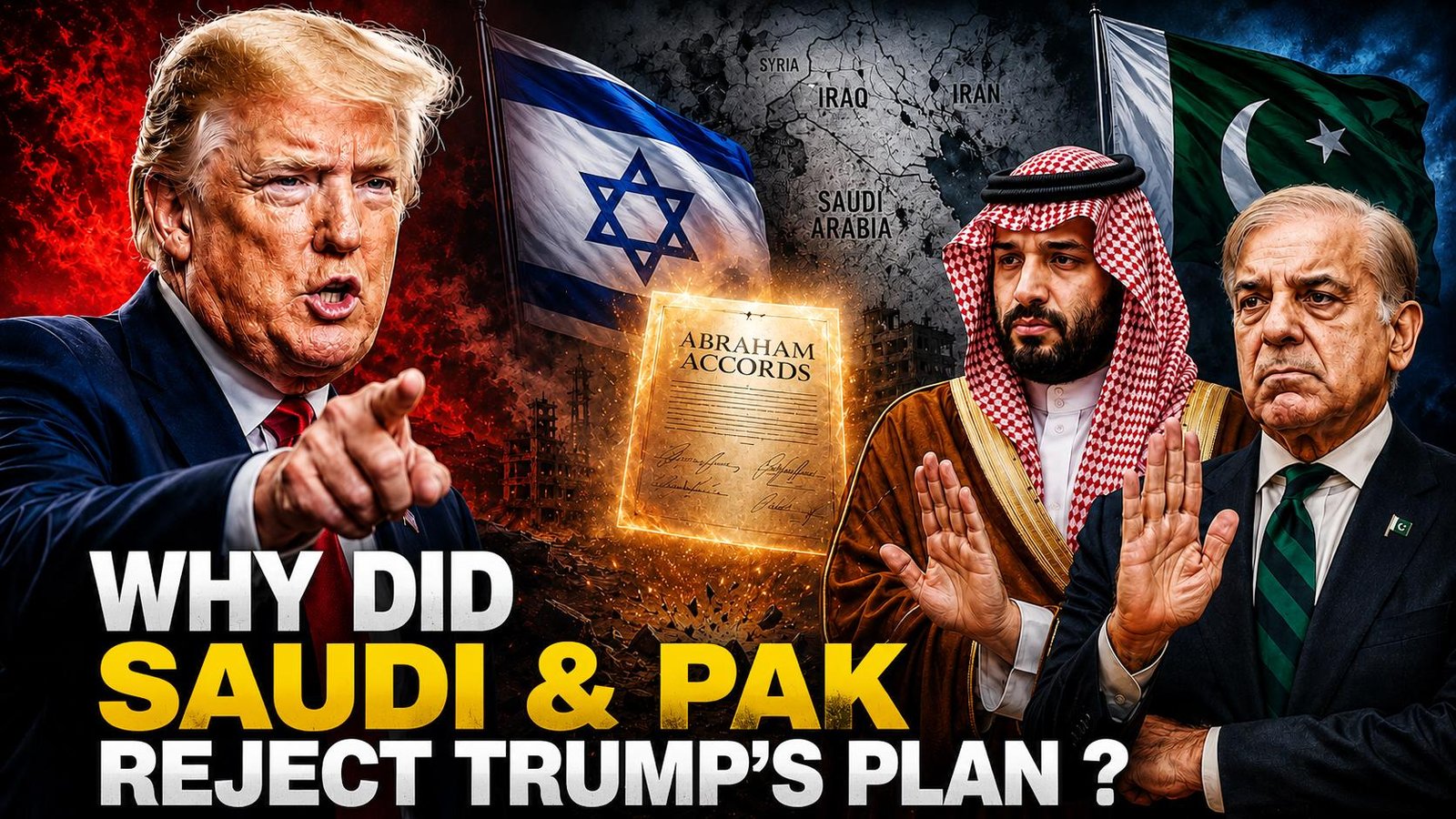
How did Donald Trump corner Pakistan? Michael Kugelman, an expert at the U.S. think tank Atlantic Council, observes that Pakistan currently finds itself “between a rock and a hard place.” Specifically, on May 25, amidst the Iran nuclear deal negotiations, Trump presented a condition to six Muslim-majority nations—including Pakistan—requiring them to sign the Abraham Accords. In essence, this meant they had to formally recognize Israel as a sovereign state and establish diplomatic relations with it; however, Pakistan refused. But why?
Pakistan’s animosity toward Israel dates back to 1947—the very year of Pakistan’s inception. At that time, the United Nations held a vote to partition Palestine into two separate entities: one for the Jews and the other for the Arabs. Pakistan’s founder, Muhammad Ali Jinnah, voted against this proposal, declaring that Pakistan stood in solidarity with the Arab cause. Despite this, when Israel was officially established on May 14, 1948, Pakistan refused to grant it diplomatic recognition. In June 1967, the “Six-Day War” erupted between Israel and the Arab nations; during this conflict, Pakistan dispatched its pilots to fight on the side of Egypt, Jordan, and Syria. A Pakistani pilot, Saiful Azam, notably shot down four Israeli fighter jets while flying first for the Jordanian Air Force and later for the Iraqi Air Force. The depth of this bitter animosity between Israel and Pakistan is underscored by the fact that Pakistani passports explicitly bear the inscription: “Not valid for Israel.” Over the course of their 78-year history, there have been attempts to mend relations between the two nations. On September 1, 2005, Pakistan’s Foreign Minister Khurshid Kasuri met with Israel’s Foreign Minister Silvan Shalom in Istanbul. A few days later, President Musharraf met with Israeli Prime Minister Ariel Sharon on the sidelines of the UN General Assembly session. This move triggered a political firestorm within Pakistan; hardline religious organizations—such as Jamaat-e-Islami and Jamiat Ulema-e-Islam—launched a fierce campaign of opposition against Musharraf. Musharraf faced accusations of betraying both Islam and the Palestinian cause, ultimately forcing him to back down. Now, let us return to
Trump’s Abraham Accords: on September 15, 2020, it was Donald Trump himself who… The objective behind establishing the Abraham Accords was to improve relations between Israel and Muslim nations—a goal that has already been achieved with countries like Kazakhstan. President Trump now seeks to include other Muslim nations in this initiative as well. While some nations may have one or two specific reasons for choosing not to participate, experts believe that Trump may have made this statement specifically to keep Pakistan excluded from the process. Pakistan’s Defense Minister, Khawaja Asif, has categorically rejected Trump’s overture. In an interview with Samaa TV, he stated, “I do not believe that we should join agreements that run counter to our own principles and outlook.” Pakistan has consistently linked the recognition of Israel to the establishment of an independent Palestine; consequently, joining the Abraham Accords is currently not a viable option for the country. Pakistan views itself as the standard-bearer of the Islamic world—the only Muslim nation to possess nuclear weapons. In this context, recognizing Israel as a sovereign state would completely erode its credibility within the Islamic world. However, saying “no” to Trump could also prove costly for Pakistan. Its economic situation is dire; it has staved off bankruptcy 24 times to date by securing loans from the IMF. Pakistan’s total national debt exceeds 70% of its GDP, and more than half of the government’s revenue is consumed solely by interest payments on these loans. Given that the United States holds the largest voting share—16.5%—within the IMF, if Trump were to become displeased with Pakistan, securing future loans would become exceedingly difficult. Furthermore, the U.S. is the sole supplier of the F-16—the most advanced aircraft in the Pakistan Air Force’s arsenal. Should Pakistan defy Trump, the provision of software updates and technical support for these aircraft could be suspended. Pakistan attempted to bolster its international standing by positioning itself as a mediator between the U.S. and Iran; however, Trump’s “return gift” has left Pakistan in a tangled predicament. We will continue to keep you updated on all future developments as they unfold.

Donald Trump Offers Pakistan a Chance to Join the ‘Abraham Accords’
Amidst peace efforts in the Middle East, the United States has launched fresh strikes against missile bases in southern Iran and near Bandar Abbas. In response, Iran has stated that Gulf nations will no longer serve as shields for U.S. bases. Diplomatic talks regarding a ceasefire are currently underway in Qatar. Meanwhile, U.S. President Donald Trump has extended an offer to Pakistan, Saudi Arabia, and other Muslim nations to join the ‘Abraham Accords.’ However, joining this agreement is considered a difficult prospect for Pakistan, a nation that has historically supported an independent Palestinian state. Concurrently, tensions are also continuously escalating between Israel and Hezbollah in Lebanon.

Amidst efforts to restore peace in the Middle East, the United States has launched fresh attacks against Iran. Furthermore, President Trump has presented a proposal to Pakistan—which has been attempting to mediate the conflict—that has left not only Pakistan but also several other Middle Eastern nations astonished. Is Trump’s demand simply that they join the Abraham Accords? Captain Tim Hawkins, a spokesperson for the U.S. Central Command, confirmed that the U.S. carried out attacks near the southern Iranian city of Bandar Abbas. Bandar Abbas is a vital port city situated in the Strait of Hormuz. Following the U.S. attacks, a statement was issued by Iran’s Supreme Leader. According to the BBC Persian Service, Iran’s Supreme Leader, Mojtaba Khamenei, released a written message declaring that nations in the Gulf region will no longer serve as staging grounds for U.S. military bases. He further asserted that the Zionist regime and Israel are reaching the final stages of their existence. Meanwhile, diplomatic efforts to bring an end to the conflict remain ongoing; Iranian officials are currently engaged in talks with Qatari mediators in Doha. Despite the recent attacks, U.S. Secretary of State Marco Rubio stated that finalizing the progress achieved regarding a peace deal with Iran could take several days. Such negotiations typically require time—indeed, disagreements can arise over even a single word or line of text. If an agreement is to be reached, these differences must be resolved; ultimately, however, the outcome will be either a sound agreement or no agreement at all. Before this, Ismail Baghai, a spokesperson for the Iranian Foreign Ministry, had reiterated this very point.
It appears that a resolution is not currently in sight. The BBC’s South Asia correspondent, Musahari, suggests that the recent US strikes could impact the ongoing negotiations. Iranian officials have been consistently citing a lack of trust while simultaneously attempting to advance talks with the Prime Minister of Qatar in Doha; consequently, it remains difficult to understand how these strikes might actually facilitate the progress of negotiations. Meanwhile, the US Secretary of State has stated that discussions regarding certain issues are currently underway and that progress may be seen in the coming days. Amidst this, tensions also appear to be escalating in Lebanon; the Israeli Prime Minister has vowed to intensify attacks. It is worth noting that Iran views these two conflicts as interconnected—even if the United States does not perceive them as such. Residents in southern regions have been forced to flee their homes. Israeli security forces have reported conducting strikes against Hezbollah strongholds in several areas across eastern Lebanon, including the Bekaa Valley. Conversely, Hezbollah claims to have targeted multiple sites in southern Lebanon and northern Israel on Monday using drones and rockets—an action it described as retaliation for Israel’s violations during the conflict. At present, it remains unclear what impact—if any—the US strikes on Iran and the Israeli military operations in Lebanon
will have a potential peace agreement between the United States and Iran.

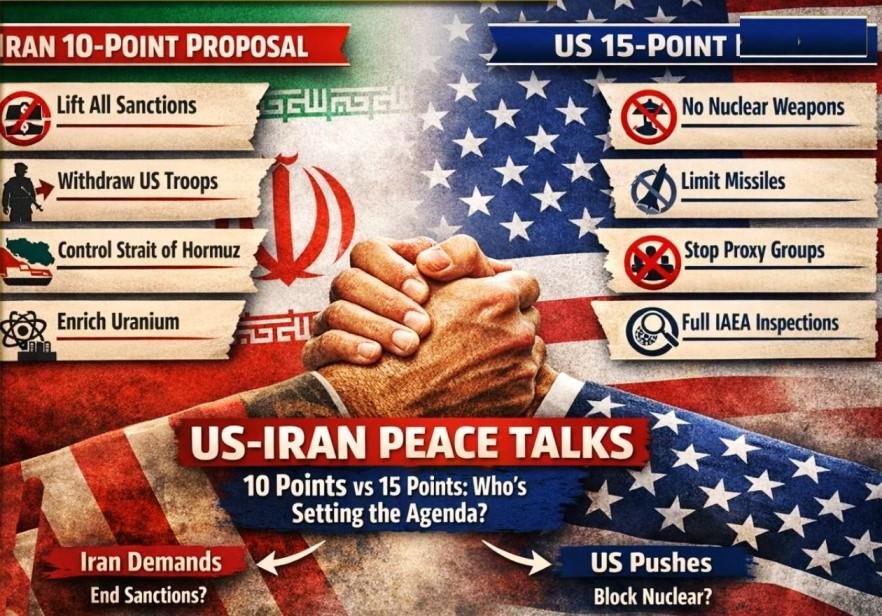
BBC Middle East Correspondent Younanli provides further details: “The focus right now is truly on reopening the Strait.” It is believed that the primary objective at this moment is to reopen the Strait of Hormuz; doing so could significantly alleviate pressure on global energy markets. Additionally, discussions are underway to unfreeze various Iranian assets—some of which are currently held in Qatari banks. According to reports, a Memorandum of Understanding (MoU) may be drafted to facilitate negotiations over the next 30 to 60 days regarding Iran’s nuclear program—specifically addressing the fate of Iran’s current stockpile of enriched uranium, as well as the future trajectory of its nuclear activities. Furthermore, attention is turning to the request made by US President Donald Trump to Pakistan and several other Muslim nations. Trump has appealed to these countries to join and expand the “Abraham Accords.” Before proceeding, let us first understand exactly what the Abraham Accords are. The Abraham Accords consist of a series of agreements designed to normalize relations between Israel and Muslim-majority nations. Under the framework of the Abraham Accords, the United States acted as a mediator to facilitate the establishment of formal diplomatic relations between Israel and four Muslim-majority countries. This initiative was launched in 2020, during Donald Trump’s first term as president. Bahrain, Morocco, Sudan, and the United Arab Emirates were the first nations to sign these agreements. Now, President Trump has extended this invitation to Saudi Arabia, Qatar, Pakistan, Turkey, Egypt, and Jordan, urging them to also join the Abraham Accords. However, several Arab nations have previously criticized this policy, arguing that it fails to offer a clear resolution regarding the status of the occupied Palestinian territories.
Only time will tell how these nations will respond to the appeal to join the Abraham Accords; however, Pakistan, which has previously acted as a mediator to facilitate agreements between Iran and the United States… What role will the vote play? Will it accede to Ram’s demand? What has been the historical stance of Pakistan regarding Israel? And why was Pakistan unable to join the Abraham Accords during Ram’s first term? BBC correspondent Umar Daraz, reporting from Pakistan, answers all these questions. The Pakistani state supports the Palestinian cause and has consistently maintained this stance. Therefore, what will be the position of the Pakistani state regarding the Abraham Accords this time around? This is a pertinent question, as the Accords do not contain any provisions for the establishment of a Palestinian state. Furthermore—and historically speaking—Pakistan has no diplomatic relations with Israel; indeed, Pakistani passports explicitly bear the inscription: “This passport is not valid for Israel.” Diplomatically, Pakistan has consistently advocated for the establishment of an independent Palestinian state—specifically one based on the pre-1967 borders—and it will not support any arrangement that deviates from this objective. Historically, this has remained the consistent position within Pakistan: a commitment to the cause of an independent Palestinian state.
First, he devastated Iran; now, Trump will rebuild it by providing $300 billion. Why is America Being Forced to Strike Such a Deal?

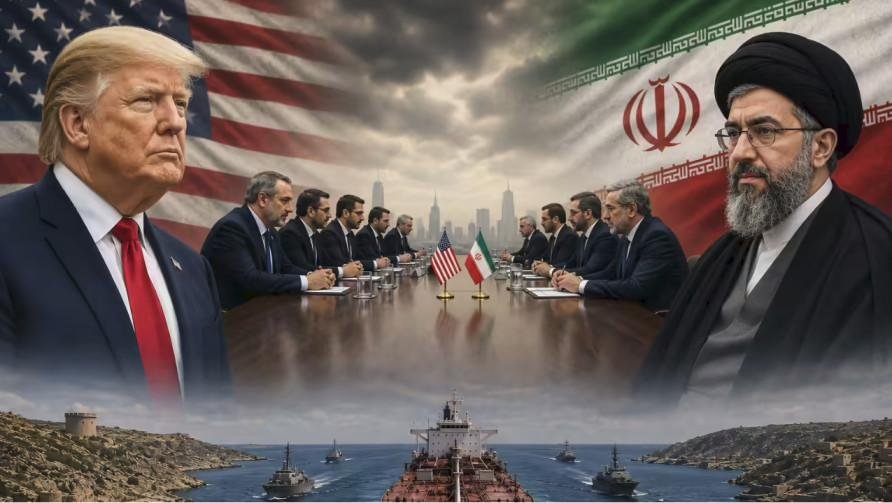
There is a famous proverb: “One went to be excused from prayers, but ended up saddled with the obligation of fasting.” Something similar has happened to Trump. He set out to bring Iran to its knees, yet today he stands at Iran’s doorstep, offering an investment fund worth $300 billion. A draft agreement to avert war is ready; all that remains is for Trump and Khamenei to affix their signatures. However, the crucial question is: under what specific terms is this deal between the U.S. and Iran being negotiated? Who stands to gain the most from it, and what are Trump’s compulsions? Let’s find out. A report by the U.S. media outlet *Axios* states that the U.S. is prepared to extend the current truce with Iran by another 60 days. On May 26, both parties reached a consensus on a Memorandum of Understanding (MoU). This draft outlines five major conditions: First, the Strait of Hormuz will be fully reopened; Iran will refrain from targeting any ships and will remove all naval mines from the Strait within 30 days. In return, the U.S. will lift its naval blockade positioned outside the Strait of Hormuz. Second, Iran will halt its nuclear program; in exchange, the U.S. will refrain from imposing any further sanctions until the final negotiations regarding the agreement are concluded. Third, the U.S. may release approximately $24 billion in Iranian assets currently frozen in foreign banks. According to the Iranian news agency *Tasnim*, negotiations regarding the release of $12 billion of this sum have already advanced. Fourth, as part of the agreement, Iran will engage in discussions regarding its support for militant organizations such as Hezbollah and the Houthis; in return, Israel will cease its attacks on Lebanon. Fifth—according to *The New York Times*—the proposed agreement includes a provision for an investment fund for Iran. This fund is estimated to be worth approximately $300 billion. An Iranian official stated that this fund is intended to support reconstruction programs within Iran. So, ultimately, who benefits the most from this deal? Gregory Brew, a senior Iran analyst at the political risk consultancy firm *Eurasia Group*, argues that this constitutes a victory for Iran. It endured a month of bombardment while maintaining its silence, and has now agreed to a settlement with the U.S. to reopen the Strait of Hormuz. Conversely, none of the objectives Trump had set for the conflict were achieved: neither was there a regime change in Iran, nor was he able to secure a major nuclear agreement. Throughout the conflict, the U.S. had repeatedly threatened to dismantle Iran’s missile program and destroy its navy. Although assurances were given, there is no mention of this in the agreement. An American intelligence report states that Iran still retains 70% of its missile stockpile. Why, then, is the U.S. compelled to negotiate such a deal with Iran? Three major constraints are driving the U.S. in this regard. First, the U.S. has already spent approximately ₹243,000 crore on the conflict, yet none of Trump’s objectives have been achieved. Furthermore, the disruption caused by the conflict has nearly doubled the price of crude oil. In an attempt to exert greater pressure on Iran, the U.S. even imposed a blockade outside the Strait of Hormuz; however, this proved ineffective. On the contrary, Iran further tightened its control over the Strait of Hormuz. Second, Trump initiated military action against Iran without the approval of the U.S. Congress. Under U.S. law, military forces cannot remain deployed for combat operations for more than 60 days without congressional authorization. A professor at JNU—who also serves as a BBC foreign affairs expert—notes that Trump is now eager to quickly reach an agreement with Iran in order to extricate the U.S. from the conflict. Third, the U.S. is scheduled to hold its midterm elections in November 2026. According to a survey conducted by an American university, 60% of the public is dissatisfied with both the conflict with Iran and Trump’s handling of the situation. Consequently, Trump aims to de-escalate the Iran issue before the elections take place. Experts on Iranian affairs suggest that had the U.S. emerged victorious in the conflict, Trump might have gained a political advantage in the midterm elections; however, since that did not happen, the question remains: how long will it take for the situation to return to normalcy? While the reopening of the Strait of Hormuz would certainly resume shipping traffic, it could take anywhere from six to nine months for oil prices to revert to their previous levels, as major corporations typically purchase and sell crude oil based on pre-established contracts. Moreover, it could take at least another six months for both nations to reach a definitive agreement. Iran’s strategic objective has been to exert pressure on the global economy by disrupting the Strait of Hormuz—a strategy in which it has, in fact, succeeded. Consequently, it is unlikely to readily accede to American demands.
Have Israel’s attacks on Iran heightened Trump’s concerns?
The IDF states that Iran has once again fired missiles towards Israel. In a statement, it said that defense systems are working to intercept the threat. Before this, Iran had fired multiple missiles at Israel; in response, Israel launched attacks on Iranian targets. Following these attacks, US President Donald Trump has called on Iran to return to the negotiating table.
Amidst ceasefire talks, the Israel Defense Forces (IDF) stated that Iran has once again fired missiles at Israel; a statement noted that defense systems are working to intercept the threats. The IDF urged the public to move to safe locations if they receive an alert. Iran had previously fired multiple missiles at Israel on Sunday, and in response, Israel struck Iranian targets. This marks the first time Iran has launched a missile attack on Israel since a fragile ceasefire agreement was reached between Iran, Israel, and the US in April. The IDF posted on X (formerly Twitter) that the Israeli Air Force struck military targets linked to Iranian terrorism in western and central Iran. While no specific details regarding casualties or the exact locations of the strikes were provided, Iranian state television reported explosions in three cities. Local Iranian media reported that the urban areas of Tehran were not targeted during the Israeli strikes on central and western Iran. Citing the Tehran Fire Department, local media reported that at least two explosions were heard in the western parts of the Iranian capital early Monday morning. State media, quoting local officials, stated there were no casualties; no information has been received regarding other parts of the country. Following these attacks, oil prices rose in Asian markets; the price of global benchmark Brent crude reached $95.5 per barrel, while US crude rose to $92.5 per barrel. According to a report by The Times of Israel, warning sirens are sounding in Jerusalem and areas surrounding central Israel. Earlier, Iran’s Islamic Revolutionary Guard Corps (IRGC) stated that the attacks served as a warning, noting that they would continue to launch attacks throughout the week. This attack by Iran follows an Israeli strike on the Lebanese capital, Beirut, on Sunday morning. Referencing the Beirut attack, the IRGC stated that if Israel repeats such aggressive actions, the retaliation would be on a much larger scale and could target all US and Israeli installations in the region. According to local Iranian media reports, following the missile strikes on Israel, Iran has suspended all incoming flights to Tehran’s international airport until further notice. The IRGC announced that it used ballistic missiles to strike the Ramat David airbase, located southeast of Haifa. Iran’s Foreign Ministry stated that its forces had attacked several military sites in the northern part of the occupied Palestinian territories. In a statement, the ministry noted that these attacks were a response to repeated violations of the ceasefire established between the US, Iran, and Israel in April—violations that included US attacks on Iranian ships and bases in the country’s south. Although a ceasefire has been in effect between the two sides since April 17, it has been nominal, with both Israel and Iran repeatedly breaching it. Last week, the US stated it had attacked Iranian military bases over the weekend, while Iran claimed it targeted a US base in retaliation. Iran’s Foreign Ministry asserted that the country is defending its security and national interests, warning that any Israeli attack on Lebanon or Iran would be met with a crushing response. Following these attacks, US President Donald Trump called on Iran to return to the negotiating table. According to a Fox News correspondent, President Trump stated, “Enough is enough; return to the negotiating table and reach an agreement.” After Iran’s missile strikes, Trump spoke with several US and international media outlets. Before speaking with Israeli Prime Minister Benjamin Netanyahu, Trump told the US media outlet Axios that he planned to urge Netanyahu not to retaliate against the Iranian attack. Earlier, in a conversation with the Financial Times, Trump had said that Netanyahu would have no choice but to accept the deal with Iran.
Can Israel survive without the US? It clashed with Iran despite Trump’s attempts to hold it back. Why is India concerned about the renewed conflict?
Is a greater crisis looming over the world as Iran and Israel clash again? While Trump appeals for peace from both sides, why has the ceasefire—which held for over two months—collapsed? Can Israel manage without US support? We explore the answers to these questions. A ceasefire had been in place between Israel, the US, and Iran since April 8, with no major attacks occurring during that period; however, this peace was shattered on June 7. Israel attacked Beirut, the capital of Lebanon. Just hours later, Iran launched a ballistic missile attack on Israel’s Ramat David airbase. The Islamic Revolutionary Guard Corps (IRGC) stated that this was a retaliation for the attack on Lebanon, claiming Israel had violated the terms of the peace agreement. On June 8, Israel launched counterattacks against Iran, signaling that the hostilities could continue for several days. Is the US involved in these attacks? No, on the contrary, the US is urging the peace agreement process to move forward. According to the US news website Axios, Trump wanted to prevent Netanyahu from retaliating and was far from pleased with Israel’s actions. Earlier, when Israel attacked Lebanon on June 2, Trump had even called Netanyahu to reprimand him, using harsh language and accusing him of ruining peace talks. Why is Netanyahu ignoring Trump? There are two major reasons. First, elections are scheduled in Israel for October. A survey by Hebrew University indicates that public trust in Netanyahu is waning; he faces three corruption charges and has been avoiding court appearances by citing the ongoing war. The Deputy Director of the Strategic Studies Program at ORS notes that if the war ends, the state of emergency in Israel will be lifted, shifting public attention back to the allegations against Netanyahu.

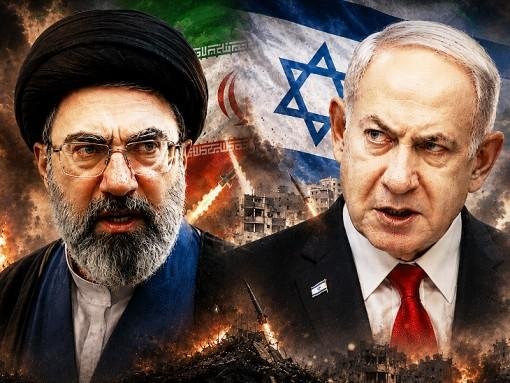
The second reason is that the objective has always been regime change in Iran. Netanyahu views Iran and its proxy organizations as a threat to Israel; thus, he may be targeting Hezbollah… If attacks on Lebanon do not cease until the objective is achieved, could Israel manage without the United States? The straightforward answer is no. There are three major reasons for this. First, the distance between Israel and Iran is significant; to launch an attack, Israel relies on American fighter jets like the F-15, F-16, and F-35, but covering such a distance requires mid-air refueling—a capability for which US assistance is essential. Furthermore, Israel uses US-manufactured 2,000-pound and 500-pound heavy bombs for airstrikes. Second, Israel’s “Iron Dome” system can only intercept short-range missiles, not the long-range missiles launched from Iran; thus, Israel requires American defense systems for the conflict. Third, Iran possesses 73 times the land area and three times the number of troops compared to Israel. Consequently, if a ground war were to break out or the conflict were to drag on, it would be difficult for Israel to prevail. Additionally, Israel is surrounded by Iranian proxy groups such as Hezbollah, the Houthis, and Hamas, and is already grappling with the escalating costs of war. Without US support, Israel could only withstand a confrontation with Iran for 10 to 15 days before being compelled to seek American assistance. The looming threat of conflict has heightened global anxiety; following the exchange of attacks between Israel and Iran, the price of crude oil rose to $83.20 per barrel on June 8. This serves as an economic warning for India, given that we import approximately 90% of our oil. Meanwhile, petrol and diesel prices in India have risen by ₹7.50 per liter over the past month, and the price of commercial gas cylinders has increased by up to 84%. If the situation deteriorates further, the government may be forced to raise prices again, leading to higher costs for essential items like domestic gas cylinders. India’s Ministry of External Affairs has appealed for an immediate de-escalation of tensions, urging that harm to civilians be avoided and calling for dialogue to restore peace and stability.
Became ‘killers’ at their father’s behest: 3 marriages driven by the obsession to have 5 children; Is Trump eccentric or a psychopath? A full analysis on his 80th birthday.
US President Donald Trump shocks the world daily with unpredictable actions; it is impossible to guess what he might do next, though a pattern emerges from his behavior and statements regarding his mindset. Today marks Trump’s 80th birthday; let us explore his psychology by tracing his life from childhood to the present. Donald Trump’s father, Fred Trump, taught him that there are only two types of people in the world: winners and losers. He preached never showing weakness or apologizing, and doing whatever it takes to win. From childhood, Trump believed he was always right; at just 13, he was sent to military school, where he bullied others. The family’s real estate business—originally named “Elizabeth Trump & Son” after his grandmother—was taken over by Trump in 1973; he immediately removed his grandmother’s name and rebranded it as “The Trump Organization.” He launched several companies under his own name, such as Trump University, Trump Casino, and Trump Plaza. Between 1991 and 2009, six of his companies went bankrupt due to debt, yet he refused to view this as personal failure. Trump seeks credit for everything but never admits his own mistakes. To gain fame and celebrity status, he purchased three beauty pageants—Miss Universe and Miss Teen USA—in 1996. During this time, he met over 4,000 models and would barge into their dressing rooms regardless of their state of undress; American models have recounted instances where Trump suddenly walked in, leaving them no time to get dressed—some were even completely naked. Through these pageants, Trump landed the American reality show The Apprentice, which he hosted for 14 years, making him a household name. According to American journalist Mary Brenner, Trump once told a friend he wanted at least five children, with one of them being just like him. He married model Ivana in 1977, and they had three children; it is said that for each child… Trump gave Ivana a bonus of $250,000; he divorced her in 1992 and subsequently married twice more.

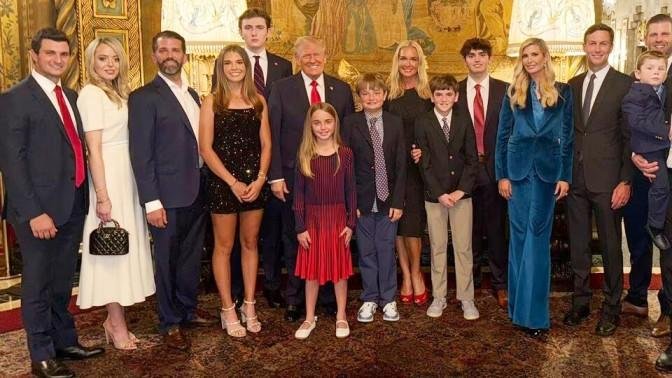
Trump had numerous affairs, and around 27 women accused him of sexual misconduct; nevertheless, he had five children with his three wives. Even after losing the US presidential election in November 2020, Trump refused to relinquish power; he incited rally crowds, framing the situation as a battle to “save the country,” which led to riots at the Capitol. In his second term, Trump appears more volatile than before, and his conduct toward world leaders seems poor. He remarked that French President Emmanuel Macron was “recovering from a slap” delivered by his wife, called Saudi Crown Prince Mohammed bin Salman a “sycophant,” and has frequently flip-flopped on the issue of war with Iran—even going so far as to refer to the Strait of Hormuz as the “Strait of Trump.” This raises the question: what exactly is Trump’s psychology? Before the 1968 election, America’s 37th President, Richard Nixon, adopted the “Madman Theory”; it posits that if a leader behaves in a way that suggests they are capable of anything, other nations will surrender to them. Trump also subscribes to this theory. Many psychologists have analyzed Trump’s actions and behavior; his niece, clinical psychologist Mary Trump, suggests he craves constant praise. According to American psychiatrist Robert Jay Lifton, Trump is a narcissist who views himself as superior but makes no effort to win others over.