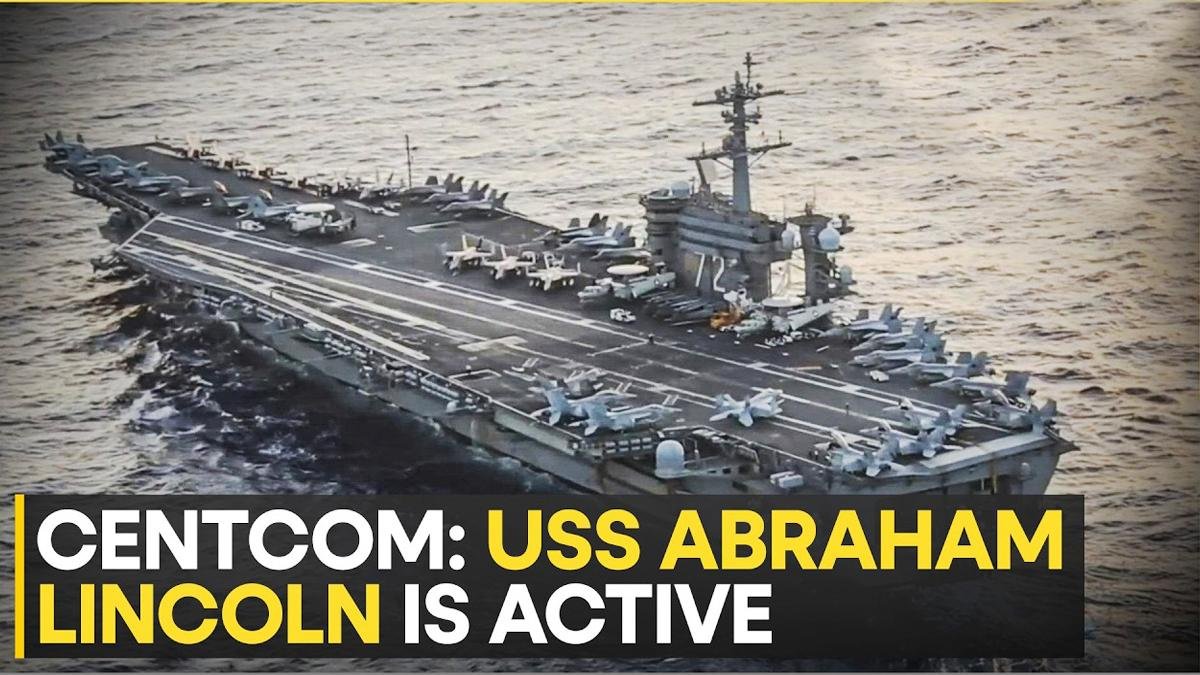
Reports of U.S. sailors attempting to go overboard from the USS Abraham Lincoln have raised serious questions about mental health, deployment conditions, and the U.S. naval blockade of Iran. USS Abraham Lincoln, USS Lincoln sailors, U.S. Navy Iran, Iran naval blockade, sailors jumping overboard, USS Abraham Lincoln mental health crisis
Reports surrounding the USS Abraham Lincoln, one of the U.S. Navy’s largest aircraft carriers, have sparked international attention. The ship has been involved in U.S. military operations connected to the conflict with Iran and has spent an exceptionally long period at sea. In recent days, reports have emerged that several sailors aboard the carrier attempted to go overboard. The reports have prompted questions about what is happening on the ship and whether the prolonged deployment is contributing to a serious mental-health problem among its crew. However, one important point needs to be clarified at the beginning: there is no credible evidence that U.S. sailors are being “forced to jump into the sea and die.” Nor does the available reporting establish that sailors who went overboard died. At least one reported incident involved a sailor who was rescued after going overboard. The Navy has also disputed claims of a broader increase in suicidal behavior. So what is really happening aboard the USS Abraham Lincoln?
What Is the USS Abraham Lincoln Doing Near Iran?
The USS Abraham Lincoln (CVN-72) is a nuclear-powered aircraft carrier and the centerpiece of a carrier strike group. It carries thousands of sailors and operates aircraft capable of conducting a wide range of combat and support missions.
The carrier has become an important part of U.S. military operations connected to the conflict with Iran. According to recent reporting, the United States has also been maintaining a naval blockade of Iranian ports as part of its strategy to pressure Tehran. U.S. Defense Secretary Pete Hegseth said the Navy could maintain the blockade indefinitely by rotating ships in and out of the region. The blockade is connected to the wider confrontation over Iran, the Strait of Hormuz and regional shipping. The Strait is one of the world’s most important energy routes, making any military disruption there potentially significant for global oil supplies and prices. The Lincoln’s role has therefore been much larger than simply sitting offshore. The carrier has supported sustained military operations while remaining at sea for an unusually long period. Why Has the Deployment Become So Long? This is one of the central issues behind the current controversy. The Lincoln was originally deployed in late 2025 and was subsequently redirected toward the Middle East as the conflict with Iran intensified. Instead of returning on its original schedule, the carrier’s deployment was repeatedly extended. Recent reports say the ship has spent more than 240 days continuously at sea, with some accounts putting the deployment beyond 250 days. The carrier has also gone extraordinarily long periods without a normal port visit. For a naval crew, a prolonged deployment is not simply an extended vacation away from home. Sailors work demanding schedules, live in confined spaces and remain subject to military discipline while carrying out potentially dangerous combat operations. Port visits normally provide opportunities for rest, recreation, maintenance and resupply. When those opportunities disappear for months, the psychological and physical burden can become much greater. What Happened to the Sailors Who Went Overboard?
Reports published in August 2026 said that multiple sailors aboard the USS Abraham Lincoln had attempted to go overboard during the extended deployment—one widely reported case involved a sailor who went overboard on August 3 and was subsequently rescued. Family members and media reports have described additional incidents in which sailors allegedly attempted to leave the ship by going over the side. The reports are particularly concerning because going overboard from an aircraft carrier is extremely dangerous. A person can be injured by the ship, swept away by the water, or exposed to drowning and other hazards. But it is important not to turn reports of suicide attempts or mental-health episodes into an unsupported claim that sailors were deliberately “forced to jump and die.” The available evidence instead points toward individual incidents of severe distress, amid concerns about the conditions of an exceptionally long wartime deployment. Is There a Mental-Health Crisis on the Ship?
That question is at the heart of the controversy. Families of sailors have raised concerns about declining morale and mental health. They have told U.S. officials that prolonged separation from families, uncertainty about when the ship will return home, and difficult living conditions are placing enormous pressure on crew members. Some reports have also described problems involving food supplies, plumbing, water, hygiene products and mail. Such problems may appear relatively minor individually, but on a warship carrying thousands of people for months without normal port access, they can contribute to frustration and exhaustion. The Navy, however, has pushed back against the strongest descriptions of the situation. Officials have acknowledged that extended deployments create stress and that individual sailors have experienced mental-health problems, but the service has disputed claims that there has been a confirmed surge in suicidal behavior. That distinction matters. There can be genuine concerns about crew welfare without proving that the entire ship is experiencing a formally recognized suicide crisis.
Why Would Sailors Become So Distressed?
Long deployments can affect military personnel in several ways.
1. Separation from family
Sailors may spend months away from spouses, children, parents, and friends. Important family events can pass without them, while communication may sometimes be limited or disrupted.
2. Lack of normal shore leave
A port visit provides a psychological break from life aboard the ship. Without regular opportunities to leave the vessel, the environment can begin to feel repetitive and restrictive.
3. Combat stress
The Lincoln has been operating during an active regional conflict. Even sailors who are not directly involved in combat missions understand that the ship and its crew can become targets.
4. Physical exhaustion
Aircraft carriers operate around the clock. Aircraft launch and recovery operations, maintenance, watch duties, security, and other responsibilities require sailors to maintain demanding schedules.
5. Uncertainty
One of the most difficult aspects of an extended deployment can be not knowing exactly when it will end. A sailor preparing to return home may find the deployment extended again because military circumstances have changed. This combination can produce substantial psychological pressure.
What Are U.S. Officials Doing About the Situation?
The controversy has attracted attention from lawmakers and senior military officials. Family members recently confronted Navy leadership over the conditions aboard the Lincoln and the mental health of its crew. U.S. lawmakers have also demanded greater transparency and questioned whether the Navy has provided adequate support for sailors during the unusually long deployment. Admiral Brad Cooper, commander of U.S. Central Command, recently visited the carrier. His visit came as the Navy prepared to relieve the Lincoln after its extraordinary deployment. The Navy is preparing to bring in another carrier, the USS George Washington, to replace the Lincoln in the region. This is intended to allow the Lincoln’s crew to return from the prolonged deployment. The relief operation highlights an important point: the U.S. military is not necessarily ending its naval pressure on Iran. Instead, it can rotate ships and crews while maintaining the broader mission.

Why Is the Iran Blockade Important?
The naval blockade is part of a wider U.S. strategy to put economic and military pressure on Iran. Iran’s geographic position gives it significant influence over the Strait of Hormuz. Large quantities of global oil and gas normally pass through this narrow waterway, meaning any disruption can have consequences far beyond the Middle East. The U.S. government has indicated that it intends to maintain pressure on Iran while continuing to pursue its broader objectives. Reuters reported that Washington believes the naval blockade can be sustained indefinitely through ship rotations. For the sailors aboard ships such as the Lincoln, however, an “indefinite” military strategy raises a difficult human question: how long can individual crews realistically remain deployed before their physical and psychological resilience is exhausted? That is increasingly becoming part of the debate.
Are American Soldiers Being Forced to Jump Into the Sea?
No evidence currently supports that claim. The wording is important because social-media posts can transform a complicated military and mental-health story into a much more dramatic narrative. The credible reporting describes sailors attempting to go overboard, including at least one sailor who was rescued. It does not establish that U.S. military commanders ordered sailors to jump, nor does it establish that these sailors were deliberately sent to their deaths. It is also more accurate to call the personnel aboard the carrier sailors, rather than “soldiers.”The real story is arguably more troubling precisely because it does not require an extraordinary conspiracy: an exceptionally long deployment, combat-related stress, separation from families, and concerns about living conditions can create serious pressure on military personnel. What Happens Next? The immediate focus is likely to be on safely rotating the Lincoln’s crew home and replacing the carrier with another U.S. naval force. But the controversy could have longer-term consequences for the U.S. Navy. Aircraft carriers are designed to remain deployed for extended periods, but the current situation raises questions about the limits of that endurance. If wartime operations continue for months or years, commanders must balance operational requirements against crew welfare, maintenance, and readiness.The Lincoln’s experience could therefore become a case study in how modern militaries manage prolonged deployments during sustained conflicts.
Conclusion
The USS Abraham Lincoln story is not simply about sailors jumping into the sea. It is about the human cost of an exceptionally long military deployment during a major confrontation with Iran. Reports of sailors attempting to go overboard have raised serious concerns about mental health and morale. At the same time, the Navy disputes claims that there has been a broad increase in suicidal behavior, and there is no reliable evidence that sailors were ordered or “forced” to jump to their deaths. The larger issue is the extraordinary pressure created when thousands of sailors spend many months at sea with limited port access while supporting an active military campaign. As the United States prepares to rotate the USS Abraham Lincoln out and bring in the USS George Washington, the question is no longer only how long the Navy can maintain its blockade of Iran. It is also how long individual sailors can sustain the demands of such a deployment without paying an unacceptable psychological and physical price.
FAQs
Why is the USS Abraham Lincoln near Iran?
The USS Abraham Lincoln has been supporting U.S. military operations connected to the conflict with Iran and the U.S. naval pressure campaign against Iranian ports.
Did sailors on the USS Abraham Lincoln really jump overboard?
Reports indicate that multiple sailors attempted to go overboard during the prolonged deployment. At least one reported sailor was rescued. The Navy has disputed claims of a broader increase in suicidal behavior.
Did U.S. commanders force sailors to jump into the sea?
There is no credible evidence supporting that claim. Available reporting points to individual incidents involving sailors experiencing severe distress.
How long has the USS Abraham Lincoln been deployed?
The carrier has been deployed for an exceptionally long period, with recent reports describing more than 240 days continuously at sea and, in some accounts, more than 250 days.
Is the U.S. Navy ending the blockade of Iran?
Not necessarily. U.S. officials have said the Navy can maintain the blockade through rotations of ships and crews, meaning the Lincoln can be relieved without ending the broader naval operation.
Which ship will replace the USS Abraham Lincoln?
The USS George Washington is being redirected to the Middle East to relieve the Lincoln.