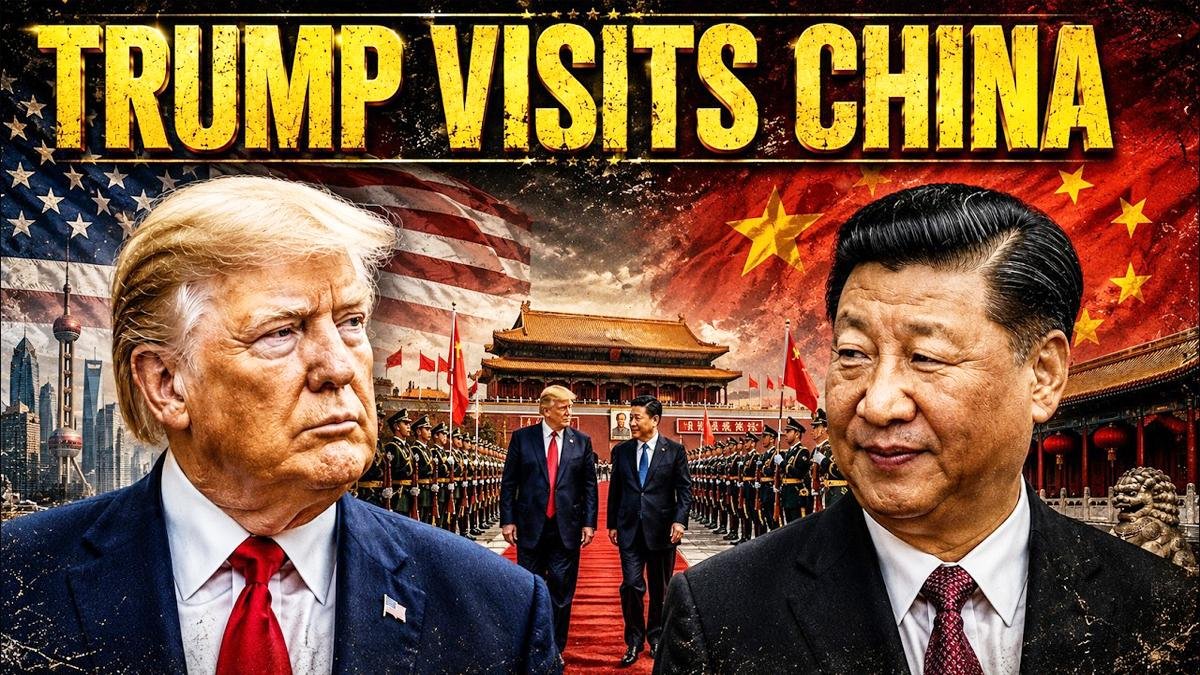
US President Donald Trump is currently on a two-day visit to China. Regarding the hotel in Beijing where Trump is staying, before the visit, inspections of psychiatric facilities were conducted, and Air Force One is to remain stationed on the runway at all times. The U.S. intelligence agency has cleared three floors of the facility. This team has brought along a toilet seat; it is reported that Trump’s stool and urine will be transported back to the United States. Let us now examine Trump’s security detail, which accompanies him during his foreign travels. Preparations for a foreign tour begin as early as three to four months in advance. An “Advance Survey Group” is formed, comprising personnel from four key agencies, including the Secret Service and White House staff. This group clears the flight path for the President’s aircraft—Air Force One—and holds meetings with all air traffic control centers located along the route. A comprehensive plan is devised, covering everything from radio frequencies and flight codes to coordination at the airports. American ground guards and agents are deployed at these airports. The Advance Survey Group arrives in the host country approximately three months ahead of the visit. There, potential threats are profiled; in the event of a significant threat, immediate action is taken. Checks are conducted on patients recently discharged from nearby mental health institutions. This protocol stems from an incident on March 30, 1981, when a mentally ill individual attempted to assassinate the then-U.S. President, Ronald Reagan. The President’s motorcade route is thoroughly inspected using bomb-sniffing dogs.
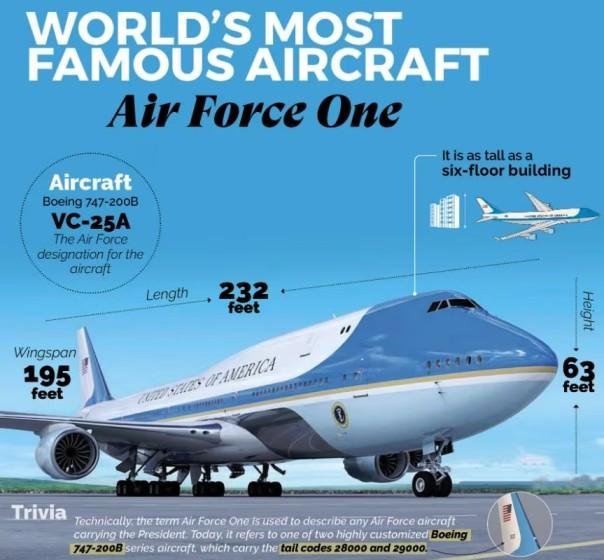
It is capable of traveling a distance of over 12,000 kilometers. While in a host country, the U.S. President’s aircraft remains constantly “ready to take off.” Additionally, a second aircraft is stationed at a discreet, undisclosed location. Upon disembarking from his plane, the President typically travels in a specialized armored limousine. This vehicle features bulletproof windows and is equipped with tear gas grenade launchers, night-vision cameras, and a built-in satellite phone. For emergencies, the car carries a supply of blood matching the President’s specific blood type. No individual is permitted to occupy the hotel floors immediately above or below the floor where the President’s suite is located. Before the President’s arrival, Secret Service agents remove all standard hotel equipment—including the television and telephone—from his suite and install their own specialized electronic devices. Furthermore, the hotel staff undergoes a thorough police background verification before the President’s visit. The specific room designated for the President’s stay is reinforced to be bulletproof; it is even reported that robust security measures are implemented within the restroom facilities. According to reports, due to security protocols, President Trump’s visit will be confined solely to Beijing; he will not travel to any other cities within China.
Trump in China: What is the objective of U.S. President Trump’s visit to Beijing?
U.S. President Donald Trump is set to visit China. This marks the first visit by an American President to China in nearly a decade. It will also serve as a critical test for the delicate trade agreement between the United States and China. A “tariff war” between the two nations began in April of last year, following President Trump’s announcement of tariffs on several countries. During this period, both nations imposed tariffs exceeding 100 percent on each other. The imposition of tariffs was subsequently halted following the last face-to-face meeting between Trump and Xi Jinping in South Korea in October. With so much at stake, let us attempt to understand how we arrived at this juncture. The trade war began in 2018 when Trump announced tariffs on $250 billion worth of imports from China. Many experts believe that this was the precise moment when the trade war commenced. That same year, Trump also imposed tariffs on other trading partners—including Mexico, Canada, and Europe. Trump justified these tariffs by arguing that these nations were taking advantage of the United States. According to policy researcher Link at Georgetown University, U.S. President Trump’s move came as a shock to China. Link noted that this marked the first time China engaged in serious negotiations with Trump; perhaps they had not anticipated that he would take such a step. At that time, China was heavily dependent on the United States for trade, and the U.S. was the primary importer of Chinese-manufactured goods. As American buyers began to withdraw in response to Trump’s tariffs, the livelihoods of workers in China were placed in jeopardy. This tension exacerbated existing, long-standing issues within the Chinese economy—including sluggish domestic consumption, rising unemployment, and a protracted real estate crisis. Trump’s return to power for a second term—specifically, after retaking the presidency in 2025—saw him further tighten his tariff policies. He imposed a 34% tariff on Chinese goods. As a result of this decision, the total tariffs levied on China exceeded those imposed on any other nation.
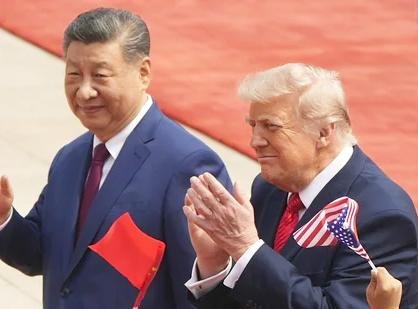
These tariffs severely impacted Chinese businesses, leading to a massive accumulation of unsold inventory in warehouses; meanwhile, American companies scrambled to identify alternative supply sources. China immediately retaliated by imposing tariffs on American agricultural products, causing significant financial losses for U.S. farmers—a key demographic among Trump’s voter base. Trump had utilized tariffs as leverage to compel nations to negotiate trade agreements with the U.S.; however, he could not afford to jeopardize key domestic industries that relied on raw materials imported from China. Consequently, the time had come to strike a deal. A meeting held between Trump and Xi in October concluded with the suspension of China’s export controls—a development that, in a sense, constituted a victory for Trump. Despite the tariff agreement reached last year, a permanent resolution to the underlying dispute has yet to be achieved. Link observed that, within the manufacturing sector, China’s… Massive investment implies that, due to a decline in domestic spending, Chinese businesses were left with no alternative but to seek sales abroad; consequently, China will require access to the U.S. market, for when it comes to consumer markets, no other nation rivals the scale of the United States. Nevertheless, despite this reality, China enters this meeting from a position of strength; its export figures have reached record levels—a direct result of forging new trade partnerships across the globe following the deterioration of its relations with the U.S. China has also continued to make substantial investments in robotics, while simultaneously striving to develop its own advanced chips and reduce its reliance on Western firms such as Nvidia. The Trump administration is likely to pressure China to increase its purchases of goods from key American industries, including soybeans and aircraft components. Just last week, a U.S. trade court ruled that the new global tariffs were unjustified—a decision that could potentially trigger further legal challenges in the future. And what of Iran? There is no doubt that the conflict involving Iran will cast a long shadow over this meeting between Trump and his counterpart. The two sides hold vastly divergent views regarding Iran; the world will be watching closely to see how—and to what extent—they can bridge this divide.
What significance is being attached to the meeting between Trump and Xi Jinping held in China?
The bilateral talks between US President Donald Trump and Chinese President Xi Jinping have concluded. The discussions lasted for approximately two hours—about an hour longer than originally scheduled. This visit to China by US President Donald Trump marks the first such visit in nine years. Consequently, questions are being raised as to why Trump felt the need to travel to China specifically to meet with President Xi Jinping. What could be the implications of Trump’s visit to China?
There is a prevailing sentiment on social media regarding Trump’s current visit: the notion that, this time, he has gone to China in a submissive posture. As Harshvardhan has also observed, Trump now faces a China that—after a decade—stands significantly stronger than before. But why, exactly, has China become so indispensable to the United States? How is it that, after all these years, this realization has suddenly dawned upon them? The point being raised is crucial: since 2017—and now in 2026—China has expanded its influence across a multitude of sectors. Previously, it was viewed primarily as a military power; subsequently, it emerged as an economic superpower; and now, it has established dominance in technology, AI, semiconductor manufacturing, and has become the global hub for production. The reflection of this expanded influence is precisely what we see in the manner of Trump’s visit to China. That is the first point. Secondly, regarding the body language we observed in the photographs—specifically during the Guard of Honor ceremony—where Trump walked alongside the Chinese Head of State on Chinese soil, two distinct messages were being conveyed. One message was that China is now publicly showing respect to Trump—and, by extension, to the United States—on the global stage. The very act of the Chinese Head of State walking alongside Trump during the Guard of Honor serves as a powerful piece of diplomatic messaging. The second message is directed at those nations—particularly those in the region—that are currently experiencing friction or tensions with China. That message is this: “America has come into our backyard to engage with us, and from now on, any dialogue within our domain will take place strictly on our terms.” This is by no means a trivial matter, for it has the potential to fundamentally alter the entire security landscape of the Indo-Pacific region. As we all know, the relationship between these two nations was once characterized by significant friction and frostiness—China was historically viewed through the lens of a perpetually strained relationship with the U.S.—but that dynamic is no longer in evidence today. Yes, Harshvardhan—while the discussion has focused on body language, Nitin suggests that equal attention should be paid to the actual statements being issued.
Trump has referred to Xi Jinping as a “great friend”; however, social media users and numerous analysts who are decoding their body language suggest that—despite the outward praise—Trump’s demeanor carries a distinct undertone of patronage. How do you interpret this? It suggests that there cannot be any genuine, natural warmth between these two leaders or between their respective nations. Fundamentally, I believe there is an inherent fault line running between the United States and China—a point Nitin was just alluding to. China has risen rapidly, and it now seeks to capture the technological space that will ultimately determine the future global balance of power; conversely, the U.S. is determined to consolidate and maintain its own position. These objectives are irreconcilable; if the U.S. wishes to preserve its presence and status as a preeminent global power, it must contain China. This explains why we have observed a gradual shift in President Trump’s approach—from his initial interactions in 2017 to the recent wave of legislation that has tightened export controls and imposed further technological restrictions on China. Consequently, that sense of “warmth” is absent, given the fundamental divergence of interests between the two nations. China, for its part, will frame this narrative to its own advantage—portraying it as a victory and asserting that the leader of the world’s most significant nation has effectively ushered in a new era of engagement on China’s terms.
This approach offers long-term prospects; it ensures enduring warmth and durability. It serves as a viable strategy for managing the relationship—specifically by providing space to address the structural issues inherent in it—rather than attempting to resolve the relationship itself entirely. Since the fundamental issues are inherently difficult to resolve—and might otherwise be relegated to a secondary priority—any measures taken to address them would likely run counter to China’s interests. Therefore, I view this as a management tactic on the part of the U.S.—a method designed to manage a relationship that has been in continuous decline, ensuring that the ongoing competition does not escalate into open conflict. After all, both sides face a multitude of challenges: China has its own set of issues to contend with, just as the U.S. does—challenges that are manifesting physically, whether one looks at Iran, the Western Hemisphere, or elsewhere; indeed, the U.S. faces challenges on every front. If we turn to the “America First” rhetoric—specifically the messaging conveyed during the State of the Union address delivered by the U.S. President in January—it becomes crucial to examine how that message is being received. How is the world viewing this meeting of ours? How are the nations of Europe perceiving it? After all, the relationships these nations share with the U.S. are currently somewhat strained—given what transpired with Cuba, Venezuela, and Iran—so one must ask: how is the global community interpreting these events now? If we trace the trajectory from “Trump 1.0” to “Trump 2.0,” we see a consistent policy thread. Throughout his campaign trail and across various platforms, Trump declared—or rather, proclaimed—that America was in a state of decline. While the notion of American decline dates back to 2011–12, Trump subsequently began advocating for a foreign policy—and a diplomatic strategy—characterized by “withdrawal.” Furthermore, if we delve into the ideological underpinnings of U.S. foreign policy, we observe that Trump—particularly within the context of domestic politics you mentioned—revived and championed concepts such as “Mount Sinai Exceptionalism” and the “Shining City on a Hill.” Through this “MAGA” rhetoric—this “America First” narrative—he prioritized the re-establishment of the “American Dream” and the assertion of American supremacy. Thus, in analyzing the entirety of the discourse surrounding these events, we see a consistent pattern of such rhetoric. If we look at the Trump era, he engaged in a series of withdrawals. Indeed, he withdrew from various spheres—notably, he withdrew from the International Criminal Court. Furthermore, he withdrew from the Joint Comprehensive Plan of Action (JCPOA)—the nuclear agreement between Iran and the United States—which had been established during the Rouhani administration. Since 2015, observers—including those of us based in Delhi—had held the belief that the U.S. would retreat across its “drawbridge,” effectively isolating itself by raising the surrounding canals. It was thought that this process might take another 10, 15, or 20 years to fully materialize; however, that is precisely not what happened. Instead, the U.S. continued to interfere in the affairs of nations such as Iran and Libya. Consequently, one could argue that American foreign policy—specifically the foreign policy under Mr. Trump—was rife with contradictions and internal conflicts. It was a foreign policy characterized by such inconsistency that the rest of the world—and China, in particular—would likely hope never to witness again.
How are Donald Trump’s supporters viewing his softening stance toward China?
Trump visited Beijing. He arrived on the red carpet at the Great Hall of the People, where hundreds of children were waving flags and a military band was playing “The Star-Spangled Banner.” Trump told Chinese President Xi Jinping, “It is an honor to be with you. It is also an honor to be your friend. Relations between China and the United States are going to be better than ever before.” Amidst the softened rhetoric and cordial atmosphere, a tough stance against China clearly reflects the traditionally more aggressive approach of Trump’s Republican Party. American President Donald Trump has long engaged in anti-China rhetoric. This rhetoric persisted for a decade, spanning his rallies, the 2024 election campaign, and into his second term. The year is 2026; when Donald Trump took the stage during an election rally in Indiana, he stated one thing in very clear terms: China is America’s primary economic rival. Trump returned to the White House alongside associates known for their anti-China stance; these include Secretary of State Marco Rubio, Vice President J.D. Vance, and Senior Economic Advisor Peter Navarro. All of them have, in unison, accused Beijing of looting the U.S., stealing technology, and flooding American streets with fentanyl. Subsequently, the issue of escalating tariffs came to the fore. Starting at 10 percent in February 2025, these tariffs surged to 145 percent by mid-April—coinciding with “Liberation Day.” Trump had, in fact, dubbed the imposition of import taxes on China and several other U.S. trading partners as “Liberation Day.”
This very week, Trump paid a visit to Beijing. Trump told Chinese President Xi Jinping, “It is an honor to be with you, and it is an honor to be your friend. Relations between China and the U.S. are going to be far better than ever before.” According to reports, chipmaker Nvidia has been approved to sell semiconductors to ten Chinese companies, and Boeing has received an order for 200 aircraft. Citi, too, has received approval to conduct securities business operations within China—however…
China retaliated by levying a 125 percent tariff on the U.S. and imposing a ban on the export of rare earth elements; thus began the trade war.
Earlier this week, Trump visited Beijing. Trump told Chinese President Xi Jinping, “It is an honor to be with you, and it is also an honor to be your friend.” He added that relations between China and the United States are going to be better than ever before. According to reports, chipmaker Nvidia has been authorized to sell semiconductors to ten Chinese companies, and Boeing has received an order for 200 aircraft. Citi has also received approval to conduct securities business in China. However, amidst the soft rhetoric and cordial atmosphere, the traditionally more aggressive stance of Trump’s Republican Party—particularly its hardline approach toward China—remained clearly evident. Just days before the summit, the U.S. Secretary of State imposed sanctions on three Chinese companies, alleging that they had provided satellite imagery to Iran to assist in attacks on U.S. forces in the Middle East. Yet, beyond this, several other critical issues remain unresolved. Foremost among these is the issue of Taiwan, which Beijing considers to be an integral part of its territory. Before the visit, a bipartisan group of Senators wrote to Trump, urging him to proceed with arms sales to Taiwan and to inform his Chinese counterpart of this decision formally.
Speaking to reporters aboard Air Force One, Trump remarked, “Xi Jinping feels very strongly about the Taiwan issue. I have not made any commitments to either side.” Notably, the Chinese readout of the meeting identified Taiwan as the most critical issue; it stated that if this matter remains unresolved, it could lead to confrontation—or even conflict—thereby placing the entire bilateral relationship in grave jeopardy. In contrast, the White House statement made no mention of Taiwan whatsoever. On Capitol Hill, leaders known for their hardline stance on China—as well as most of Trump’s allies—remained largely silent following the visit; they offered very little reaction to Trump’s friendly demeanor or his ambiguous statements regarding Taiwan. For experts on China affairs in the United States, this silence came as no surprise. David Firestein, President and CEO of the George W. Bush Foundation for U.S.-China Relations, told the BBC that even if 50 presidential-level summits were held within a month or a year, it would not alter the fact that the U.S. and China will never agree on certain issues. He added, however, that this does not necessarily mean the summit will be a failure. Firestein suggested that Trump’s softening language and demeanor could be an indication that the strategies adopted following his previous visit in 2017 have failed to yield results.
Some individuals associated with the “Make America Great Again” (MAGA) movement perceived the Chinese statement as a threat. Steve Bannon, Trump’s former strategist, told Politico: “I am astonished. People were trying to foster a positive atmosphere, yet he—meaning Xi Jinping—began with a threat right from the start. It was so overt and unambiguous that he placed it front and center.” David Shambaugh, a fellow in Asian Studies at the Council on Foreign Relations, noted that Trump’s softer stance could also influence other officials, Republican lawmakers, and his supporters. He remarked: “Compared to the early days of the Trump administration—or indeed any other recent U.S. administration—this is a system controlled far more strictly from the top down. I believe that most individuals within the administration serve primarily in the role of implementing policy.”
What did Trump warn Taiwan against following his meeting with Xi Jinping?
US President Donald Trump has warned Taiwan against formally declaring independence from China. A two-day summit between the United States and China concluded on May 15. Following the event, Trump told Fox News, “I don’t want anyone to move toward independence.” Meanwhile, Taiwan’s President Lai Ching-te has previously stated that Taiwan does not need to formally declare independence, as it already considers itself a sovereign nation. US President Donald Trump has issued a warning to Taiwan against formally declaring independence from China. The two-day summit between the United States and China concluded on May 15; subsequently, Trump told Fox News, “I do not want to see any tensions escalate.” Trump had previously stated that he had not expressed support for any specific proposal regarding Taiwan. Taiwan’s President Lai Ching-te has previously stated that Taiwan does not require a formal declaration of independence, nor has he expressed a commitment to such a move, given that Taiwan already regards itself as a sovereign nation. In today’s top story: China considers Taiwan to be part of its territory and has consistently maintained that it could bring the island under its control by force if necessary. The United States has continued to support Taiwan, though it does not support Taiwan’s independence.
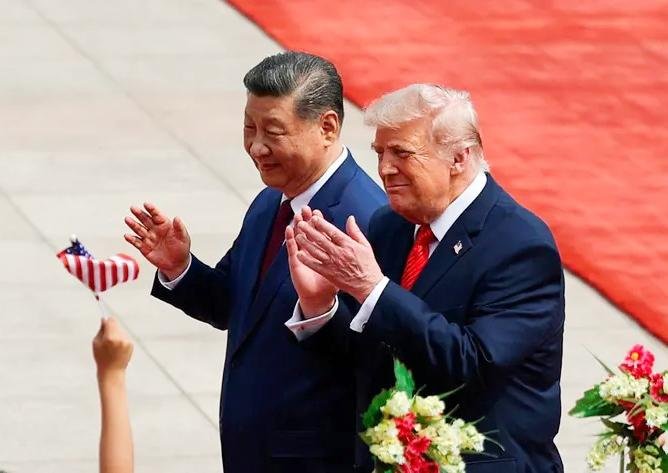
This has long been official U.S. policy. Under U.S. law, the United States is obligated to provide Taiwan with the resources necessary for self-defense. However, due to its close political ties with China, the U.S. has always had to strike a delicate balance in this regard. Maintaining relations with China entails recognizing the “One China” policy. Many people in Taiwan view themselves as part of a distinct nation; however, the majority favor maintaining the current status quo—meaning they believe Taiwan should neither formally declare independence from China nor take steps toward integrating with it. In an interview, Trump reiterated that there has been no change in U.S. policy regarding this issue. He remarked, “Imagine having to travel 9,500 miles to fight a war.” He added, “I don’t want that. I want things to calm down. I want China to remain calm.” Chinese President Xi Jinping spoke extensively on the Taiwan issue, but he declined to state whether or not the U.S. would come to Taiwan’s defense.
Trump noted that Xi Jinping takes this issue very seriously and is adamant that no steps be taken toward Taiwan’s independence. According to Chinese state media, during their discussions, Xi Jinping stated that the Taiwan issue is the most critical point of contention in China-U.S. relations. When asked if he foresaw a potential conflict with China over this issue, Trump replied, “No, I don’t think so. I believe everything will be fine. Xi Jinping does not want a war.” In recent years, China has significantly ramped up its military exercises around Taiwan; this has heightened tensions in the region and tested the U.S. strategic balance. Late last year, the Trump administration announced a proposed arms sale to Taiwan worth $11 billion. This package included state-of-the-art rocket launchers and various types of missiles. China strongly condemned this move.
Trump stated that he would soon make a decision regarding whether or not this arms deal would proceed. He also stated that he and President Xi Jinping have held detailed discussions regarding this issue. Presidents typically do not engage in direct dialogue with the leader of Taiwan, as doing so could trigger significant tension with China. This country views Taiwan’s President, Lai Ching-te, as a separatist.
On May 16, Taiwan’s Deputy Foreign Minister, Chen Ming-chi, remarked that Taiwan would require further clarification to fully grasp the true import of Trump’s comments. He asserted that U.S.-Taiwan arms deals have historically served as the bedrock of regional peace and stability. Trump also told the press, “We do not want war.” He added, “If the current situation persists, I believe China, too, would be content with it. However, we do not want anyone to say, ‘Let’s declare independence,’ simply because the United States is backing us.”
Has the US-Iran conflict created new difficulties for the nations of the Middle East?
Amidst the ongoing conflict between Iran and the United States, what specific challenges have emerged for America’s close allies in the Middle East? Furthermore, where does Pakistan—which once served as a mediator between Iran and the US—stand today?
A new question appears to be emerging from the entirety of this conflict: for the Gulf nations—specifically those in the Arab world—which have historically maintained a certain distance from, or even a mild animosity toward, Iran while fostering close ties with the US—is their proximity to America now just as perilous as their hostility toward Iran? Absolutely. Because, as I mentioned just a short while ago, the US position is currently unstable; no definitive decision has been reached. Regarding the losses that the GCC nations have had to endure thus far in this conflict, the US has been unable to offer any form of compensation. Moreover, if one considers the hypothetical scenario in which the US—under Trump—were to actually accede to Iran’s demands, would that not, too, constitute a humiliating position?
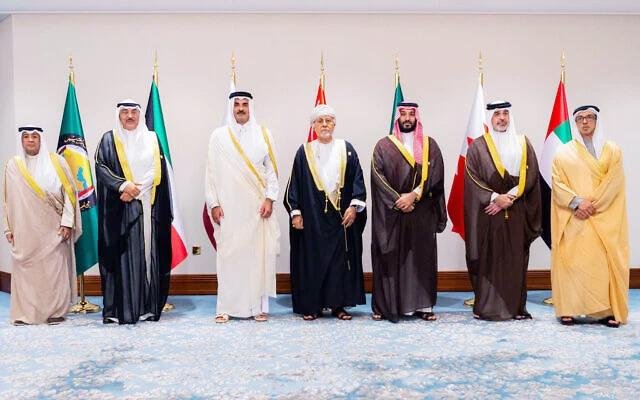
To what extent these policies will remain moderated is something only time will tell. Today, when discussing Pakistan—specifically regarding mediation—Pakistan was initially viewed as a potential channel for this purpose. However, as things stand, Pakistan’s current position suggests that, rather than being an indispensable channel, it appears to be an option that both parties currently seem to be ignoring. It appears that, from the very beginning, when Pakistan attempted to assume a mediation role in the region, it was primarily seeking its own self-interest—a natural inclination, as every nation conducts foreign policy with its own benefit in mind. Yet, given the emerging geopolitical equations, it seems to me that Pakistan’s role is increasingly being perceived as that of an “interested party” rather than a neutral mediator.
This shift is particularly evident when recalling earlier instances: when Pakistan attempted to assert its own relevance in the region, it faced internal backlash. At that time, the argument was that Pakistan merely served as a conduit for communication—a channel through which messages could be relayed back and forth between parties. However, now that those same actors have actively sought to make themselves relevant, the narrative has shifted; instead of merely being a communication medium, reports are now surfacing—such as the discovery of Iranian air assets within Pakistan—which have subsequently drawn a strong reaction from the United States. Consequently, I believe that Pakistan, in its attempt to play both sides of the fence—engaging in dialogue with Saudi Arabia and Turkey while simultaneously maintaining ties with Iran—has likely created complications for itself. I anticipate that this will lead to further difficulties for Pakistan in the future, as the evolving geopolitical landscape is undergoing a natural transformation, and Pakistan’s own position is inextricably linked to these shifting dynamics. How else, after all, is one to interpret the situation? In the context of this entire affair, Pakistan’s scope for acting as a mediator has effectively been exhausted. Indeed, I would argue that Pakistan never truly possessed the requisite qualities to function effectively as a neutral mediator. Pakistan is, after all, Pakistan; if it were to attempt such a role, it would inevitably strain its relations—particularly with the United States—and President Trump would likely cease making any efforts on Pakistan’s behalf. From the very outset, it became increasingly adept at appeasement; however—as the conflict escalated and evolved—it became evident that Pakistan’s relevance was diminishing. I believe that in the times ahead, Pakistan will face even greater difficulties, and one wonders who will be willing to devote time and attention to it. Pakistan is likely to face significant complications in this regard, particularly given the intra-Arab challenges currently unfolding before us. This is no longer merely a matter of the U.S. versus Iran; a dynamic of the UAE versus Saudi Arabia also appears to be emerging. Given the complex nature of these shifting alignments, what kind of role would Pakistan wish to play? Whether or not it will actually be able to do so, however, remains a matter of doubt.
Talks between Iran and the United States are now stalled not over the Strait of Hormuz, but over uranium.
Negotiations regarding a peace agreement between the United States and Iran are ongoing. Consensus has been reached on several points of the agreement; however, a standoff persists regarding uranium enrichment. Understand the dispute surrounding uranium enrichment from the perspective of experts.
Regarding nuclear enrichment—a topic Trump addressed today in a post on Truth Social—he stated that Iran should hand over its nuclear stockpile to the United States, whereupon we would destroy it here. Alternatively, he suggested that a mutually agreed-upon location be selected for this process, with observers present. Notably, Donald Trump did not post anything this time regarding the Strait of Hormuz; instead, his post focused specifically on enriched uranium. Does this imply, then, that the sticking point in negotiations—which previously centered on the Strait of Hormuz—has now shifted to the issue of enriched uranium? Essentially, yes. The deal remains stalled precisely because the U.S. insists that Iran agree to a comprehensive set of conditions; according to incoming reports, the most critical of these conditions concerns enriched uranium. There is ongoing discussion regarding the size of Iran’s stockpile: some sources claim it amounts to 300 kilograms, others say 400 kilograms, while various estimates suggest that any amount exceeding 324 kilograms could potentially be converted into weapons with relatively little effort. The U.S. now seeks the complete disposal—or “disposition”—of this material. This issue of enriched uranium was also a subject of negotiation during the 2015 deal struck with the administration of then-President Barack Obama; under that agreement, Iran was permitted to enrich uranium up to a certain limit—a process explicitly designated for civilian nuclear purposes. For Trump—and for U.S. diplomats—a “win-win” situation would be achieved only if Iran yields on this specific point. After all, Iran has invested years—running extensive, long-term programs—to acquire this uranium; for years, its nuclear scientists have been targets for intelligence agencies across the globe. (It is worth noting that several nations have, discreetly, assisted Iran in its pursuit of nuclear weaponization.) Thus, the crux of the entire issue is this: if this matter is resolved, the Strait of Hormuz would immediately be reopened. Furthermore, reports suggest that, in addition to this concession, Iran may also be required to address certain other issues that have been pending for some time. He could even propose the removal of those assets, provided that a deal is reached regarding the nuclear dust—or specifically, the uranium currently under discussion.
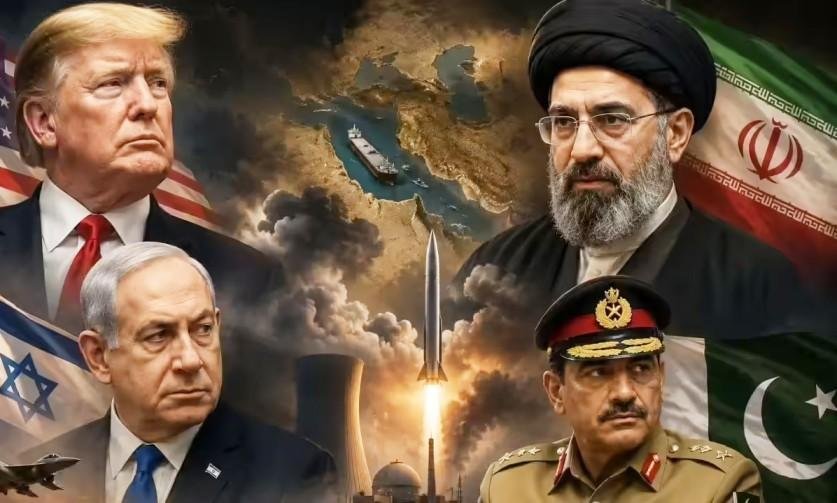
In this context—specifically regarding a post that Donald Trump shared on social media—it was stated that, “In conjunction and in coordination with the Islamic Republic of Iran, [we will] destroy [the target] in place or at another acceptable location.” How are we to interpret this? Does it imply that Donald Trump might involve another country in this particular issue? The situation is already fraught with tension—specifically regarding the Abraham Accords—but then, Israel launched an attack. Consequently, a distinct pattern is emerging. Consider how Donald Trump traveled to China, held talks with Xi Jinping, and raised this specific issue in an effort to resolve it; in response, Xi Jinping raised the issue of Taiwan. Furthermore, if you observe the aftermath of Donald Trump’s return, the proposed $14 billion arms sale to Taiwan—which was set to be the largest such deal to date—has been put on hold. This has raised significant questions: Is Trump attempting to appease China in an effort to leverage their influence to help resolve this current crisis? Questions are also being raised regarding the sincerity of his commitment to the Indo-Pacific region. At this moment, there are many disparate “dots” that need to be connected to fully understand the situation. However, one thing is certain: with the Abraham Accords, he has attempted to introduce yet another complex layer—one that involves neither Saudi Arabia nor Pakistan. Pakistan’s involvement is particularly noteworthy, as they have positioned themselves as key mediators and are playing a pivotal role. They maintain a security pact with Saudi Arabia and had also extended a hand to the Gaza Peace Board. However, they insist that the Gaza Peace Board initiative should not be conflated with this current crisis, arguing that it is a separate matter and that they merely support its peace plan. Nevertheless, they maintain that—until the Palestinian people are granted their full rights, and until the actions currently taking place in the Gaza Strip are halted—there is absolutely no question of Pakistan ever recognizing Israel. In fact, their passports explicitly bear a stipulation stating: “Not valid for travel to Israel.” This underscores the deep impasse that exists between the two sides. Therefore, regarding the nature of the strikes that have been carried out—as I may have mentioned on your very show perhaps a month ago—you will likely observe that they remain limited in scope. Escalation will continue intermittently as a means of exerting pressure, but it will not amount to a full-blown escalation. Consequently, Donald Trump will continue to carry out sporadic strikes—partly to cater to his domestic constituency, and partly to demonstrate his capacity to strike decisively.