
With AI glasses that remember everything you see, housekeeping robots that clean and cook, and even “deathbots” that can speak in the voice of your loved ones after they’re gone. On the first day of 2026, find out what AI will be able to do this year.
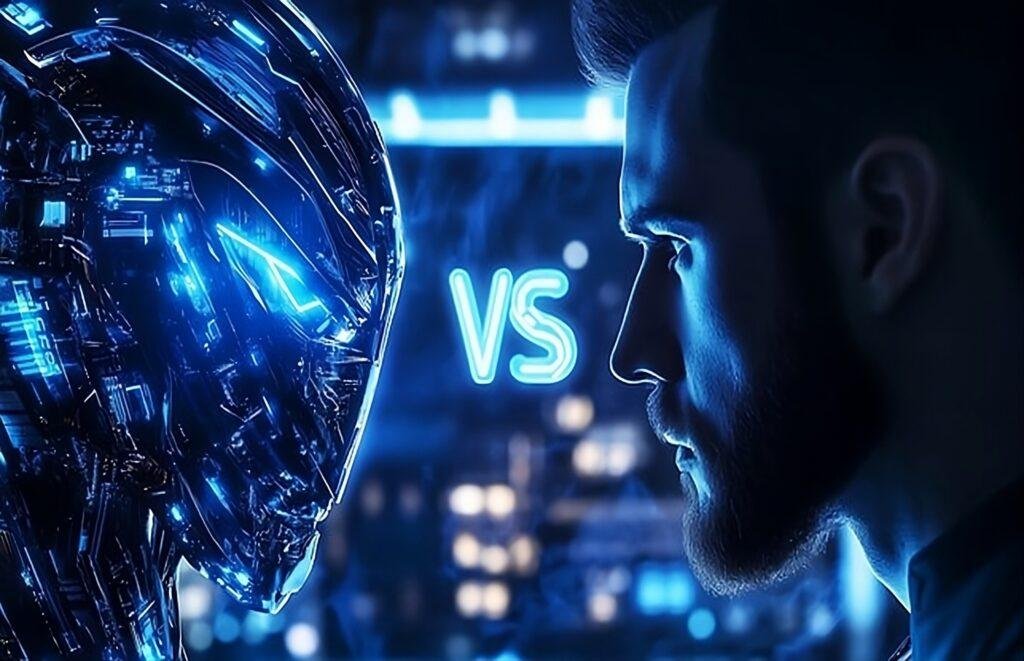
In the new year, artificial intelligence is going to move beyond the screen and directly into your life. Glasses that remember what you see, robots that clean and cook, and AI teachers that adapt to students’ learning styles – here’s the full story of five such AI innovations in 2026. The American robotics company 1X has designed a new 30-kilogram robot called Neo that, with the press of a button, will perform everyday tasks such as cleaning, washing clothes, cooking, opening the door for guests, and turning off the lights after you go to sleep. This also utilizes a large language model (LLM). It has Wi-Fi and a speaker, allowing it to learn and remember things from the user’s conversations. Google, in collaboration with Samsung, is developing Android smart glasses. These glasses will perform tasks such as real-time translation, navigation, notifications, music, photos, videos, and act as an AI assistant. Importantly, the glasses will be able to store memories. You can even ask them where your car keys are or why you had an argument with your friend. But how will this work? These glasses will have AI cameras, microphones, speakers, a battery, and an optional in-lens display. They will be paired with an Android phone and controlled via voice commands. Startups like Project December, HereAfter AI, and StoryFile are developing AI tools that create digital avatars, or “AI deathbots,” of deceased individuals. Here’s how it works: The AI is trained on notes, call recordings, WhatsApp chats, emails, and videos. The large language model learns their speaking style, favorite words, and response patterns. The company is designing a mirror that can control the entire house. By pointing at the mirror, you can turn off the electronic devices in your home. It will also give you health updates while you brush your teeth in the morning and even suggest how you should get ready. To achieve this, the company will connect all the electronic devices in the house to the mirror, providing control over the entire home and giving health updates based on parameters such as heart rate and sleep patterns. India’s Airtel company is developing an AI tutor called Lead Group Miscree that will teach and assist each child according to their individual learning level. It will motivate, mentor, and emotionally support children. Miscree is being taught mathematics, science, social science, and languages. Once the teacher sets the learning context in the classroom, it will create a step-by-step plan for the students. In this way, it will gradually become a part of our lives, both in small and large ways, by 2026. Hopefully, these new AI applications introduced with the new year will make your life easier.
What steps can be taken to protect your face from deepfakes?
Deepfakes are created with the help of artificial intelligence. They look and sound so real that it’s difficult to distinguish them from reality. This technology is now becoming easily accessible. Deepfakes are being used to defame people or damage their reputation. This week on World Around Us, we will try to find out if the time has come to copyright our faces. It’s time to copyright your face to protect yourself from deepfakes.
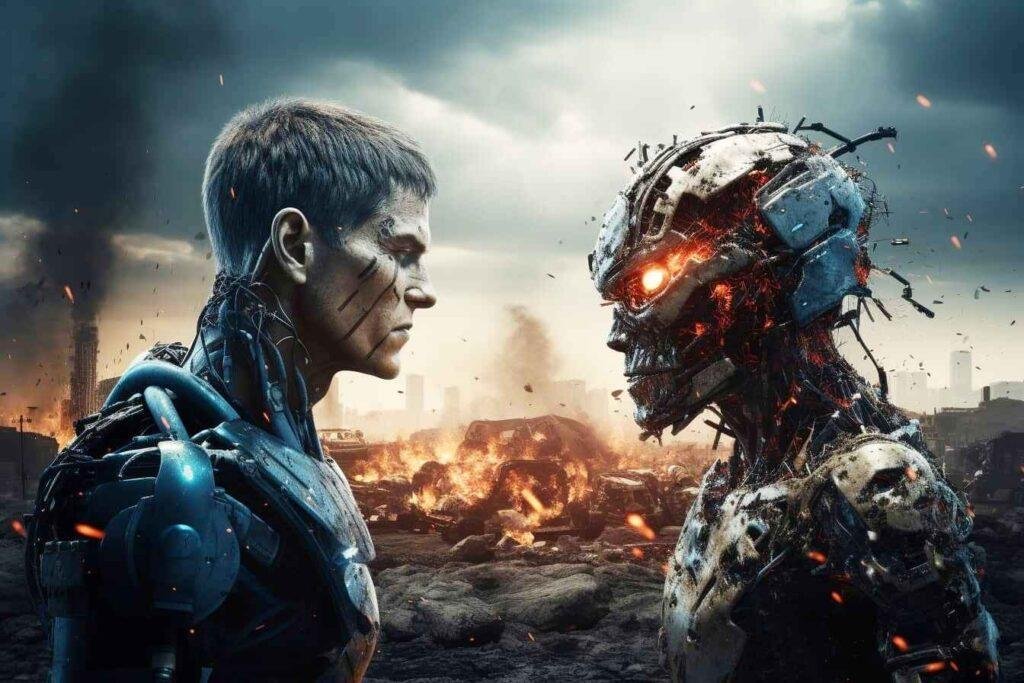
Imagine a video circulating on the internet that mimics your face and voice, showing you saying something you never said and doing something you never did. Now that the video has reached your family and acquaintances. Such fake videos, audio clips, or photos are called deepfakes. They are created with the help of artificial intelligence and look so real that it’s difficult to distinguish them from genuine content. This technology is now easily accessible, and many actors, politicians, and other well-known figures or celebrities are falling victim to it. Deepfakes are being used to defame people or damage their reputation. They can depict people engaging in obscene or other embarrassing acts. So, how can we prevent our identity or face from being digitally replicated? To address this problem, one country is taking steps by amending its laws. We will try to find out if it’s time to copyright your face to protect yourself from deepfakes.
Part 1: What are Deepfakes? To combat deepfake impersonation, the Danish government is amending the country’s copyright laws.
Under copyright law, the creator of any original work has the rights to it. It is illegal for another person or company to copy, distribute, or reproduce it. The Danish government is now amending its copyright laws to include individuals’ faces, voices, and expressions under copyright protection. Our first expert, Ditte Lund Larsen, is a digital copyright expert and a lawyer at a Danish law firm. She believes that artificial intelligence is now available on people’s phones and computers, and this is being used to create deepfake content, which is a cause for concern. If a video or audio is created and distributed without someone’s permission, using artificial intelligence to perfectly mimic their face and voice, that person can demand that the creator of the content remove it and can also seek compensation. This proposed law has not yet been passed by parliament, but under it, such videos would be made illegal. Danish courts will decide on the application of this law. What punishment will be given to those who violate the law? Will the videos be made legal? This law will not apply to videos, or rather, it will not apply if no other law is being violated.
What impact will this law have on social media platforms or tech companies that host this content on their platforms, and which can also be viewed in Denmark? These companies will have to comply with this law. If they do not remove the unauthorized content from their platforms, legal action can be taken against them. This law will bring companies and users of AI tools under the purview of the law. But will this be a good way to deal with the problem? We need to know what is fake and what is real, because anyone can easily show a politician saying something in these videos that they didn’t actually say. It is difficult to ascertain the truth. Such a law would be good for democracy and for everyone. The use of copyright law is not appropriate, but to understand this, we first need to know what copyright law actually is.
Part 2: What is Copyright?
There are three main aspects of intellectual copyright: one is trademarks, which identify a brand; the second is patents related to inventions; and the third is copyright for creative works such as art, literature, or music. Our other expert, Dr. Elena Trapova from the University of London, specializes in intellectual property. She says that, in simple terms, intellectual copyright is granted to human creations. So, this law protects our creative expression. Creative expression is a deeply personal aspect of a person, linked to their identity. In a way, it protects our identity. Initially, there wasn’t much specificity in copyright law; it was primarily designed to protect against the copying of things like paintings. However, with the development of technology, digital copies of these things can be created with the help of computers. Considering this, the law has been amended. Think about traditional literature and writings; this law was applied to protect their copyright. Later, when cases of copying music and films increased, people realized that copyright is also a technology-related issue. With the development of digital technology, we need to amend the copyright law. AI-generated works fall under its purview, but now questions are being raised about whether we should also bring scent and taste under the scope of copyright. That is, should perfumes and food items also be included under copyright protection?
The story of copyright is very long and rapidly evolving, but applying it to a face is not easily understood. Applying it to a human face is somewhat strange because we don’t create our faces; we are born with them. She says that if the goal is to control content on social media websites, then another major hurdle is that most social media platforms are international. This means that for them to operate within this law, many countries would have to implement this law. Regarding their intellectual property, all countries have their own copyright laws, but with the development of technology, several countries have agreed to implement some copyright laws together. However, many countries still implement their own copyright laws. This is a major legal challenge.
Part 3: Existing Laws
A deepfake of a person used for pornography is harmful not because it is fake, but because it appears authentic. Therefore, the same laws that apply to real pornography involving a specific individual should apply to such deepfakes to address the harm caused by the realistic depiction of that individual. So, should deepfakes be restricted in a way that prevents them from appearing real? Deepfakes are also used to show what a building might look like or how a city might appear after construction. A better way to control them might be to bring them under the purview of data protection and privacy laws. The importance of social media platforms’ role in the dissemination of deepfake content is also being discussed. There is a growing public opinion that social media should regulate this, but the US and many other countries are hesitant to impose controls on social media. Social media companies prioritize content in users’ feeds based on their reactions. Content that elicits a stronger emotional response or generates more engagement is promoted more or shown more frequently than regular content. This benefits the companies through increased advertising revenue. However, if these companies are profiting from this medium, they should also bear the consequences of the harm it causes.
Part 4 Global Law
A professor of Communications and Digital Transformation at a business school, he is in favor of individuals copyrighting their faces. He believes that in the future, ordinary people, or rather, democratic institutions, will be able to take steps to hold tech companies accountable in this matter. The focus is on how ordinary people or democratic institutions in the future will be able to pressure technology companies to adhere to certain conditions regarding the technologies they use. To address the problem and the harm caused to society, we need to change digital technology. But what should we do to strike a balance between the development of new technologies and the protection of people? Nikhil says that in the US, the view is that controlling companies will reduce business and income. However, in China and several other countries, a new debate is underway on striking a balance between business and security.
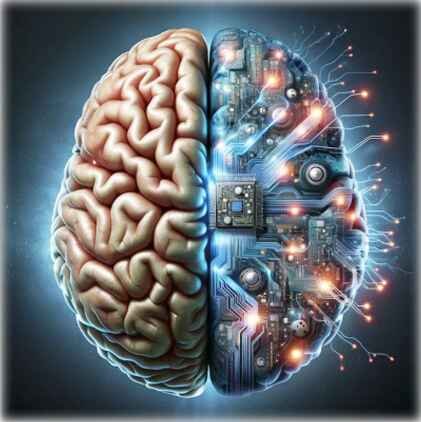
There, the discussion continues on balancing societal values and priorities with the working methods of tech companies. This April, the US Congress passed a law that makes it a crime to publish photos or videos of people without their permission. Last year, the European Union also enacted a law requiring a label indicating that the content is not real but created with the help of AI. Pressure is increasing on companies for greater control. Through legislation, awareness is growing in society regarding the protection of children and the security of our faces and voices, which are intimate aspects of our identity. Now, the responsibility for ensuring this is being shifted from ordinary people to the police and courts. Large language models collect vast amounts of data from the internet and reconstruct it. They don’t care who created the content. When artificial intelligence was developed, the fact that the data actually belonged to someone was completely ignored. We don’t see this happening in other industries, where someone’s intellectual property rights are violated without restraint. So, we return to our main question: Is it time to copyright our faces to protect ourselves? As our experts say, the matter is not that simple because your face is not something you created; it is something you were born with. However, you can certainly take steps to prevent its misuse. First, you need to protect your videos. And when sharing photos, you should consider who you are sharing them with and whether they could be misused. You can also take steps under your country’s laws to prevent such misuse. It is also crucial to establish the legal responsibility of social media platforms and tech companies. Therefore, the steps Denmark is considering might be a step in the right direction to address this problem. This will send a clear message that tech companies cannot and should not use our faces or intimate photos as data.
Part 5 The future
Car will run 1000km on a full charge; calls from the mountains without a SIM card; humans will reach close to Mars; 10 Science and Tech Innovations
2026: A year when humans will prepare for the moon, cars will travel a thousand kilometers on a single charge, calls will be made from mountains without a SIM card, robots will work in homes and become personal assistants, and India will make history in space. The future we see in movies is about to become a reality. Let’s look at the world of science and the innovations that will turn your imagination into reality this year. India will become the fourth country in the world, after the US, Russia, and China, capable of sending humans into space on its own. This mission will open up new jobs and startups in the country. Elon Musk’s company, Tesla, will begin limited production of its Optimus robot. Tesla will initially use the robots for internal purposes in its factories and then sell them to other companies. Importantly, in the future, the cost of a robot could be less than a car, meaning every home could have a mechanical helper, and robotic jobs will increase in the industry. Commercial trials and mass production of solid-state batteries could begin. These will replace existing lithium-ion batteries. Electric cars will be fully charged in just 5 to 10 minutes. A single charge will give vehicles a range of over 1000 kilometers. The world’s most powerful rocket, Starship, will launch for Mars. In the future, humans will be able to travel to Mars using it. The cost of space travel could be reduced by up to 90%. NASA will launch a mission to take astronauts to the moon’s orbit. This mission is considered a precursor to sending humans to the moon.
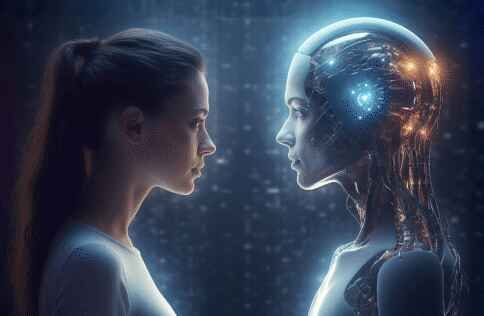
The goal of this mission is to search for water and establish a base camp at the Moon’s South Pole. This year, foldable screen phones, like paper, are expected to be launched. This will fulfill the need for both portability and a large display. With the press of a button, the screen will expand from 5-6 inches to 8-10 inches. The phone will become the size of a tablet, eliminating the need for users to carry a separate tablet. Several companies are working on this. AI will complete tasks from ticket booking to payments; it will do whatever you tell it to. Advanced AI agents will become the default in smartphones this year. You’ll save up to 50% of your time, you won’t have to take notes after meetings, and your personal life will become easier. Direct-to-satellite connectivity will become standard on Apple, Google, and Samsung phones. Users will be able to make calls from mountains or the middle of the ocean without a SIM card or cell tower. 2026 is not just one year, but the beginning of the future.