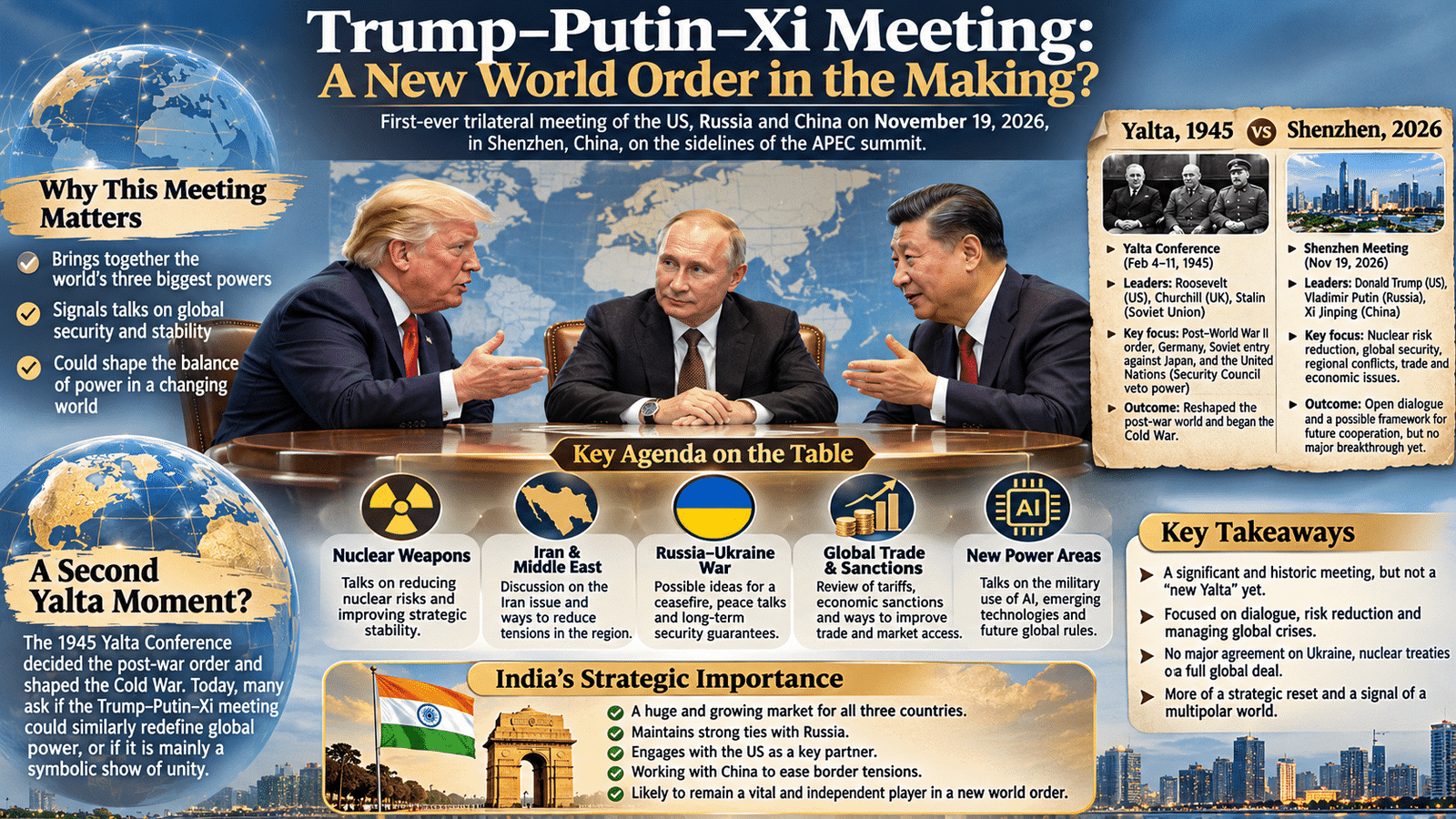
The possibility of Donald Trump, Vladimir Putin and Xi Jinping sitting at the same table raises an important question: are the world’s three major powers preparing to reshape global politics, or would such a meeting simply be another diplomatic photo opportunity?For decades, the United States, Russia and China have played major roles in shaping international politics. Their decisions influence wars, global trade, energy markets, military security and the future of developing countries.Now, the possibility of these three powerful leaders coming together has attracted international attention. Some observers compare the situation with the historic Yalta Conference of February 1945, when American President Franklin D. Roosevelt, British Prime Minister Winston Churchill and Soviet leader Joseph Stalin discussed the future of the world after World War II.
But is history about to repeat itself?Could Trump, Putin and Xi Jinping reach an agreement that changes the international balance of power? Will they discuss the Russia–Ukraine war, tensions in the Middle East, nuclear weapons and global trade? And most importantly, what could such developments mean for India?
A Historic Meeting of Three Powerful Leaders
The meeting between Trump, Putin and Xi Jinping is significant because it brings together three leaders whose countries have enormous military, economic and political influence.
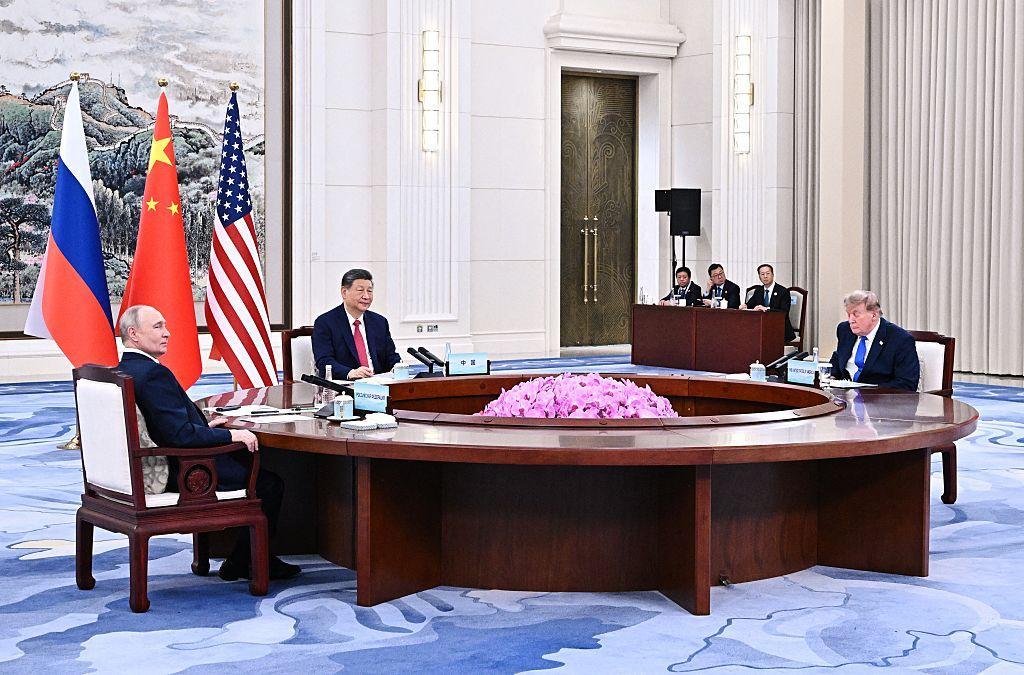
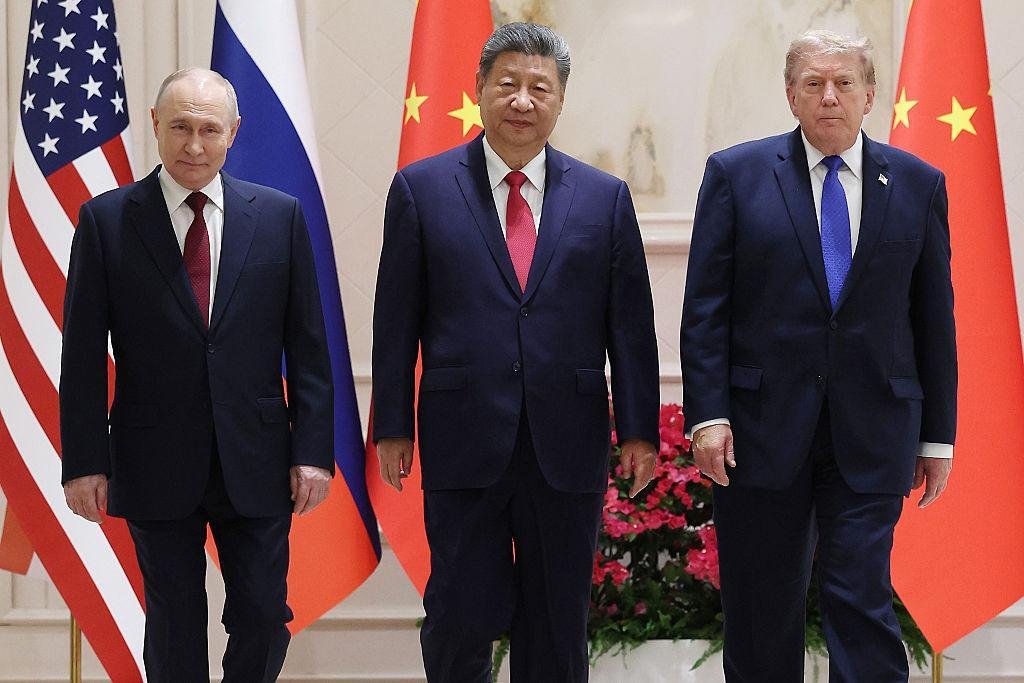
The United States remains a leading global economic and military power. Russia possesses one of the world’s largest nuclear arsenals and plays an important role in global energy markets. China has become a major manufacturing, technological and trading power.Although these countries have different political systems and national interests, they share one important reality: decisions made in Washington, Moscow and Beijing can affect almost every part of the world.The three leaders held their first-ever trilateral summit on November 19, 2026, in Shenzhen, China, on the sidelines of the Asia-Pacific Economic Cooperation (APEC) summit. This was therefore more than a hypothetical possibility. The meeting actually took place. Yonhap News Agency+1The meeting attracted attention because it brought together leaders who have often disagreed over international conflicts, economic competition and military security.However, a historic meeting does not automatically produce historic agreements.The real question is whether these leaders can convert diplomatic discussions into practical decisions.
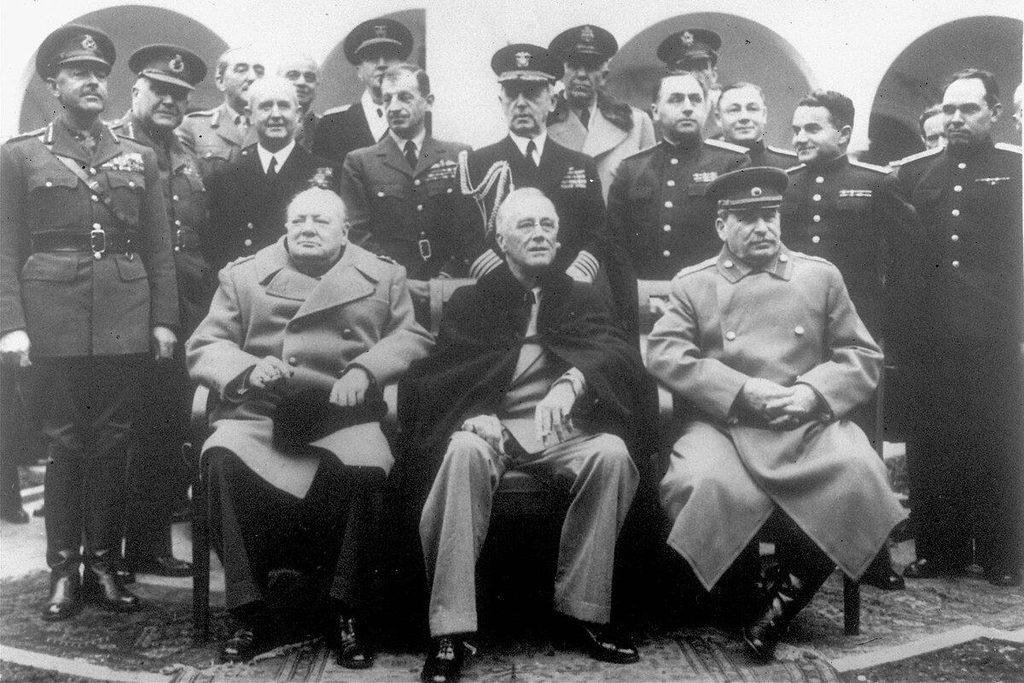
Why Is the Meeting Being Compared With the 1945 Yalta Conference?To understand why the Trump–Putin–Xi meeting attracted so much attention, we need to look back at February 1945.At that time, World War II was approaching its final stage. Nazi Germany was losing the war, and the Allied powers were preparing for a new international arrangement.
Three important leaders met at Yalta in Crimea:
- Franklin D. Roosevelt – President of the United States.
- Winston Churchill – Prime Minister of Britain.
- Joseph Stalin – Leader of the Soviet Union.
The meeting took place between February 4 and February 11, 1945.It became one of the most important diplomatic conferences of the twentieth century.
Four important outcomes of the Yalta Conference
First: The future of Germany
The leaders discussed how Germany would be governed after its defeat. They agreed on arrangements that included occupation zones for the major Allied powers, with France also receiving a role.Second: The United NationsThe leaders discussed the creation of a new international organisation that would help prevent another world war.These discussions helped shape the United Nations Security Council, including the veto power held by its five permanent members.
Third: The Soviet Union and the war against JapanStalin agreed that the Soviet Union would enter the war against Japan after Germany’s defeat, subject to agreed conditions.Fourth: The future of Eastern EuropeThe leaders discussed political arrangements for countries liberated from Nazi control. They also made commitments concerning elections, although the Soviet Union’s later actions did not match the Western interpretation of those commitments.Office of the Historian+1
Did Yalta create the Cold War?
The Yalta Conference did not officially establish the Cold War.However, disagreements over Eastern Europe, political influence and security gradually damaged relations between the Soviet Union and Western countries.Europe eventually became divided into two major political and military blocs.This division became a defining feature of the Cold War.That is why the comparison with Yalta is important.If Trump, Putin and Xi Jinping begin discussing global security and international influence together, their decisions could affect the balance of power for years.But there is one major difference: the 1945 conference took place during a world war, while the 2026 meeting took place in a world facing several separate geopolitical crises.What Were the Main Agendas of the Trump–Putin–Xi Meeting?
Nuclear weapons and global security
Nuclear security was one of the most important subjects surrounding the summit.
The United States and Russia possess the world’s largest nuclear arsenals. China also has a growing nuclear weapons programme.Trump has repeatedly expressed interest in reducing nuclear weapons and encouraging major powers to discuss arms control.The challenge is that all three countries have different security concerns.The United States wants to maintain its strategic position. Russia wants recognition of its military and security interests. China wants to protect its growing international influence without accepting restrictions that it considers unfair.For this reason, a nuclear agreement involving all three countries would be extremely complicated.According to reports following the November 19 summit, the leaders agreed to continue dialogue on reducing nuclear risks and preventing nuclear proliferation. However, this should not be confused with a comprehensive nuclear disarmament treaty. Yonhap News Agency+1
The Iran conflict and Middle East tensions
The Middle East is another major concern for international politics.
Iran has an important position in regional security, energy supplies and relations between major powers.The United States, Russia and China have different interests in the region.Washington has its own security priorities and relationships with Israel and Gulf countries. Moscow has maintained important political and military connections with Iran. Beijing has economic and diplomatic interests in regional stability.A discussion between Trump, Putin and Xi could therefore help reduce misunderstandings.However, ending a regional conflict is not as simple as reaching an agreement between three presidents.Countries directly involved in the conflict must also participate in negotiations.Any long-term solution would need to consider regional security, political independence, economic interests and the concerns of neighbouring countries.
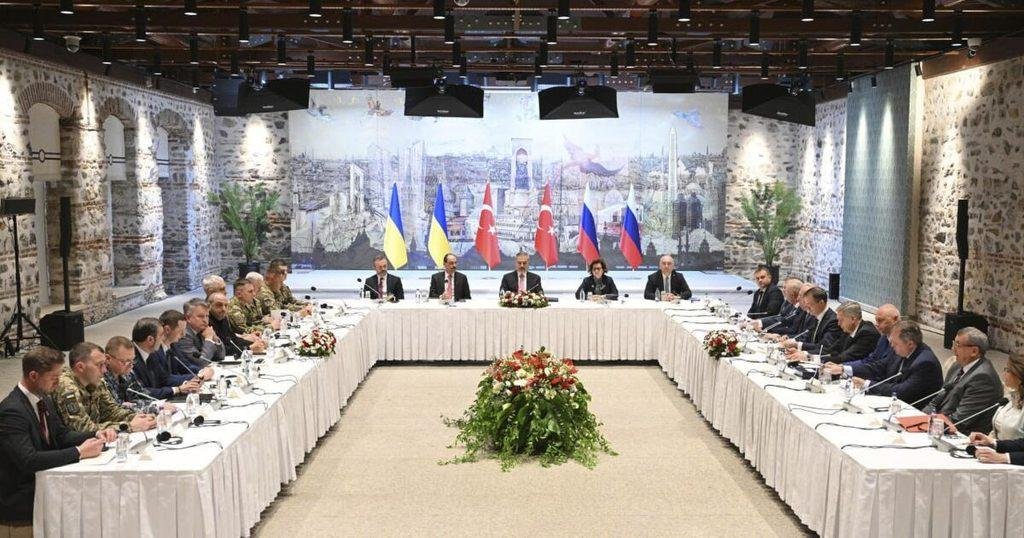
The Russia–Ukraine war remains one of the biggest challenges to European and international security.Since Russia launched its full-scale invasion of Ukraine in February 2022, the conflict has created enormous humanitarian, economic and political consequences.Trump has expressed interest in ending the war through negotiations.Putin, meanwhile, wants Russia’s security and political demands to be considered in any peace arrangement.China has also tried to present itself as a country capable of supporting diplomatic solutions.A meeting involving all three leaders could create opportunities for discussion.
Possible subjects include:
- A ceasefire arrangement.
- Security guarantees for Ukraine.
- The future of disputed territories.
- European security arrangements.
- Sanctions against Russia.
- Future relations between Russia and Western countries.
However, Ukraine cannot simply be excluded from decisions concerning its own future.European countries also have important security interests.Therefore, even if Trump and Putin reach a common understanding, a lasting peace agreement would require broader international participation.Reports following the summit did not indicate a major breakthrough on Ukraine.Economic competition is another major reason why this meeting matters.
The United States and China have been competing over technology, manufacturing, international trade and strategic industries.Tariffs and restrictions have created uncertainty for businesses and international markets.Trump has frequently used tariffs as a tool in trade negotiations.China wants stable access to international markets and protection for its manufacturing and technology sectors.Russia faces a different economic challenge.International sanctions have restricted several areas of its economy, including finance, technology and trade with Western countries.Putin would naturally prefer greater economic access and fewer restrictions.A discussion between these leaders could help establish communication on trade-related problems.However, removing sanctions or changing tariff policies requires separate decisions by governments and, in some cases, legislative institutions.A friendly meeting alone cannot solve these problems.
Artificial intelligence and future military technology
Another important area is the growing influence of artificial intelligence.AI is changing the global economy, defence systems, intelligence operations and international competition.The United States and China are particularly important competitors in advanced technology.Russia also wants to strengthen its position in military and technological development.
The use of AI in defence raises important questions:
- Should countries agree on rules for military AI?
- How should autonomous weapons be controlled?
- Can AI increase the danger of accidental military escalation?
- Should major powers cooperate on cybersecurity?
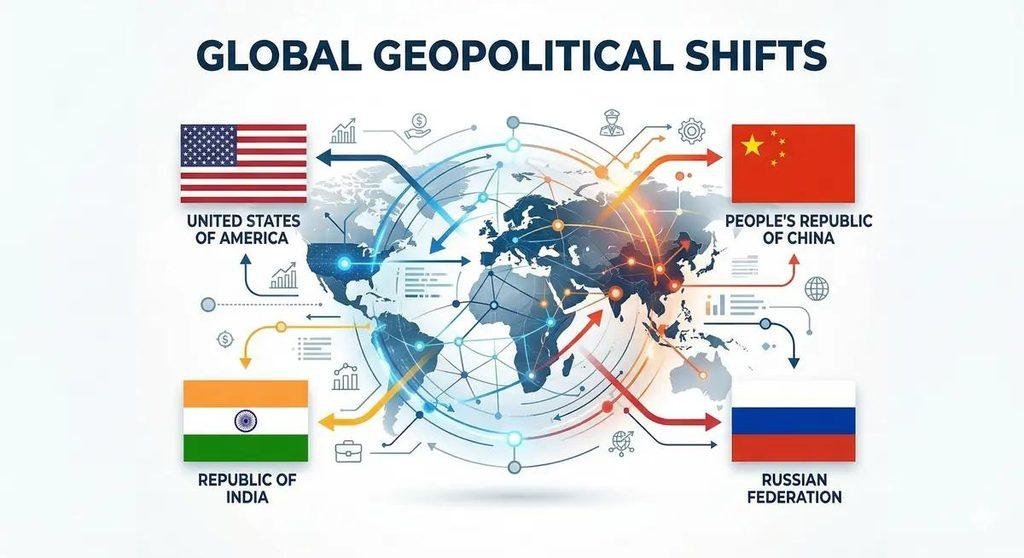
These questions may become increasingly important in future diplomatic meetings.However, discussions about technology should not be mistaken for a formal agreement to share military capabilities.The phrase New World Order sounds dramatic, but it describes an important question in international politics.For several decades after the collapse of the Soviet Union in 1991, the United States enjoyed a particularly powerful position in global affairs.Today, the situation is more complicated.China has become a major economic and technological power. Russia continues to influence international security. India is growing economically and strengthening its global diplomatic role.Other countries and regional organisations are also becoming more influential.This changing situation is often described as a move towards a multipolar world.
What does a multipolar world mean?
A multipolar world is an international system in which power is distributed among several important countries rather than being dominated by one country or two competing blocs.
For example:
- The United States remains influential in military, financial and technological affairs.
- China is a major economic and manufacturing power.
- Russia retains significant military and energy influence.
- India is an increasingly important economic and diplomatic power.
- The European Union remains a major economic and regulatory force.
The Trump–Putin–Xi meeting is important because it demonstrates that even powerful rivals may need direct communication.But three leaders meeting together does not mean they have agreed to divide the world into separate areas of influence.That would be a much bigger claim, requiring substantial evidence.
Will the Three Leaders Actually Change the World?
This is perhaps the most important question.The meeting was historic because it brought together the leaders of three major powers for direct trilateral discussions.But history teaches us that diplomatic meetings and actual political agreements are two different things.The Yalta Conference took place when the Second World War was nearing its end. The leaders were discussing the future of a devastated international system.
The Shenzhen meeting took place under very different circumstances.The United States, Russia and China have overlapping interests, but they also have serious disagreements.Consider the following challenges.
Different national interests
Trump wants to strengthen America’s international position.Putin wants Russia to retain its influence and protect what Moscow considers its strategic interests.Xi wants China to become an even more influential global power.These objectives do not always support one another.
Lack of trust
The three countries have experienced years of diplomatic tensions.The United States and China have disagreements over trade, technology and Taiwan.he United States and Russia have serious disagreements over Ukraine and European security.Russia and China have a closer strategic relationship, but they are also independent countries with their own long-term interests.Building trust will require more than one meeting.
Other countries cannot be ignored
The international system is not controlled by three countries alone.India, Japan, South Korea, European countries, Australia and many other nations have their own security and economic priorities.Ukraine must be involved in decisions about its future.Middle Eastern countries must have a voice in decisions concerning their region.A genuine international settlement requires cooperation beyond Washington, Moscow and Beijing.
Now that the summit has taken place, it is possible to distinguish the actual developments from expectations before the meeting.The three leaders met in Shenzhen on November 19, on the sidelines of the APEC summit.The meeting lasted approximately 70 minutes, according to Associated Press reporting.The discussions included nuclear risks, international security and major geopolitical issues.The leaders also expressed support for continued dialogue.However, the outcome was considerably more limited than some observers might have expected.
Reports following the meeting highlighted discussion of:
- Reducing nuclear risks and preventing nuclear proliferation.
- Reforming international institutions, including the United Nations.
- Energy cooperation and fossil fuel supplies.
- Managing international conflicts and strategic competition.
- Maintaining communication between the three major powers.
There was no announcement of a comprehensive nuclear disarmament agreement or a major settlement of the Russia–Ukraine war.The Associated Press described the outcome as much narrower than the ambitious expectations surrounding the summit. webcenters.netscape.compuserve.com
Why was the outcome limited?
There is a simple explanation.The three leaders may want international stability, but they do not necessarily agree on how to achieve it.For example, the United States may want China to participate in nuclear arms reduction discussions.China, however, has argued that its nuclear arsenal is considerably smaller than those of America and Russia, making equal negotiations difficult.Similarly, Russia wants its security concerns addressed in discussions about Ukraine, while Ukraine and European countries have their own demands.These disagreements cannot be resolved through diplomatic photographs or friendly statements.
Was the summit a success?
It depends on how we define success.If the objective was to bring three powerful leaders together and establish direct communication, the summit was significant.If the objective was to end major international conflicts or establish a new global security agreement, the results were limited.In diplomacy, even maintaining communication between rivals can be valuable.Sometimes preventing a crisis is itself an important achievement.
Although the meeting did not immediately create a new international system, it could have several longer-term consequences.
More direct communication between major powers
The first benefit could be regular communication.When major powers communicate directly, misunderstandings may be reduced.This is particularly important when nuclear weapons and military operations are involved. A new approach to nuclear securityThe summit could provide a starting point for future discussions about nuclear risks.A practical agreement would require technical negotiations, verification systems and long-term commitments. Changes in international tradeIf the United States and China improve economic relations, global businesses could benefit from greater stability.Russia could also seek opportunities to improve its international economic position.However, major economic changes will depend on policies implemented after the summit. A stronger multipolar international systemThe meeting reinforces the idea that global politics increasingly involves several powerful countries.The United States may remain highly influential, but it cannot ignore China’s economic position or Russia’s military influence.India and other emerging economies will also have opportunities to increase their international roles. Greater importance of strategic independenceCountries may increasingly try to avoid becoming completely dependent on a single major power.India’s strategic autonomy is one example of this approach.For smaller countries, maintaining balanced diplomatic and economic relationships may become equally important.
One interesting aspect of the meeting is the personal diplomacy between the three leaders.Trump has often presented himself as a negotiator who can communicate directly with world leaders.Putin has consistently sought recognition of Russia as an independent great power.Xi Jinping has focused on strengthening China’s international position.Their public interactions may appear friendly, but their countries remain strategic competitors in several areas.It is important to understand the difference between personal relationships and national interests.
A president may develop a friendly relationship with another leader, but this does not mean their countries will agree on every issue.For example, America and China can cooperate on trade while competing over advanced technology.Russia and China can cooperate strategically while maintaining separate foreign policies.Similarly, India can maintain a close relationship with Russia while strengthening its partnership with America.International politics is rarely a simple story of friendship or rivalry.It is usually a combination of both. Is Another Yalta Conference Possible?The comparison with Yalta is interesting, but we should be careful about assuming that the same history will repeat itself.In 1945, the world was emerging from a devastating global war. The major Allied powers were discussing the structure of the post-war international system.In 2026, the international situation is different.There is no single victorious alliance preparing to redesign the entire world. Instead, the three countries are dealing with competing interests, regional conflicts, economic challenges and technological competition.There is also an important difference in international institutions.The United Nations already exists, and international law, national sovereignty and the interests of other countries cannot simply be ignored.A secret understanding between three leaders would not automatically become a legitimate international settlement.Therefore, the Shenzhen summit may be remembered as an important moment in international diplomacy, but calling it another Yalta would be premature. What Should the World Watch Next?The real importance of the summit will become clearer through what happens afterwards.
Here are five developments worth watching:
- Nuclear negotiations: Will the three countries establish a formal process to discuss nuclear risk reduction?
- Ukraine: Will Russia and the United States make progress towards a settlement that also considers Ukraine’s interests?
- Middle East: Will diplomatic engagement help reduce regional tensions?
- US–China relations: Will the two countries maintain progress on trade and technology?
- India’s position: Will India strengthen its role as an independent diplomatic and economic power?
These developments will tell us much more about the future of the international system than the summit’s photographs.
Conclusion: A Historic Meeting, But Not Yet a New World Order
The meeting between Donald Trump, Vladimir Putin and Xi Jinping in Shenzhen on November 19, 2026, was an important diplomatic event.For the first time, the leaders of the United States, Russia and China came together for a trilateral summit.Naturally, the meeting attracted comparisons with the historic Yalta Conference of 1945.However, the two events took place under very different international circumstances.Yalta helped shape the post-World War II international system. The Shenzhen meeting, by contrast, demonstrated the importance of communication between major powers in an increasingly complicated world.The three leaders discussed important subjects, including nuclear security and international stability. Yet they did not announce a comprehensive agreement capable of resolving the world’s major conflicts.For India, the developments offer both opportunities and challenges.India must continue strengthening its economic position, maintaining strategic independence and developing relationships with all major powers.The future international system may become increasingly multipolar, with America, China, Russia, India and other influential countries playing important roles.So, is something big happening in the world?Yes, the international balance of power is changing. But the November 2026 summit should be seen as a significant diplomatic signal, not proof that a completely new world order has already been created.The real story will be written by the decisions these leaders make in the months and years ahead.
Frequently Asked Questions (FAQs)
1. Did Trump, Putin and Xi Jinping meet in November 2026?
Yes. Donald Trump, Vladimir Putin and Xi Jinping held their first-ever trilateral summit on November 19, 2026, in Shenzhen, China, during the APEC summit.
2. Why is the Trump–Putin–Xi meeting important?
It is important because it brought together the leaders of three major military, economic and nuclear powers to discuss international security and global stability.
3. What was the main agenda of the meeting?
Major subjects included nuclear risk reduction, international security, global conflicts, energy and international cooperation.
4. What was the Yalta Conference of 1945?
The Yalta Conference was a meeting between US President Franklin D. Roosevelt, British Prime Minister Winston Churchill and Soviet leader Joseph Stalin in February 1945. They discussed Germany’s future, the war against Japan and the creation of the United Nations.
5. Is the 2026 summit another Yalta Conference?
Not exactly. Although both meetings involved three major powers discussing international affairs, the political and military circumstances were very different.
6. Will the meeting end the Russia–Ukraine war?
There was no major peace agreement announced following the summit. Any lasting settlement will require negotiations involving Ukraine, Russia and other relevant parties.
7. What does the meeting mean for India?
India could benefit from improved relations between major powers through greater economic stability, trade opportunities and reduced international tensions. However, India must continue protecting its strategic interests.
8. Will China become more powerful than America?
China is already a major global economic and technological power. However, becoming more influential than the United States across every area would require overcoming significant economic, military and geopolitical challenges.
9. What is a multipolar world?
A multipolar world is an international system in which several countries share global influence rather than one country dominating international politics.
10. Will the world see another Cold War?
A new Cold War is possible in some areas of international competition, particularly technology, military security and trade. However, economic interdependence and diplomatic cooperation make today’s situation different from the original Cold War.