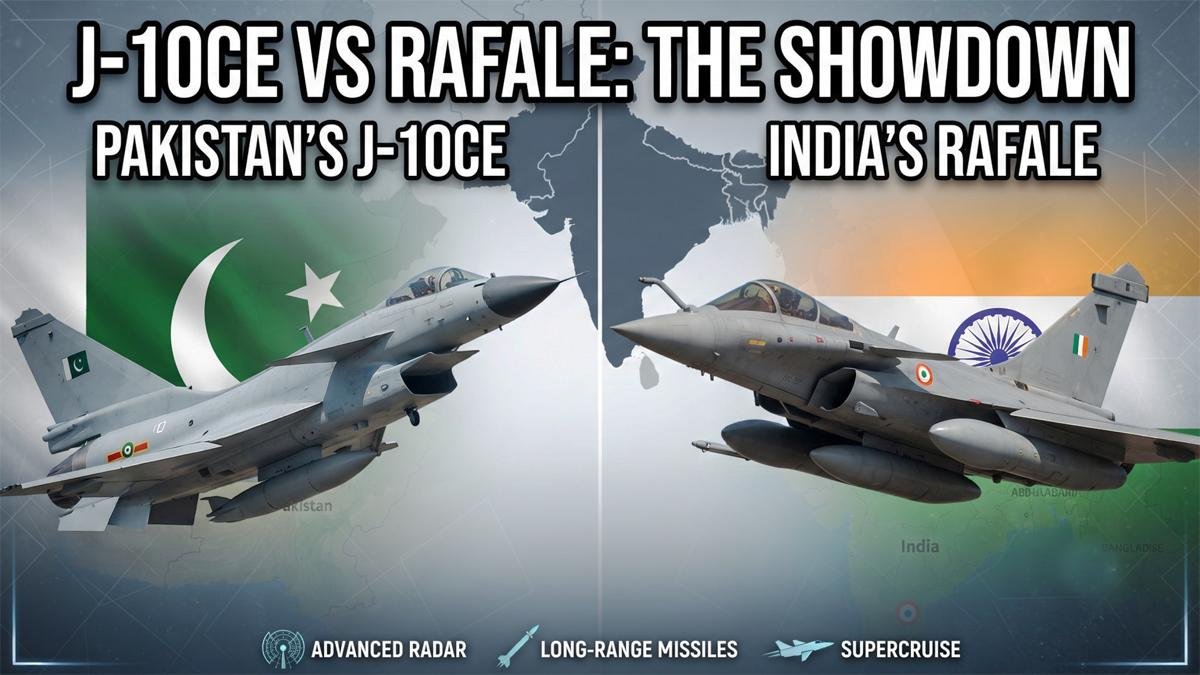
Bangladesh is moving toward one of the most consequential military-modernisation decisions in its recent history: the potential acquisition of Chinese-made J-10CE multirole fighter aircraft.
The proposed purchase is significant not simply because Bangladesh wants a more capable fighter fleet. Its importance lies in the wider geopolitical environment surrounding South Asia. Bangladesh already relies heavily on Chinese military equipment, Pakistan operates the J-10C, China remains a major defence partner for both countries, and relations between New Delhi and Dhaka have entered a more complicated phase following Bangladesh’s political transition.
Recent reporting indicates that Bangladesh has prepared a draft agreement for the acquisition of J-10CE fighters, with additional plans involving helicopters and unmanned aerial systems. The exact final number, financial structure and delivery schedule remain subject to negotiations and approvals, although reports have consistently discussed a requirement for around 20 aircraft, with some reports putting the potential fleet at 20–24.
The most politically sensitive element, however, is the explanation offered by Bangladeshi Prime Minister’s adviser Zahed Ur Rahman. He cited the 2025 India-Pakistan conflict and the reported performance of Pakistani J-10CE fighters against Indian aircraft as one reason Bangladesh has focused on the Chinese aircraft.
That statement has generated a much larger question: Does Bangladesh’s J-10CE acquisition represent the emergence of a new China-Pakistan-Bangladesh strategic alignment around India?
The answer is not straightforward.
A modern fighter purchase does not automatically create a military alliance. Bangladesh has its own security calculations, economic constraints and defence requirements. At the same time, the acquisition could materially alter the military balance in the eastern Indian Ocean region and increase the importance of China’s defence relationship with Dhaka.
To understand the implications, it is necessary to examine the J-10CE itself, the Rafale controversy, Bangladesh’s military-modernisation programme, China’s role in Bangladesh, Pakistan’s J-10 experience and the changing strategic relationship between India and Bangladesh.
Bangladesh’s J-10CE Purchase: What Is Actually Being Proposed?
Bangladesh’s proposed acquisition has been under discussion for some time, but the programme moved closer to implementation in August 2026.
Bangladeshi authorities have said that a committee has prepared a draft agreement covering the acquisition of J-10CE multirole combat aircraft and other defence equipment. The proposal has been sent to relevant authorities, including the Armed Forces Division and ministries responsible for approval and funding.
This distinction is important.
A draft agreement is not the same thing as a completed procurement contract.
Bangladesh’s government has indicated that implementation depends partly on budgetary availability. If sufficient funds are not available during the current fiscal cycle, the procurement could move into the following budget period.
Reports have placed the potential package at roughly US$2.2–2.3 billion, although the final figure could change during negotiations.
One Bangladeshi report based on an Armed Forces Division analysis put the proposed package at about US$2.302 billion for 20 aircraft. The reported figure includes considerably more than the basic airframe price, with training, logistics, infrastructure, insurance, technical support and other associated expenses included.
This illustrates a fundamental reality of modern fighter procurement:
The price of a combat aircraft is not the same as the cost of operating a combat aircraft.
A fighter fleet requires pilot training, simulators, weapons, spare engines, maintenance infrastructure, ground equipment, software support, technical personnel, fuel infrastructure and long-term logistical assistance.
Consequently, comparing the headline price of a J-10CE with the catalogue price of a Rafale can be misleading.
Why Bangladesh Wants the J-10CE
Bangladesh’s interest in the J-10CE predates the latest political controversy surrounding the aircraft.
The Bangladesh Air Force needs to replace or supplement an ageing combat fleet. Its fighter inventory has historically relied heavily on Chinese-origin aircraft, particularly F-7 variants, alongside Russian MiG-29s.
According to Anadolu Agency, Bangladesh operates approximately 44 fighter aircraft, of which 36 are Chinese-made F-7s.
The F-7 is essentially the Chinese development of the Soviet MiG-21 design family. While successive upgrades have improved its capabilities, it belongs to an entirely different technological generation from the J-10CE.
Moving from F-7s to J-10CEs therefore represents more than simply replacing old aircraft with newer ones.
It would give Bangladesh access to a modern fighter architecture incorporating:
- Active electronically scanned array radar
- Modern electronic warfare systems
- Digital avionics
- Advanced data links
- Beyond-visual-range air-combat capability
- Modern air-to-air missiles
- Multirole strike capability
- Improved situational awareness
- Greater interoperability with modern command-and-control systems
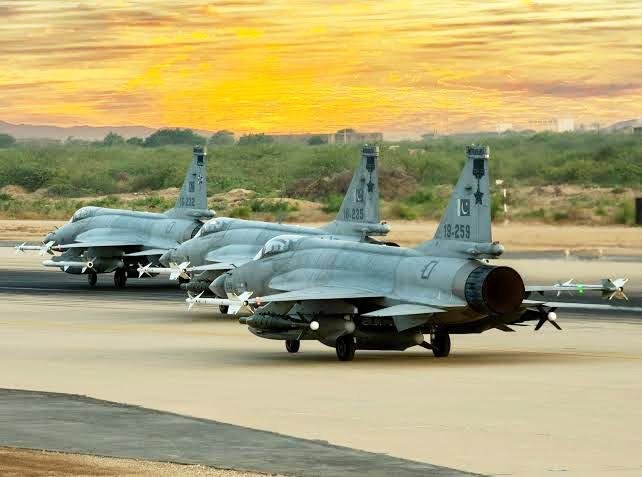
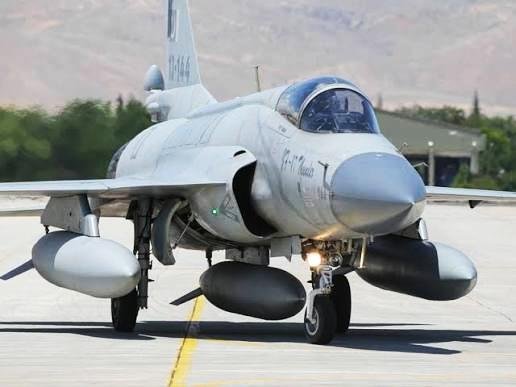
The J-10CE is an export variant of the J-10C family and is designed as a modern multirole combat aircraft.
Defense News has described the J-10C as China’s most capable fighter currently offered for export, while noting that the aircraft’s AESA radar, data links and modern missile systems represent a substantial capability increase for Bangladesh.
For Dhaka, that transformation could be strategically attractive.
What Is the J-10CE?
The Chengdu J-10 is a single-engine multirole fighter developed by China’s Chengdu Aircraft Industry Group.
The J-10 family has evolved substantially since its early versions. The J-10C introduced significant improvements in radar, avionics, electronic warfare and weapons integration.
The export J-10CE is designed for foreign customers and has become particularly important because Pakistan operates the aircraft.
Its significance is therefore not only technological.
It has also become a test case for the international reputation of Chinese combat aviation.
For years, Chinese fighter aircraft were often judged primarily through comparisons with American, European and Russian systems. The J-10C’s operational association with Pakistan has changed that discussion.
The aircraft’s perceived performance during the 2025 India-Pakistan confrontation attracted international attention and has become part of China’s argument that its fighter technology is increasingly competitive with Western systems.
Bangladesh has explicitly acknowledged that this operational experience influenced its procurement thinking.
Zahed Ur Rahman said Bangladesh had examined the India-Pakistan conflict and believed the Chinese fighter had demonstrated strong performance against Rafale aircraft.
But this is where the story becomes controversial.
Did a Pakistani J-10CE Actually Shoot Down an Indian Rafale?
This question requires considerable caution.
During the May 2025 India-Pakistan conflict, Pakistan claimed that its fighter force had destroyed several Indian aircraft, including Rafales.
Those claims became a major part of Pakistan’s information campaign surrounding the conflict.
Some international reporting also indicated that India had suffered aircraft losses. However, the exact identity and circumstances of individual losses have been disputed.
India did not publicly confirm Pakistan’s claim that multiple Rafales had been shot down.
The controversy is particularly important because Bangladesh’s stated justification for purchasing the J-10CE treats the reported Rafale shootdown as established evidence.
That goes further than what the publicly available evidence conclusively establishes.
A later Indian Air Force procurement document became an important piece of evidence in the debate. In June 2026, reporting based on an Air Headquarters request for proposal indicated that the Indian Air Force was seeking support covering the full fleet of 36 Rafale aircraft acquired under India’s agreement with France. India Today reported that the document contradicted repeated Pakistani claims that India had lost multiple Rafales.
That does not, by itself, provide a complete reconstruction of every aircraft incident during the 2025 conflict.
But it does mean that statements such as “China’s J-10 definitively shot down India’s Rafale” should not be presented as an uncontested fact.
A more accurate formulation is:
Pakistan claimed that J-10CE fighters contributed to the destruction of Indian combat aircraft, including Rafales, during the 2025 conflict; India disputed or did not confirm those specific claims, and subsequent evidence has challenged the assertion that multiple Indian Rafales were lost.
This distinction matters enormously in defence analysis.
J-10CE vs Rafale: Is the Chinese Fighter Really Better?
Another issue is the tendency to turn the J-10CE-versus-Rafale discussion into a simple winner-takes-all comparison.
That is not how modern air warfare works.
The J-10CE and Rafale are both generally described as advanced 4.5-generation fighters, but they belong to different design philosophies and procurement ecosystems.
The Rafale is a twin-engine French multirole fighter developed by Dassault Aviation.
The J-10CE is a single-engine Chinese multirole fighter derived from the J-10 family.
Their performance depends on far more than the aircraft itself.
Factors include:
- Radar capability
- Electronic warfare
- Missile performance
- Pilot training
- Data-link architecture
- Airborne early-warning support
- Ground-based radar
- Intelligence and surveillance
- Mission planning
- Electronic intelligence
- Rules of engagement
- Maintenance readiness
- Weapons availability
- Tactical doctrine
Consequently, saying that one aircraft is categorically “better” is less useful than examining specific mission requirements
The Rafale’s Advantages
The Rafale’s twin-engine configuration provides substantial power and redundancy.
It was designed from the beginning as a highly versatile multirole aircraft capable of air superiority, ground attack, reconnaissance and nuclear missions in the French system.
India’s Rafale fleet has also been integrated into a broader operational ecosystem involving Indian command-and-control networks, weapons, sensors and support infrastructure.
The Rafale’s combat capability is therefore not simply a function of the aircraft’s maximum speed or payload.
Its value comes from the combination of:
Aircraft + sensors + weapons + electronic warfare + pilot + network + support infrastructure.
This is one reason comparisons based purely on specifications can be misleading.
The J-10CE’s Advantages
The J-10CE, meanwhile, offers Bangladesh an important combination:
modern capability at a comparatively attractive procurement and sustainment cost.
Its AESA radar and integration with modern Chinese weapons give it credible beyond-visual-range capabilities.
Pakistan’s operational experience is also valuable for Bangladesh.
If Dhaka purchases the aircraft, it would not be entering an entirely untested ecosystem. Pakistan already operates J-10Cs and provides China with an important export reference customer.
This creates opportunities for training, operational lessons and logistical cooperation.
For a country seeking to modernise a relatively small fighter force, that can be highly attractive.
Why Bangladesh Prefers China
The biggest reason may not be that Bangladesh believes the J-10CE is universally superior to the Rafale.
The more practical explanation is cost, financing, existing infrastructure and political relationships.
Bangladesh already operates a large quantity of Chinese military equipment.
Its armed forces have purchased Chinese tanks, naval systems, aircraft, missiles and other equipment over several decades.
This creates what defence analysts call a path dependency.
Once a country builds its military around a particular supplier, switching suppliers becomes expensive.
Training systems, maintenance practices, spare parts, technical personnel and weapons integration all become interconnected.
China can therefore offer Bangladesh something that European competitors may find difficult to match:
a complete defence ecosystem built around existing Chinese equipment.
That reduces transition costs.
Forces Goal 2030 and Bangladesh’s Military Modernisation
Bangladesh’s military modernisation programme is not new.
The country introduced its Forces Goal 2030 programme as a long-term framework for upgrading the Bangladesh Armed Forces.
The objective has been to build a more capable military across the army, navy and air force.
For the air force, modern fighter aircraft are particularly important because the existing fleet contains ageing platforms.
The J-10CE fits naturally into that modernisation strategy.
Defense News reported in 2025 that Bangladesh had already given in-principle approval for modern multirole combat and attack aircraft, along with air-defence systems and long-range radars.
The aircraft procurement therefore should not be interpreted solely through the lens of India.
Bangladesh has legitimate reasons to modernise its air force regardless of its relationship with New Delhi.
China Is Already Bangladesh’s Major Defence Supplier
The proposed J-10CE acquisition would deepen an existing relationship rather than create an entirely new one.
China has been a major source of military hardware for Bangladesh for years.
Bangladesh has purchased Chinese-origin:
- Fighter aircraft
- Tanks
- Naval vessels
- Submarines
- Air-defence systems
- Missiles
- Radars
- Training aircraft
- Unmanned systems
This dependence creates strategic advantages for China.
Weapons sales are rarely just commercial transactions.
When a country purchases an advanced fighter fleet, it also becomes connected to the supplier through:
- Training
- Maintenance
- Software
- Spare parts
- Weapons
- Technical assistance
- Upgrades
- Intelligence relationships
- Military exercises
Therefore, the J-10CE deal could strengthen China’s long-term defence influence in Bangladesh.
Why India Is Paying Attention
India and Bangladesh share a long land boundary and extensive maritime interests in the Bay of Bengal.
For decades, India’s eastern security environment was generally considered less threatening than its western or northern borders.
Pakistan has traditionally been the primary focus of India’s western security planning, while China dominates the northern strategic calculation.
Bangladesh was generally treated as a partner in India’s eastern neighbourhood policy.
That environment is changing.
The concern in New Delhi is not simply:
“Bangladesh is buying 20 Chinese fighter jets.”
The more important question is:
“What military infrastructure, political relationships and strategic access could eventually accompany the purchase?”
A fleet of 20 modern fighters does not suddenly give Bangladesh the ability to challenge India’s air force.
India operates a much larger and more sophisticated air-power structure.
The strategic concern is therefore not immediate numerical parity.
It is the possibility of a broader shift in Bangladesh’s defence orientation.
The China-Pakistan-Bangladesh Triangle
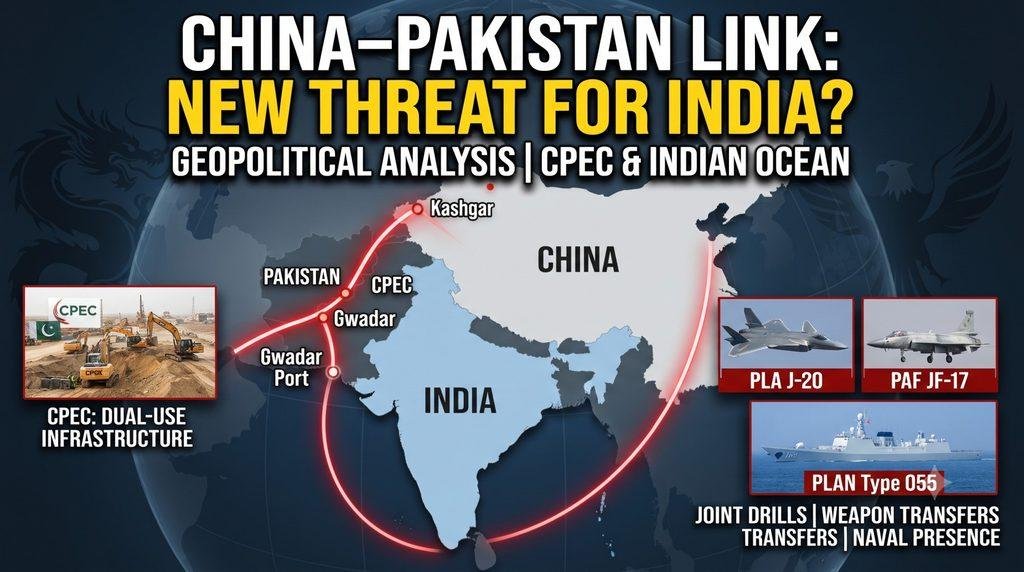
The phrase “China-Pakistan encircling India” is politically powerful but should be used carefully.
China and Pakistan have a deep strategic relationship.
China supplies Pakistan with major quantities of military equipment, including fighter aircraft and air-defence systems.
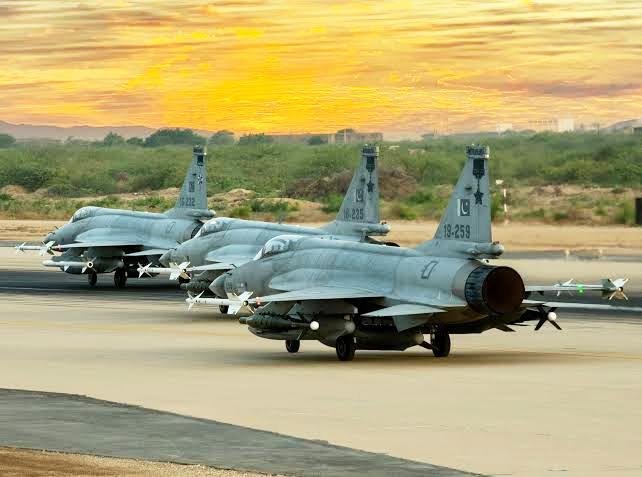
Pakistan’s J-10C fleet is a particularly visible symbol of that relationship.
Bangladesh, meanwhile, has increasingly relied on Chinese military technology.
If Dhaka also operates the J-10CE, three countries in India’s immediate strategic environment would be connected through Chinese combat-aircraft technology.
That does not mean they form a formal military alliance.
But it could create interoperability, common training practices, shared weapons ecosystems and defence-industrial relationships.
That is strategically significant.
Why Pakistan’s J-10 Experience Matters to Bangladesh
Bangladesh’s decision-makers are clearly paying attention to Pakistan.
Pakistan is the only country besides China currently operating the J-10 family at meaningful scale.
This makes Pakistan an important reference point for Bangladesh.
If Bangladesh buys the J-10CE, it could potentially benefit from lessons learned by Pakistan in:
- Pilot training
- Air combat tactics
- Maintenance
- Weapons employment
- Radar operation
- Electronic warfare
- Beyond-visual-range engagements
The 2025 India-Pakistan conflict further increased international attention around the Pakistani J-10C.
Regardless of the unresolved claims about individual aircraft losses, the conflict demonstrated that modern air warfare involves a network of sensors, missiles, electronic warfare systems and command-and-control assets rather than simple aircraft-versus-aircraft combat.
That lesson is more important than the propaganda surrounding individual shootdown claims.
Bangladesh’s Strategic Calculus Is More Complicated Than “Anti-India”
It would be a mistake to assume that Bangladesh’s military modernisation automatically means Dhaka is becoming an anti-India state.
Bangladesh has substantial economic, geographic and cultural links with India.
Its economy depends heavily on regional connectivity.
India is also important for trade, energy, transportation and security cooperation.
At the same time, Bangladesh has its own strategic objective:
maintaining maximum diplomatic flexibility among India, China, the United States and other major powers.
China offers infrastructure, defence equipment and financing.
India offers geographic connectivity, trade, energy and regional access.
Western countries offer investment, technology and export markets.
Bangladesh has strong incentives to avoid becoming completely dependent on any single power.
The J-10CE purchase can therefore be interpreted simultaneously as:
- A military-modernisation programme.
- A Chinese defence-industrial relationship.
- A diversification strategy.
- A signal of Bangladesh’s strategic autonomy.
- A potential challenge to India’s traditional influence in Dhaka.
All five interpretations can coexist.
The Political Transformation in Bangladesh
Bangladesh’s domestic political transition has also affected its foreign-policy calculations.
The fall of Sheikh Hasina’s government in 2024 dramatically changed the political environment.
India had maintained a particularly close relationship with the Hasina government.
The subsequent political transition created greater uncertainty in India-Bangladesh relations.
The new political environment has produced more visible engagement between Bangladesh and China.
This does not mean Dhaka has abandoned India.
Instead, Bangladesh appears to be pursuing a more diversified foreign-policy approach.
The key question for India is whether this diversification remains balanced or gradually becomes a strategic tilt toward Beijing.
Tarique Rahman and the China Question
Bangladesh’s political leadership has also been looking toward China.
Recent reporting has highlighted high-level Bangladesh-China engagement and Dhaka’s interest in strengthening economic and strategic ties with Beijing.
China’s appeal is considerable.
Beijing can provide large-scale infrastructure financing and defence technology without attaching the same political conditions often associated with Western governments.
For Bangladesh, which needs economic development while simultaneously modernising its armed forces, China can appear to be an efficient strategic partner.
For India, however, a stronger Chinese footprint in Bangladesh creates a difficult geopolitical equation.
Is Bangladesh Becoming a Chinese Military Outpost?
There is currently insufficient evidence to describe Bangladesh as a Chinese military outpost.
That would be an exaggeration.
Buying Chinese fighters does not mean China automatically obtains military bases in Bangladesh.
The more realistic concern is incremental strategic dependence.
A country that operates Chinese fighters may gradually acquire:
- Chinese radar systems
- Chinese air-defence networks
- Chinese missiles
- Chinese UAVs
- Chinese electronic warfare equipment
- Chinese maintenance infrastructure
The more systems become interconnected, the deeper the defence relationship becomes.
That is how strategic influence usually develops.
Not through a single dramatic agreement, but through a series of interconnected decisions.
The Bay of Bengal Dimension
The geography of Bangladesh makes the Bay of Bengal particularly important.
Bangladesh occupies a strategically valuable position between India and Myanmar and has access to the northern Bay of Bengal.
For India, the region is crucial to its eastern maritime strategy.
India’s northeastern states also depend heavily on the Siliguri Corridor for land connectivity with the rest of the country.
Bangladesh’s geographic position means that its foreign-policy orientation can affect India’s strategic calculations even without any military confrontation.
However, Bangladesh’s geography also gives Dhaka substantial leverage.
India cannot simply ignore Bangladesh.
The two countries are deeply connected by geography.
That makes diplomacy as important as military power.
Could J-10CEs Threaten India?
In purely numerical terms, a fleet of approximately 20 J-10CE fighters would not fundamentally alter the balance between India and Bangladesh.
India’s overall air-power inventory, operational depth, supporting infrastructure and combat experience are significantly larger.
The J-10CE should therefore not be described as an aircraft capable of independently “challenging India’s Rafales.”
The more meaningful issue is capability concentration.
A modern fighter fleet could give Bangladesh a much stronger ability to:
- Patrol its airspace
- Protect strategic infrastructure
- Conduct maritime surveillance
- Perform air defence
- Conduct precision strikes
- Challenge hostile aircraft at beyond-visual-range distances
For Bangladesh, that is a major improvement.
For India, it means the eastern theatre requires greater attention.
Why the Rafale Comparison Is Politically Powerful
The Rafale has become a symbol of India’s advanced air power.
Consequently, claims that a Chinese fighter defeated a Rafale carry enormous propaganda value.
China can use such claims to demonstrate the credibility of its aviation industry.
Pakistan can use them to portray its military as capable of defeating a technologically superior adversary.
Bangladesh can cite them as evidence that the J-10CE provides good value for money.
But defence procurement decisions should not be based on a single combat narrative.
The real question is whether the aircraft fits Bangladesh’s operational requirements.
Cost Versus Capability
Bangladesh faces significant budget constraints.
A Rafale fleet would involve a substantial financial commitment.
A European fighter procurement also requires integration with a Western supply chain and potentially different training and support systems.
The J-10CE offers Bangladesh an alternative.
China can potentially provide:
- Aircraft
- Weapons
- Training
- Spare parts
- Maintenance
- Infrastructure
- Financing arrangements
under a more integrated package.
That makes the Chinese option attractive to a country with limited resources.
Bangladesh therefore does not need to prove that the J-10CE is better than the Rafale.
It only needs to determine whether the J-10CE provides sufficient capability at an affordable lifecycle cost.
That is a much more realistic procurement criterion.
The Biggest Strategic Question: What Comes After the J-10CE?
The most important aspect of the deal may not be the first 20 fighters.
It may be what comes next.
If Bangladesh acquires J-10CEs and later purchases:
- Additional Chinese fighters
- Long-range air-defence systems
- Chinese AEW&C aircraft
- Chinese drones
- Modern radars
- Long-range missiles
- Electronic warfare systems
then the character of the Bangladesh Air Force could change dramatically.
At that point, Bangladesh would possess a more integrated Chinese-origin air-combat ecosystem.
That would have much greater strategic consequences than a standalone fighter purchase.
The Attack Helicopter and UAV Factor
Bangladesh’s current modernisation plans also reportedly include attack helicopters, VIP helicopters and unmanned aerial vehicles.
This is significant because modern warfare is increasingly shaped by unmanned systems.
UAVs can provide:
- Persistent surveillance
- Target acquisition
- Maritime reconnaissance
- Border monitoring
- Electronic intelligence
- Strike capability
If Bangladesh develops a modern UAV ecosystem alongside its fighter fleet, the overall improvement in situational awareness could be more significant than the fighter acquisition alone.
India’s Likely Response
India has several options.
The first is military.
New Delhi can strengthen air-defence and surveillance coverage in the eastern region.
The second is diplomatic.
India can intensify political and economic engagement with Dhaka.
The third is economic.
Greater connectivity, trade and infrastructure cooperation can make India’s relationship with Bangladesh more valuable.
The fourth is defence diplomacy.
India can expand training, exercises and defence cooperation with Bangladesh while demonstrating that New Delhi remains willing to work with Dhaka regardless of its purchases from China.
The best Indian response may therefore not be to treat the J-10CE purchase as an act of hostility.
Instead, India could attempt to ensure that Bangladesh has strong reasons to maintain a balanced foreign policy.
India Should Not Underestimate Bangladesh
At the same time, New Delhi should not dismiss the significance of Bangladesh’s military modernisation.
Bangladesh is becoming more strategically important.
Its population, economic growth, geographic position and access to the Bay of Bengal give it considerable regional relevance.
A stronger Bangladesh Air Force is not automatically bad for India.
A militarily capable Bangladesh can also contribute to:
- Counterterrorism
- Maritime security
- Disaster response
- Border management
- Anti-smuggling operations
- Regional stability
The challenge arises only when military modernisation becomes connected to a strategic alignment hostile to Indian interests.
That outcome is not inevitable.
Is China Really “Encircling” India?
The concept of a Chinese “encirclement” of India is frequently discussed in strategic circles.
China’s relationships with Pakistan, Sri Lanka, Nepal, Myanmar, Bangladesh and other countries have generated concerns about Beijing’s regional footprint.
But geography and strategic influence should not automatically be equated with military encirclement.
China does not have unrestricted military access to every country that buys Chinese weapons.
Bangladesh is a particularly good example.
Dhaka has historically balanced among multiple external powers.
Therefore, the emergence of Chinese military equipment in Bangladesh should be understood as increasing Chinese strategic influence, not proof of a completed military encirclement of India.
What the J-10CE Deal Says About China’s Defence Industry
There is another major story here.
China is increasingly using arms exports to expand its geopolitical influence.
The J-10CE provides an example of this strategy.
If Bangladesh becomes another major operator, China gains:
- A new customer
- A regional reference operator
- Long-term maintenance revenue
- Weapons-sales opportunities
- Training relationships
- Greater defence-industrial influence
Pakistan already provides China with an important export market.
Bangladesh could become another.
This strengthens China’s position in the South Asian defence market.
Why India Needs to Watch Pakistan Closely
The J-10CE issue also demonstrates how Pakistan’s military relationship with China can indirectly affect India beyond the India-Pakistan border.
Pakistan is becoming an increasingly important showcase for Chinese military technology.
The Pakistan Air Force’s experience with J-10C and other Chinese systems gives Beijing an opportunity to demonstrate its products under operational conditions.
Bangladesh is watching that experience.
Other countries could also watch it.
If Chinese aircraft gain a stronger international reputation, China’s share of the global fighter market could expand.
That would create a much larger strategic challenge for Western and Russian defence exporters—and for India as it attempts to expand its own defence-industrial footprint.
What Bangladesh Must Consider Before Signing
For Dhaka, the biggest question should not be whether the J-10CE is “better than Rafale.”
The more important questions are:
1. Lifecycle cost
Can Bangladesh afford the aircraft over 25–30 years?
2. Weapons availability
Will Bangladesh have reliable access to missiles and precision weapons?
3. Maintenance
Can the Bangladesh Air Force maintain high fleet availability?
4. Training
Can sufficient pilots and technicians be trained?
5. Upgrade pathway
Will China provide future upgrades as the technology evolves?
6. Supply-chain resilience
Can Bangladesh sustain operations during a geopolitical crisis?
7. Interoperability
How will the aircraft integrate with Bangladesh’s existing Russian and Western equipment?
8. Strategic dependence
Will the acquisition make Bangladesh excessively dependent on China?
These questions are more important than political claims surrounding the aircraft’s performance in a single conflict.
What India Should Watch Next
India should monitor several indicators.
The first is whether Bangladesh ultimately purchases 20 aircraft or expands the requirement toward 24 or beyond.
The second is whether Dhaka acquires Chinese long-range air-defence systems.
The third is whether Bangladesh develops Chinese-built UAV infrastructure.
The fourth is whether Chinese military personnel become significantly involved in training and maintenance.
The fifth is whether Bangladesh begins regular air exercises with Pakistan or China.
The sixth is whether Chinese military infrastructure expands around strategically important areas.
None of these developments alone would prove an anti-India alliance.
Together, however, they could signal a deeper strategic realignment.
The Real Meaning of the Bangladesh J-10CE Deal
The proposed J-10CE acquisition should therefore be understood at three different levels.
Level One: Military Modernisation
Bangladesh needs modern fighter aircraft.
Its ageing F-7 fleet cannot remain the backbone of the country’s air-combat capability indefinitely.
The J-10CE offers a significant technological upgrade.
Level Two: Defence Economics
Bangladesh needs a fighter that it can afford.
China can potentially provide aircraft, weapons, training and support within a package that fits Dhaka’s financial constraints better than many Western alternatives.
Level Three: Geopolitics
China is already a major defence supplier to Bangladesh.
The J-10CE would deepen that relationship.
That is the level at which India needs to pay the most attention.
Conclusion
Bangladesh’s move toward acquiring Chinese J-10CE fighter aircraft is much more than a routine procurement story.
It represents the intersection of military modernisation, defence economics and changing South Asian geopolitics.
The J-10CE offers Bangladesh a substantial improvement over much of its ageing fighter inventory. The aircraft’s AESA radar, modern avionics, data links and beyond-visual-range weapons make it a serious contemporary combat platform. Bangladesh’s interest is therefore understandable from a purely military perspective.
The controversial part is the political narrative surrounding the purchase.
Bangladeshi officials have cited the 2025 India-Pakistan conflict and the reported performance of Pakistani J-10CE aircraft against Indian fighters as one reason for choosing the Chinese platform.
However, claims that J-10s definitively shot down multiple Indian Rafales remain contested. Later Indian Air Force documentation has challenged repeated claims that India’s entire Rafale fleet suffered the losses claimed by Pakistan.
Therefore, the most credible conclusion is not that the J-10CE has “defeated” the Rafale.
The more important conclusion is that Chinese combat aviation has become credible enough for another major South Asian military to consider it a primary fighter option.
That is strategically significant.
For India, the potential Bangladesh-China defence relationship deserves close attention—but not panic.
Twenty modern fighters do not fundamentally change the regional military balance.
What could change the balance over time is the development of a broader Chinese defence ecosystem in Bangladesh involving fighters, UAVs, air-defence systems, radars, missiles, training and long-term military cooperation.
India’s strongest response will therefore not necessarily be military escalation.
It will be a combination of diplomacy, economic engagement, defence cooperation, regional connectivity and continued investment in India’s own eastern and maritime security capabilities.
Bangladesh, meanwhile, is likely to continue pursuing its own strategic interests.
The future of South Asian security may therefore depend less on whether Bangladesh chooses China or India and more on whether Dhaka can maintain a workable balance between the two.
The J-10CE deal is an early indicator of that changing equation.
And for New Delhi, the central question is no longer simply “How good is the J-10CE?”
It is:
“What kind of strategic relationship will Bangladesh build around it?”
Frequently Asked Questions1. Is Bangladesh buying Chinese J-10CE fighter jets?
Bangladesh is moving toward procurement of Chinese J-10CE multirole fighter aircraft. A draft agreement has reportedly been prepared and submitted for government approval, but the final contract, number of aircraft and implementation schedule remain subject to the procurement process and budgetary approval.
2. How many J-10CE fighters could Bangladesh buy?
Current reporting has most consistently discussed approximately 20 aircraft, while other reports have mentioned a potential requirement of 20–24 fighters. The final number will depend on negotiations and government approval.
3. How much will Bangladesh’s J-10CE deal cost?
Reports have placed the proposed package at approximately US$2.2–2.3 billion. The total package can include aircraft, training, logistics, infrastructure, insurance, technical support and other costs rather than representing only the price of the aircraft themselves.
4. Did a Chinese J-10 shoot down an Indian Rafale?
Pakistan claimed that its Chinese J-10C fighters shot down Indian aircraft during the 2025 India-Pakistan conflict, including Rafales. However, the specific claims remain disputed. Later Indian Air Force documentation reported in 2026 indicated support arrangements covering India’s full fleet of 36 Rafales, challenging repeated claims that multiple Rafales had been destroyed.
5. Is the J-10CE better than the Rafale?
There is no simple answer. Both are advanced multirole fighters, but they have different designs, capabilities, weapons ecosystems and support structures. Combat effectiveness depends on the entire operational network—including pilots, radar, electronic warfare, missiles, intelligence and command-and-control—not merely the aircraft.
6. Why does Bangladesh prefer the J-10CE?
The main factors appear to include modern capability, cost, existing Chinese defence relationships and Bangladesh’s need to replace ageing fighter aircraft. Bangladeshi officials have also specifically cited the J-10’s reported performance during the India-Pakistan conflict.
7. Is Bangladesh becoming an ally of China?
The J-10CE purchase would deepen Bangladesh’s defence relationship with China, but it does not automatically mean Bangladesh has entered a formal military alliance with Beijing. Dhaka has historically attempted to maintain relationships with multiple major powers.
8. Does the J-10CE purchase threaten India?
The acquisition would increase Bangladesh’s air-combat capability, but a fleet of around 20 modern fighters would not fundamentally alter India’s overall military advantage. India’s greater concern is the possibility of a long-term Chinese defence ecosystem developing in Bangladesh.
9. Why is Pakistan important to Bangladesh’s J-10CE decision?
Pakistan is already an operator of the J-10C family and provides Bangladesh with an important regional reference point. The aircraft’s reported use during the 2025 India-Pakistan conflict has also increased its visibility and reputation.
10. What is Forces Goal 2030?
Forces Goal 2030 is Bangladesh’s long-term military-modernisation framework intended to transform and upgrade the country’s armed forces. Modern fighter aircraft form an important component of the Bangladesh Air Force’s modernisation effort.
11. Could Bangladesh buy more Chinese fighter aircraft in the future?
It is possible, although future acquisitions would depend on Bangladesh’s budget, operational requirements and strategic decisions. The more important issue for India would be whether future purchases expand beyond fighters into Chinese radar, air-defence, UAV and missile systems.
12. What should India do about Bangladesh’s J-10CE acquisition?
India’s response is likely to require both military preparedness and diplomacy. Strengthening surveillance and air-defence capabilities in the eastern region is important, but maintaining strong economic, political and defence engagement with Bangladesh is equally significant.
SEO-Friendly URL Slug
bangladesh-j-10ce-fighter-jet-china-rafale-india-strategic-impact
Suggested SEO Title
Bangladesh J-10CE Fighter Jet Deal With China: Rafale Claims, Pakistan Link and Why India Is Concerned
Suggested Meta Description
Bangladesh’s proposed J-10CE fighter jet deal with China could reshape South Asian air power. Explore the Rafale controversy, Pakistan connection and implications for India.
Primary SEO Keywords
- Bangladesh J-10CE fighter jet
- Bangladesh China fighter jet deal
- J-10CE vs Rafale
- Bangladesh J-10 fighter purchase
- China Pakistan Bangladesh
- Bangladesh military modernization
- J-10CE fighter jet
- Rafale Pakistan India conflict
- Bangladesh Air Force
- Forces Goal 2030
- China weapons Bangladesh
- India Bangladesh relations
- J-10C Pakistan
- Chinese fighter jets
- Bangladesh defence news
2 thoughts on “Bangladesh’s J-10CE Fighter Jet Deal With China: Why the Rafale Claim and Growing China-Pakistan Ties Matter for India”