
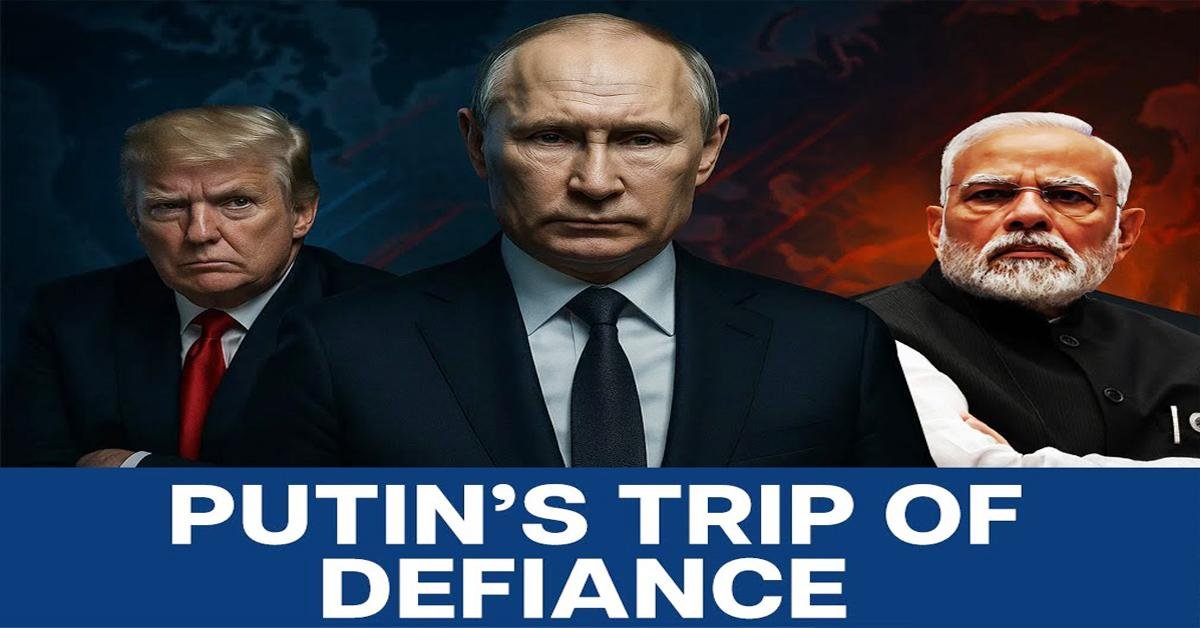
The recent visit of Russian President Vladimir Putin to India drew global attention not only for its diplomatic significance but also for a series of symbolic gestures that carried deeper political and strategic meaning. Among these gestures, one moment became the center of international discussion: Putin riding in a white Toyota Fortuner during his visit to Rajghat to pay tribute to Mahatma Gandhi, followed by three meetings with Prime Minister Narendra Modi within a short span of time.
These actions sparked discussions on geopolitical messaging, India–Russia relations, and the broader implications for global diplomacy. In this article, we examine the symbolism behind Putin’s choices and decode the multilayered message the Russian President sought to convey to India and the world.
Putin’s Choice of a White Fortuner: A Symbolic Diplomatic Gesture
The sight of Vladimir Putin seated in a white Toyota Fortuner—instead of a high-security armored limousine—was not merely a logistical decision. It carried symbolic weight.
The color white traditionally signifies peace, purity, and respect, especially in Indian culture. By choosing such a vehicle for his visit to Rajghat, Putin aligned himself with the solemnity and simplicity associated with Mahatma Gandhi.

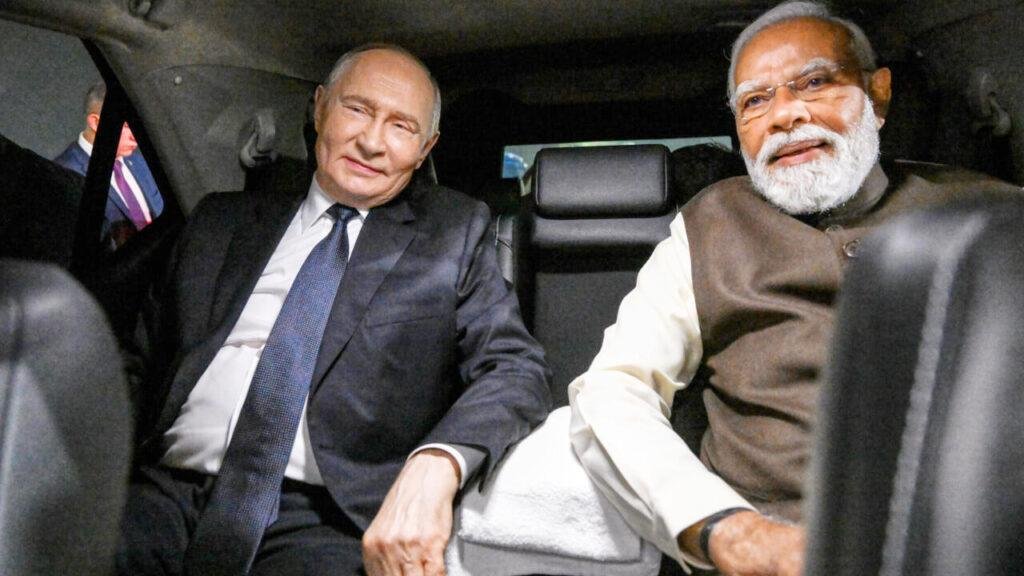
The Toyota Fortuner is known more for its practicality and reliability than luxury, and this further amplified the message of humility and respect. In the context of international diplomacy, world leaders often carefully curate their public image during key visits, and Putin’s decision reflected an awareness of Indian cultural values and global optics. It subtly communicated:
- Recognition of India’s cultural icons
- Appreciation for Gandhian philosophy
- Willingness to connect with Indian sentiments
This gesture resonated widely in India and was interpreted as a reaffirmation of long-standing Indo-Russian friendship.
Honoring Mahatma Gandhi: Strengthening Cultural and Moral Diplomacy
Putin’s tribute at Rajghat was more than a ritualistic gesture. It reinforced Russia’s acknowledgment of Gandhi’s global legacy of non-violence and moral leadership. At a time when geopolitical tensions are rising worldwide, showing reverence to a universally respected figure such as Gandhi functions as a strategic diplomatic move.
By paying homage at Rajghat, Putin highlighted several key messages:
- Russia values India’s historical and cultural leadership
- Moral diplomacy remains relevant even in a volatile geopolitical climate
- Russia seeks to position itself as a nation respectful of peaceful ideals despite conflict narratives
This tribute subtly countered Western perceptions of Russia and presented an alternate image—one grounded in respect for peace and international harmony.
Three Meetings With Modi: Signaling Deepening Strategic Synergy
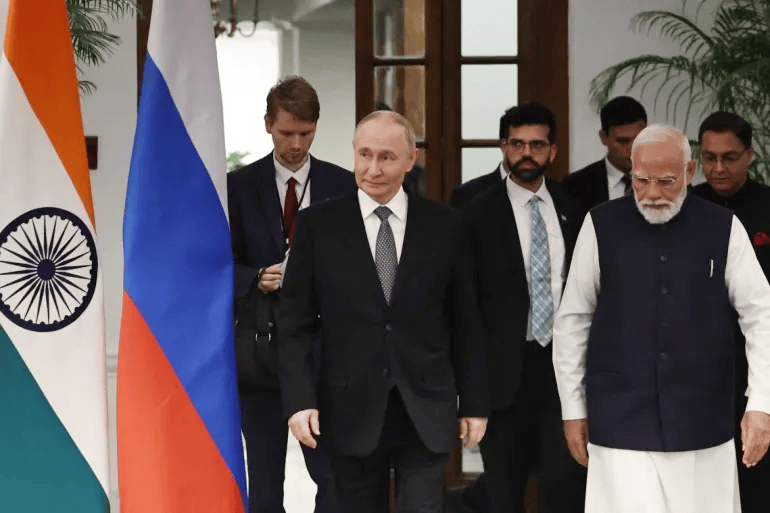
The fact that Putin met Prime Minister Narendra Modi three times during this visit was a powerful indicator of the evolving strategic partnership between the two nations. Such frequency of meetings within a short timeframe reflects:
- Intensifying dialogue on defense cooperation
- Economic and energy partnerships
- Regional and global geopolitical alignment
India and Russia have shared a close relationship for decades, especially in the defense sector. However, in the dynamic geopolitical environment shaped by U.S.–China tensions, NATO expansion, and Russia’s repositioning on the world stage, strengthening ties with India is strategically significant for Moscow.
For India, maintaining strong Indo–Russian relations ensures:
- Diversified strategic partnerships
- Continued access to defense technology
- Energy security through oil and gas partnerships
- A balanced foreign policy independent from Western pressure
The three meetings symbolized the renewed mutual trust and alignment on multiple global issues.
The Message to the World: India–Russia Relations Are Far From Weakening
Despite global speculation that India’s growing ties with the U.S. might weaken its relationship with Russia, Putin’s visit conveyed the opposite. The optics and symbolism communicated:
1. Strategic Continuity -India and Russia continue to recognize each other as dependable partners.
2. Sovereign Foreign Policy-India does not allow external powers to dictate its diplomatic priorities.
3. Multipolar World Vision- Both countries endorse a world order that is not dominated by a single superpower.
Three Meetings With Modi: Signaling Deepening Strategic Synergy
The fact that Putin met Prime Minister Narendra Modi three times during this visit was a powerful indicator of the evolving strategic partnership between the two nations. Such frequency of meetings within a short timeframe reflects:
- Intensifying dialogue on defense cooperation
- Economic and energy partnerships
- Regional and global geopolitical alignment
India and Russia have shared a close relationship for decades, especially in the defense sector. However, in the dynamic geopolitical environment shaped by U.S.–China tensions, NATO expansion, and Russia’s repositioning on the world stage, strengthening ties with India is strategically significant for Moscow.
For India, maintaining strong Indo–Russian relations ensures:
- Diversified strategic partnerships
- Continued access to defense technology
- Energy security through oil and gas partnerships
A balanced foreign policy independent from Western pressure
Fortuner Over Limousine: A Message of Equality, Not Superiority
Choosing not to travel in an armored luxury limousine carries powerful diplomatic symbolism. In India, the Fortuner is associated with practicality, strength, and resilience—qualities that resonate with both Indian leadership and the general public.
Putin’s choice reflected:
- Respect for India’s culture of simplicity
- A gesture of equality and humility
- A desire to connect with India beyond formal protocol
Cultural Soft Power Meets Hard Geopolitics
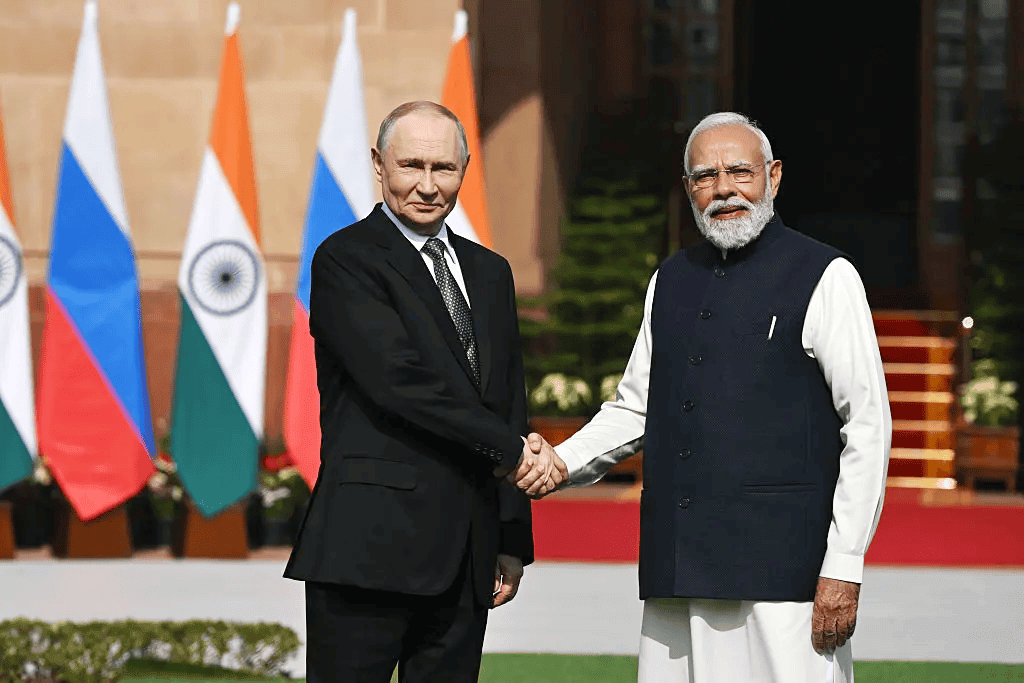
Diplomacy often balances symbolism with strategy. Putin’s gestures during this visit—selecting a modest vehicle, paying homage to Gandhi, and holding repeated discussions with Modi—represented a blend of cultural sensitivity and geopolitical signaling.
This approach conveyed a message that:
- Russia values India beyond transactional interests
- Cultural respect is central to long-term strategic partnerships
- Soft power gestures can strengthen hard power alliances
Navigating a Complex Geopolitical Landscape
Putin’s actions must also be seen within the broader context of shifting global geopolitics. As Western powers impose sanctions and increase pressure on Russia, alliances in Asia gain greater importance. India’s neutral stance on the Russia–Ukraine conflict has added a unique dimension to the partnership.
Putin’s visit and symbolic gestures served to:
- Reinforce Russia’s appreciation for India’s independent foreign policy
- Send a message to the West about Russia’s enduring global partnerships
- Highlight India’s rising influence on the world stage
Conclusion: A Visit Rich in Symbolism and Strategy
From the moment President Putin stepped into the white Fortuner, through his solemn tribute at Rajghat, to the three strategic meetings with Prime Minister Modi, every gesture carried layered meaning. These actions together conveyed respect, humility, strategic intent, and geopolitical clarity.
- The deep-rooted India–Russia partnership
- Shared commitment to a multipolar world
- The power of symbolism in diplomacy
Why did no big defence deal materialise during the visit?
Contracts not finalised. Although discussions on Su-57 jets and the S-500 system were expected during the summit, analysts note that the visit ended without any new MoU or contract for those platforms. Financial / payment-system constraints. A key reason is that due to Western sanctions on Russia, India can’t transact easily in USD, and Russia reportedly doesn’t accept large orders in Indian rupees. As one commentary put it, without a robust mechanism to settle in acceptable currency or through offset trade, it’s hard to sign up for major procurements now. Focus shifted to the economic foundation. Instead of signing big-ticket arms deals, the summit ended up emphasising boosting trade, economic cooperation, joint production, and a rebalancing of bilateral trade (more Indian exports to Russia). Pending earlier obligations & delays. India still awaits delivery of pending systems (e.g., additional batteries of the earlier S-400 Triumf systems ordered in 2018). Until these are delivered/paid for, it is unlikely India will commit to newer or more expensive systems like S-500 or new Su-57 squadrons.

Where talks on S-500 / Su-57 got stuck
Currency/payment issues and sanctions context. As noted above — because of sanctions on Russia, normal cross-border USD (or other “hard currency”) transactions are tricky; India doesn’t have enough roubles, Russia may not want rupees — raising doubts about how payment would be structured. Pending S-400 deliveries and overall “defence pipeline overload.” The Indian armed forces expect the remaining S-400 batteries to be delivered; until that pipeline is clear, procuring even more advanced systems could add logistical and financial burden. Deliberate caution by India in the current geopolitical context. India seems wary of entering big new contracts at a time when its strategic environment is changing fast (global sanctions, US pressure, diversifying suppliers). The summit’s agreements emphasize joint production, transfers, and manufacturing cooperation — signalling perhaps a pause rather than aggressive acquisition. Time and process needed for technical, logistical clarity. For a complex platform like the Su-57 (or newer S-500), India would likely want clarity on delivery timelines, maintenance, integration with existing arsenal, and maybe co-production — none of which seem to have been resolved satisfactorily.
Putin’s 27 hours in India: From closed-door meetings to a multi-billion dollar deal – the complete story in 8 questions.
What were the key outcomes of the closed-door meetings between Putin and Modi?
The private talks, lasting about 3.5 hours, focused on:
Strategic Stability: Discussing regional and global security, including the situation in Afghanistan.
Defense Cooperation: A major focus, addressing future military-technical partnerships.
Strategic Autonomy: Both sides emphasized an independent foreign policy. India reiterated its stance of resolving the border issue with China bilaterally, a point appreciated by Russia.
International Cooperation: Coordination on platforms like BRICS and the Shanghai
What was the headline “multi-billion dollar deal”?
The most significant outcome was the conclusion of the $5.43 billion deal for the supply of S-400 Triumf air defense missile systems. Despite the threat of U.S. sanctions under CAATSA, India proceeded with the delivery of the first regiment, demonstrating the depth and independence of its strategic ties with Russia.
Besides the S-400, what other agreements were signed?
A total of 28 agreements were signed, covering:
Defense: A 10-year military-technical cooperation framework (2021-2031), joint production of over 600,000 AK-203 assault rifles in India, and agreements on military logistics and technology transfer.
Space: Renewed cooperation on satellite navigation (GLONASS), lunar exploration, and human spaceflight (Gaganyaan).

Energy: A 2-year roadmap for cooperation in oil and gas, and an agreement for Russia’s Rosatom to build new nuclear power units in India.
Trade & Culture: Pacts aimed at boosting bilateral trade and cultural exchanges.
How did both leaders characterize the relationship?
Prime Minister Modi stated, “Despite the challenges posed by COVID-19, the pace of relations between our two countries has not slowed down.”
President Putin called India a “great power” and a “time-tested friend,” emphasizing that relations are “developing in all directions.”
What was the significance of the visit’s timing and brevity (27 hours)?
The short, packed itinerary underscored the efficiency and priority both leaders placed on the relationship. It occurred amidst heightened global tensions (Ukraine, Indo-Pacific) and demonstrated that high-level dialogue could yield concrete results without prolonged ceremonies.
What was the unspoken message to the international community?
The visit sent a clear signal that India values its strategic autonomy and will pursue its national security interests (S-400) despite pressure from other partners (the U.S.). For Russia, it was crucial to solidify its primary strategic partnership in Asia amid its tensions with the West.
What are the future challenges?
U.S. Sanctions: Navigating the potential application of CAATSA sanctions on India for the S-400 purchase.
Russia-China Ties vs. India-China Tensions: Balancing Russia’s deepening partnership with China against India’s border disputes with China.
Diversification of Partnerships: Managing India’s growing closeness with the U.S. and the Quad while maintaining its traditional strong ties with Russia.
Putin left his special car and sat with PM Modi: Inside “the moving fortress” that can command a nuclear response
Putin Stepped Out of His Own Car — And That Symbolism Matters
During his visit, Vladimir Putin chose to leave his official Aurus Senat limousine and sat beside Prime Minister Narendra Modi in an Indian vehicle.
For a leader whose security protocols are among the strictest in the world, this was a highly symbolic gesture of trust and diplomatic warmth.
Putin rarely sits in any vehicle except his own state-certified, highly fortified command car.
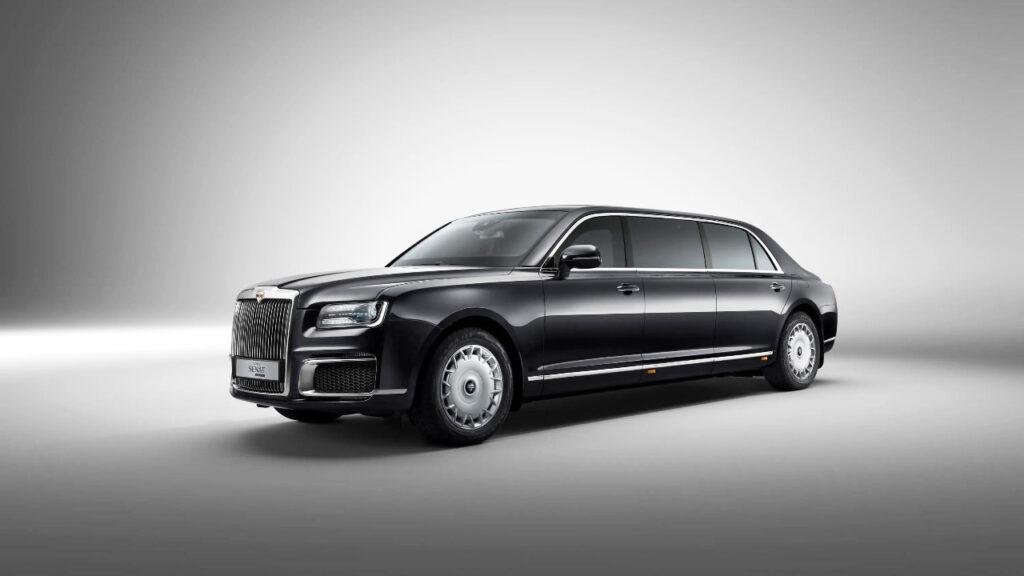
What Makes Putin’s Car a “Moving Fortress”?
Putin’s Aurus Senat is one of the most secure head-of-state vehicles ever built.
International security experts often compare it to the U.S. President’s “Beast”, but Russia’s version is even more focused on wartime survivability.
It is fully armour-plated — resistant to heavy fire and explosions
Can withstand armor-piercing rounds.
Protected against grenades and roadside bombs.
Equipped with run-flat tyres for escape even if the tyres are destroyed.
It is sealed against chemical and biological attack
The cabin becomes a pressurised safe room if toxic agents are detected.
This allows the president to survive in conditions where the outside air is unsafe.
It has encrypted military communications
This is the most important feature.
The car contains secure communication channels directly connected to:
Russia’s National Defence Command Center
Strategic Forces Command
Crisis response networks
This allows the president to issue executive orders from inside the moving vehicle.
Can Putin actually order a nuclear retaliation from inside the car?
Yes — theoretically, yes.
The Aurus Senat integrates with Russia’s Cheget (the nuclear command briefcase), commonly known as the “nuclear football”.
This gives the president the ability to:
authenticate his identity,
receive threat updates,
and authorize the activation of nuclear response protocols.
This does not mean a missile launches directly from the car —
But Putin can issue the terminal authorisation required for a strategic strike.
That is why the car is described as:
“A mobile command centre for nuclear decision-making.”
Why Putin Sitting in Modi’s Car Was Unusual
For such a leader — whose survival vehicle is literally a command bunker —
choosing to step out of it and ride with India’s Prime Minister sends a clear diplomatic message:
Trust in India’s security arrangements
Putin does not take this step in most foreign countries.
Sign of personal rapport with Modi
Both leaders often highlight the “special privileged strategic partnership”.
A gesture of respect on Indian soil
He allowed the moment to become a symbol of friendship rather than formality
Putin’s Divorce, Age Gap Relationships, and What Is Known About His Family — Explained Clearly
Did Putin divorce after nearly 30 years of marriage? – Yes — officially.
Vladimir Putin married Lyudmila Shkrebneva in 1983.
They jointly announced their divorce in 2013, after roughly 30 years of marriage.
The divorce was described as “civilised” and based on their busy, incompatible lifestyles.
The couple has two daughters:
- Maria (born 1985)
- Katerina (born 1986)
Both daughters have kept exceptionally low profiles for security reasons.
Is Putin in a relationship with a woman much younger than him?
Widely reported – Not officially confirmed
Media outlets (including Reuters, BBC, and many European papers) have reported that Putin has been in a long-term relationship with Alina Kabaeva, a former Olympic gymnast.
She is 31 years younger than Putin.
Russian officials have never confirmed nor denied the relationship.
The Kremlin treats Putin’s private life as a state security matter, not a public topic.
So while the relationship is heavily reported, it is not publicly acknowledged.
Do foreign teachers come from Britain to educate their children?

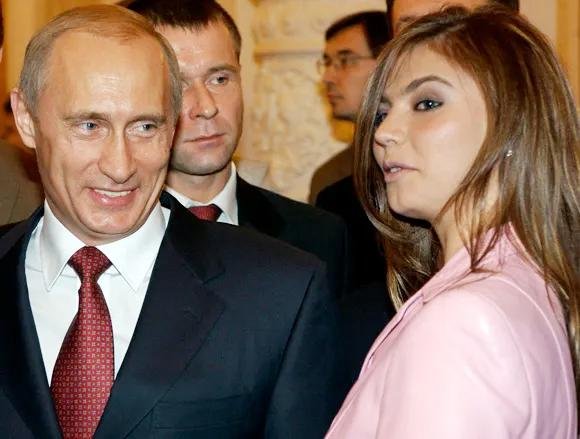
This is partly true — but refers to past practices, not the present.
When his daughters were young, Western media reported that they were educated at home with foreign tutors, including teachers from Britain and Germany.
Putin himself once confirmed that his daughters were homeschooled for parts of their childhood due to security concerns.
Today, the daughters are adults, highly educated, and reportedly involved in academic and scientific careers.
Does Putin have a “secret family”?
Many international media outlets have made claims about:
“secret children,”
“hidden villas,”
and an “unofficial partner.”
Russia has never confirmed these claims.
No official documents or direct statements validate the existence of additional family members.
Many articles rely on unnamed sources, leaked documents, or investigative journalism — not legally verified information.
Therefore, the correct phrasing is:
There are rumours and investigative reports, but no official confirmation of any ‘secret family’.
Why is Putin’s family kept so private?
Because in Russia:
The president’s family is considered a national security asset, not a public political unit.
Public appearances of his wife and daughters have been extremely rare since the early 2000s.
Security agencies maintain strict secrecy to prevent threats, blackmail, or foreign targeting.
Putin himself once said:
“I never discuss my family because it protects them. So what is actually known and reliable?
Marriage to Lyudmila (1983–2013)
Two daughters: Maria & Katerina
Extremely private family life
Use of foreign tutors (including from Britain) in the past
Widely Reported but Not Confirmed
Relationship with Alina Kabaeva
Existence of additional children
A “secret family” narrative promoted by foreign media
Why do these stories become global headlines?
Because Putin is:
a major geopolitical figure,
intensely private,
and the leader of a state with tight control over personal information.
investigative journalism,
speculation,
political narratives,
and public fascination with strongmen leaders’ personal lives.
The Bottom Line
Putin’s personal life is a mix of verified facts, partial disclosures, and media speculation.
What can be said responsibly is:
He divorced after three decades of marriage.
He has two adult daughters.
He keeps his private life deliberately hidden.
Stories about a younger partner or secret children remain unconfirmed, though widely reported.