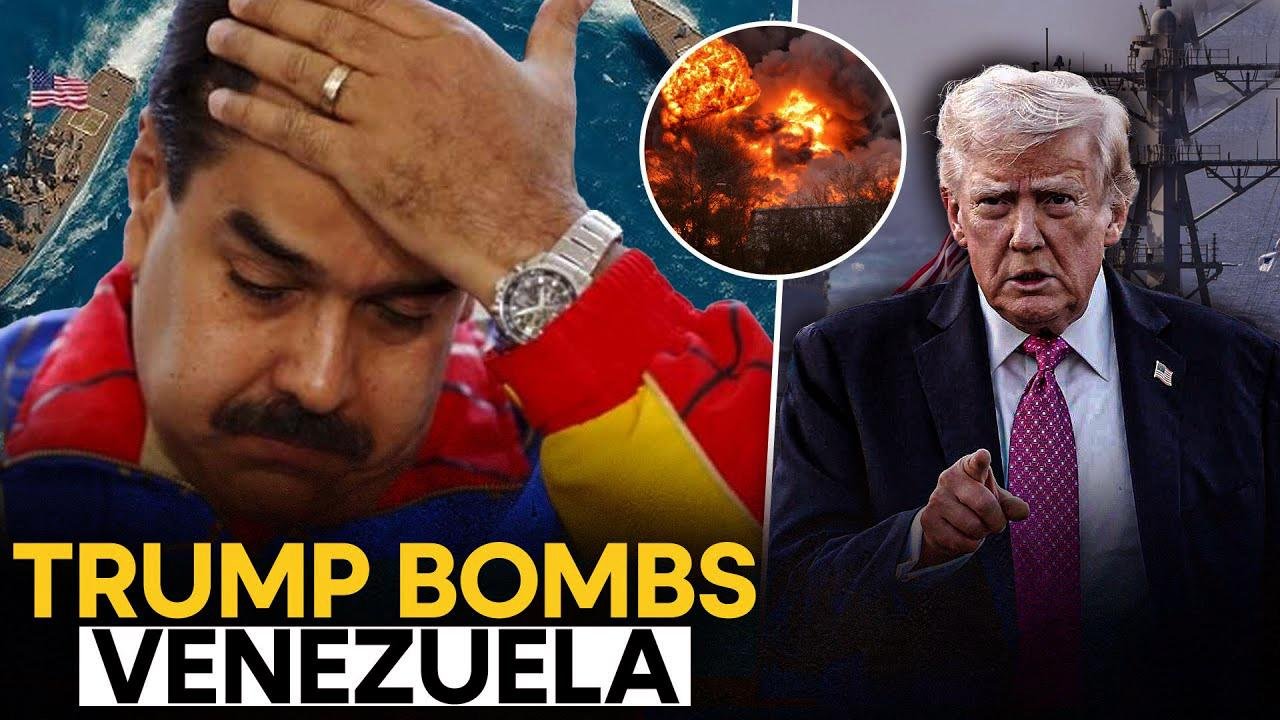
Late on the night of January 2nd, the US launched a special military operation in Caracas, the capital of Venezuela. A few hours later, a shocking announcement was made: Venezuelan President Nicolás Maduro and his wife were now in US custody. This sounds like something out of a movie script, but the claim was made by none other than US President Donald Trump himself. Venezuela is also saying that its president is missing. How could the US abduct a sitting president like this? Why is Trump after Maduro, and what will happen next?

An announcement was made on the social media platform X that the US had launched a strike on Venezuela. President Maduro and his wife had been captured and taken out of the country. Trump also announced that a press conference would be held at 9:30 PM that night to provide full details. The US launched airstrikes on four cities in Venezuela, including Caracas, Miranda, and others. Seven military bases in these cities were also attacked. President Trump gave this order. After the strike, he told The Times in a phone interview that the attack was a brilliant operation carried out with good planning and skilled soldiers. According to reports, this operation was carried out by Delta Force, one of America’s most secretive and deadliest special forces units. Now the question arises: why is Trump after Maduro? The US used to buy oil from Venezuela, but for a long time, the US has been accused of interfering in Venezuela’s internal politics. The US was also implicated in the attempted coup in 2002. Then, during Nicolás Maduro’s presidency, the US became even more aggressive. In 2017, the US imposed several sanctions on Venezuela and does not recognize Maduro as president. A few weeks ago, Trump gave Maduro an ultimatum to leave the country within a week. When Maduro refused, US warships surrounded Venezuela. Around 15,000 soldiers have been deployed, and Venezuelan oil tankers are being attacked. So far, about 100 people have died. Trump alleges that Venezuela sends drug traffickers to the US. The US has surrounded Venezuela… The three intentions stated are to stop the supply of restricted oil from Venezuela, to stop drug trafficking into the US, and to prevent illegal Venezuelan migrants from entering the US. However, Maduro claims that the US wants to use the war on drugs as a pretext for regime change and to seize their oil reserves. So, does Trump have a hidden agenda behind targeting Maduro? Venezuela has the world’s largest proven oil reserves, 303 billion barrels, which are sold in the market at a price cheaper than water. Currently, China is its biggest buyer. If Trump’s plan succeeds, millions of barrels of oil could be imported, which would also reduce China’s influence. Besides this, the US would gain two more advantages. Trump wants to remove Maduro from power. A change of government would allow the US to control drug trafficking and migration through Venezuela.
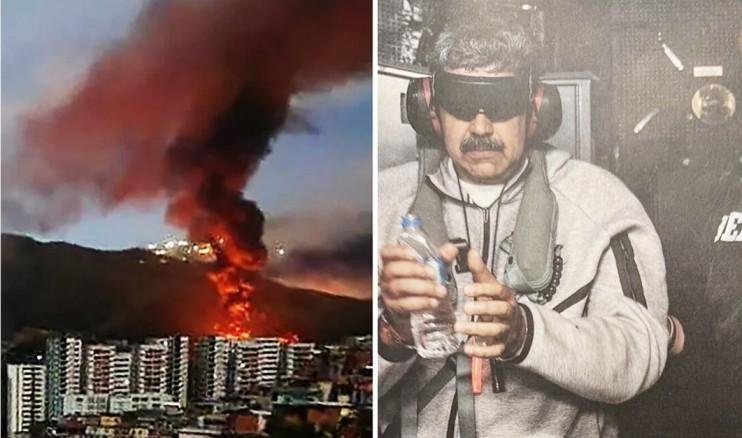
China has invested millions of dollars in Venezuela, while Russia supplies weapons. By controlling Venezuela, the US can increase its dominance. Nobel Peace Prize laureate Maria Machado is Venezuela’s leading opposition leader. If a regime change occurs, she could become president with US support. If Maduro is removed, Maria will hold elections in Venezuela, where she has a strong chance of winning. Trump has placed Maduro on the list of terrorists, meaning he could be prosecuted. However, the world will now be watching countries like Russia and China. Late on January 2nd, the US conducted a special military operation in Caracas, the capital of Venezuela. A few hours later, a shocking announcement was made that Venezuelan President Nicolas Maduro and his wife were now in US custody. This sounds like something out of a movie script, but this claim was made by US President Donald Trump himself. Venezuela is also saying that its president is missing. How could the US abduct a sitting president like this? Why is Trump after Maduro, and what will happen next?
Maduro used to drive a bus, was a devotee of Sathya Sai Baba: How he became President of Venezuela; accused of 3 assassination attempts on him by the US, now a prisoner.
On December 8, 2012, he was seen holding the Constitution in his hands. His health was weak, but the message was clear. He said, “My cancer has returned. If I don’t survive, Nicholas Maduro should be elected president.” Three months later, he died, and Maduro came to power. Today, 12 years later, Maduro is considered one of America’s biggest enemies. How did a bus driver become the most powerful man in Venezuela?
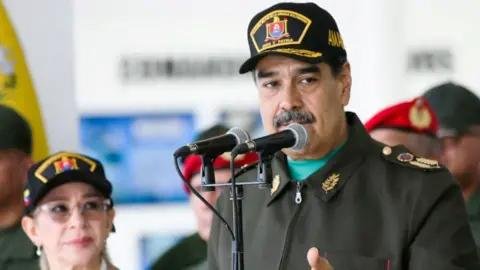
He was a devotee of Sathya Sai Baba. A day of national mourning was declared in Venezuela upon Baba’s death. At this time, Maduro was the Foreign Minister. In November, on the 100th day after Baba’s death, he issued a message, writing, “I will always remember my meeting with him. May the wisdom of this great guru always enlighten us.” After divorcing his first wife, he married Cilia Flores, who has been his strongest political ally. In Venezuela, she is not called the First Lady, but the First Combatant. Chapter 4: He was diagnosed with cancer in 2011, but he hid his illness during the 2012 elections. In December 2012, he declared Maduro his successor, and a few days later, in the March 2013 elections, Maduro won. He called himself Chavez’s son, and his voice resonated throughout the country. After that, he won every election. Chapter 5: Between 2018 and 2014, Maduro faced three assassination attempts. He survived a drone attack in 2018. An operation was carried out in 2020. Maduro accused the US, Colombia, and opposition leaders of conspiring behind these attacks. Chapter 6: The US had imposed sanctions on Venezuela in 2019. He was also accused of drug trafficking and narco-terrorism. A few days earlier, the US had given Maduro an ultimatum to leave the country within a week, but when Maduro refused, the US supported the opposition. If a change of power occurred, she could become president with the help of the US.
Venezuela, despite having more oil than Saudi Arabia, is now struggling for necessities. It was once the world’s fourth richest country, and people used to go to Miami for shopping
The news of Venezuelan President Nicolás Maduro being taken into custody by US authorities is making headlines. Media outlets from the US, UK, China, and Pakistan have covered the event extensively. The British news agency BBC called it a major political risk for Trump, stating that while success would strengthen his image, failure could be costly. The New York Times raised legal questions about the action, writing that taking control of another country’s government could be considered a violation of international law. The Pakistani media house Dawn reported that Maduro is being held in a New York prison and that the US influence on Venezuela is clearly visible. The Chinese media outlet South China Morning Post described it as the biggest military operation in Latin America in recent times. According to the Qatari media channel Al Jazeera, Trump’s decision has also angered some of his supporters.
Why are Donald Trump’s eyes now on Cuba, Mexico, and other countries after Venezuela?
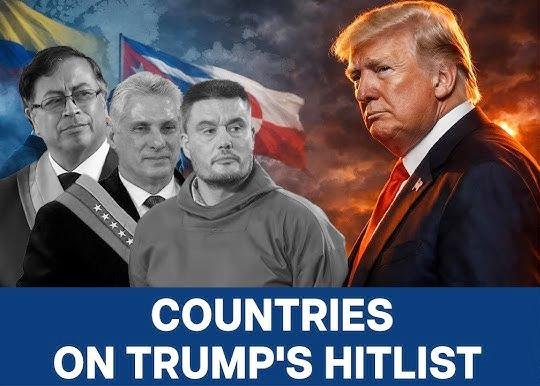
US President Donald Trump’s second term is now clearly taking shape according to his foreign policy ambitions. Trump dramatically acted on his threats regarding Venezuela. During a nighttime operation, the Venezuelan president and his wife were detained amidst heavy security in the capital, Caracas. In recent days, Trump has also sent strong messages to some other countries that have been in America’s crosshairs. This video report takes a closer look at those countries and the warnings issued against them.
US President Donald Trump’s second term is now clearly taking shape according to his foreign policy ambitions. Trump dramatically acted on the threats he made regarding Venezuela. During a nighttime operation, the Venezuelan president and his wife were detained amidst heavy security in the capital, Caracas. The Venezuelan president and his wife have been detained. In recent days, Trump has also sent strong messages to several other countries that have been in America’s crosshairs.
Let’s take a direct look at those countries and the warnings issued against them. First, let’s talk about Greenland. The US already has a military base in Greenland called Thule Air Base, but Donald Trump wants to see the entire island of Greenland under American control. In a conversation with reporters, Trump said that we need Greenland for national security reasons. Trump also said that the area is full of Russian and Chinese ships. Greenland is a vast Arctic island that is part of the Kingdom of Denmark. This area is rich in rare earth minerals, which are considered extremely important for the manufacture of smartphones, electric vehicles, and military equipment. Greenland’s Prime Minister, Mette Frederiksen, responded to Trump, calling the idea of American control over the island imaginary. The next name is Colombia. Just hours after the operation in Venezuela, Trump’s next strong message came regarding Colombia. Trump warned Colombian President Gustavo Petro to save his own life. Colombia, Venezuela’s western neighbor, is a country with vast oil reserves. It is also considered a major producer of gold, silver, emeralds, platinum, and coal. But Colombia’s identity is not limited to natural resources. This area has also been notorious for drug trafficking, especially cocaine smuggling. In September, the US launched attacks on boats in the Caribbean and the Eastern Pacific Ocean. The US alleged that these boats were carrying drugs. After this, the conflict between Trump and Colombia’s leftist president, Gustavo Petro, deepened. In October, the US imposed sanctions on Petro, saying that it was allowing cartels to flourish. On January 4th, aboard Air Force One, Trump said that Colombia was being run by a sick man who liked to make cocaine and sell it to the United States.
When asked if the US would conduct an operation targeting Colombia, Trump replied that he liked the sound of that. Donald Trump also has his sights on Iran. Iran is currently facing large-scale anti-government protests. Donald Trump has warned that if the killing of protesters continues, the authorities there will face very harsh consequences. In a conversation with reporters aboard Air Force One,
Trump said, “We are watching this very closely. If they start killing people again as they did before, I think the United States will respond harshly.” The issue of Iran was also prominently raised in a recent meeting between Trump and Benjamin Netanyahu. In this meeting, the shared concerns of the US and Israel regarding Iran were discussed in detail. Meanwhile, Trump has been mentioning Mexico since he first came to power in 2016. At that time, Trump talked about building a wall on the southern border with Mexico. On the first day of his second term in 2025,
Trump signed an executive order. This order announced the renaming of the Gulf of Mexico to the Gulf of America. On January 4th, Trump said that there is a lot of drug trafficking through Mexico and that we have to do something about it. Trump also said that the drug cartels there have rejected a multi-national military operation. Cuba has been facing US sanctions since the early 1960s.
Cuba had good relations with Venezuela, which allegedly supplied Cuba with about 30 percent of its oil. In return, Venezuela received doctors and medical personnel from Cuba. If Nicolás Maduro is removed from power in Venezuela and oil supplies are cut off, Cuba could face serious difficulties. On January 4, Trump suggested that there was no need for US military intervention there because Cuba was ready to surrender. He said, “I don’t think we need any action. It looks like things are getting better.” He added, “I don’t know if they’ll last, but Cuba has no income now because all their income came from Venezuelan oil.” Meanwhile, US Secretary of State Marco Rubio, the son of Cuban immigrants, has long been calling for regime change in Cuba.
Venezuela has not only oil but also many other natural resources, and its rivalry with the US is even older than the US itself.
Venezuela is considered one of the countries with the largest oil reserves in the world. However, Venezuela stands out in South America not only because of its oil reserves but also for several other reasons. Besides oil reserves, there are many other natural resources that are found in large quantities in this Latin American country.
In 2005, a significant agreement was reached between Petróleos de Venezuela (PDVSA), the state-owned oil company, and India’s state-owned oil company ONGC, one of the world’s largest oil reserves. Their country wanted to reduce its dependence on the American market. Nicolás Maduro is the leader of the Venezuelan political crisis and one of the most charismatic leaders of this movement in Latin America, succeeding Hugo Chávez. Venezuela has a distinct identity in South America not only because of its oil reserves but for many other reasons.
Venezuela is also among the countries with the most cities in the region. The country, spread over an area of approximately 91,000 square kilometers, has Caracas as its capital. Venezuela has a population of over 30 million, and its main language is Spanish, although other languages are also spoken in some regions. Nicolás Maduro has long accused the Trump administration of trying to oust him. Maduro has repeatedly stated that the US wants to monopolize Venezuela’s oil wealth. So the question also arises: how much oil does Venezuela have?
Venezuela is believed to have more than three hundred billion barrels of oil reserves. This is the highest in any country in the world. This is very heavy crude oil, which is expensive and difficult to extract. Yet, Venezuela remains the world’s fifth-largest exporter. According to the US Energy Information Administration, in 2012, Venezuela accounted for only 8 percent of the world’s total oil production, with 0.8 percent of the production. Currently, Venezuela exports approximately 9 million barrels of crude oil per day, and China is its largest buyer. Besides oil, Venezuela is also rich in minerals. Indian diplomats in Caracas have shared a survey related to the mining sector in Venezuela, which dates back to 2016. According to this, Venezuela has reserves of minerals such as copper, aluminum, nickel, manganese, and zinc, along with coal. According to this survey, Venezuela has reserves of twelve thousand million tons of iron ore. Venezuela’s Callao region is considered one of the most important centers for gold mining.
It is believed that the country has approximately 4 million tons of gold reserves. In addition, Venezuela is also believed to have reserves of approximately seven million tons of aluminum ore or bauxite. Regarding non-metallic minerals, Venezuela is said to have approximately ten billion metric tons of coal reserves. According to reports, Venezuela’s main crop is coffee. Along with this, maize and paddy are also cultivated on a large scale. The main agricultural area for maize is considered to be the northern mountains of the country and the region below them. At the beginning of the 21st century, a picture of poor economic integration also emerged in Venezuela.
Inflation, shortages of essential goods, unemployment, and poverty increased in the country. Due to these conditions, approximately seven million Venezuelans have fled to neighboring countries. Maduro has been held responsible. Tensions between Venezuelan leaders and the United States are nothing new. During Maduro’s presidency, his political group, led by Hugo Chávez, repeatedly accused the US of plotting his assassination. President Chávez was one of Venezuela’s most controversial figures. Before his death in his fourteenth year in power, he called himself the Messiah of the poor. Using oil revenues, he spent billions of dollars on social programs. His successor, Nicolás Maduro, faced severe economic hardship, driven by falling oil prices. During his rule, the country also experienced political turmoil. The situation became so dire that Venezuela gradually collapsed and appeared to be disintegrating. Protests against the government became commonplace on the country’s streets. Millions of refugees fled Venezuela to Colombia and Brazil. In some impoverished areas, up to 70% of children were reported to be suffering from malnutrition.
Venezuela transports oil to neighboring Guyana via a pipeline. The dispute also involves border issues. The current level of open hostility between the United States and Venezuela began under Chávez and intensified further under the Trump administration. The government’s National Electoral Commission declared Nicolás Maduro the winner of the July 2024 presidential election, securing his third consecutive term. Stay on this pad. The opposition has maintained that their candidate, Edmundo González, was the rightful winner. The US, the European Union, and several other governments have supported this claim. Maduro’s failure to release the election data is a cause for concern. Meanwhile, countries like China, Russia, and Iran recognized Maduro’s victory. Earlier, the 2018 presidential election was also deemed unfair by several countries, including the US.And subsequently, sanctions were imposed on Venezuela.
Will Maduro ever escape the clutches of the US? He told the court, “I was kidnapped.” How much weight do the accusations against him carry?
“Dad, let me tell you, the motherland is in safe hands. We will soon embrace each other in Venezuela. You will see your children. Long live Venezuela!” Madhuri’s son and his wife gave this statement while weeping in Parliament. Madhuri and his wife Celia are in American custody. During a hearing in a US court on January 5th, Madhuri said, “I am not a criminal, I am a prisoner of war. I was forcibly taken from my home.” Hello, I am Akshay. Why is he calling himself a prisoner of war? How much weight do the accusations against him carry, and can the American court release him? Let’s find out.
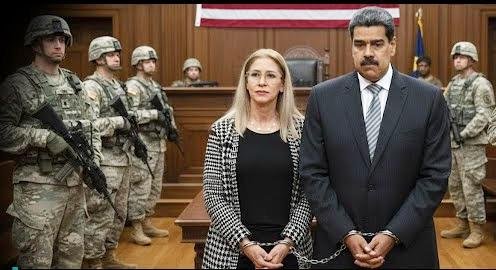
Madhuri Prasad was arrested in the US in 2020. A case was filed against him under the name Madhuri. His wife, Celia Florence, and some close associates, including his son, were also charged. The charges include: first, spreading drug-related terrorism in America (narcoterrorism); second, importing drugs like cocaine; third, possessing dangerous weapons related to drug trafficking; and fourth, conspiring to possess and use weapons like machine guns. The 92-year-old Madhuri’s case is being heard by a judge who has himself praised him. Madhuri’s lawyer, Barry, is famous for securing the release of WikiLeaks founder Julian Assange. No,w let’s understand how Madhuri’s claim of being a prisoner of war will affect his case. According to the Geneva Convention, which came into effect on October 21, 1950, if a country arrests an officer, soldier, or person with military identification from a regular armed force, they are considered prisoners of war. According to the convention, these people are not civilian criminals but legal combatants. Being granted prisoner of war status provides several benefits to the detainee. For example, they cannot be asked for any information other than their name, date of birth, and rank or regiment. Prisoners of war cannot be held in solitary confinement. No judge can sentence them. They must be released as soon as the war ends. No personal charges can be brought against them, and no inhumane treatment is allowed. This is why Madhuri is saying this, not that he committed a crime in America. However, legal experts believe that this will not affect Madhuri’s case. According to Daniel C. Richman, a professor at Columbia Law School, even if Madhuri… They can cite international law or the law of immunity, but their case will be decided like a criminal case. Previously, in 1989, Panamanian dictator Manuel Noriega and in 2003, Saddam Hussein also demanded prisoner-of-war status after their arrests, but US courts rejected this. However, Maduro is rejecting these charges and presenting himself as the legitimate president of Venezuela and a prisoner of war, sending the message that the proceedings against him are politically motivated. Several UNSC member states, such as China, Russia, and Denmark, have also questioned the US actions. Now the question is whether the US court can release Maduro. Experts believe the chances are slim. According to CNN, under the Ker-Frisbie doctrine, US courts do not inquire into how an arrest was made, even if it violates international law. In the next hearing on March 17, if the court determines that US law applies to his case, then the trial will proceed. As the President of Venezuela, Maduro can only request immunity from the court, but this doesn’t seem to offer much advantage, as the US recognized Maduro’s opposition candidate, Edmundo González, as the legitimate president in the 2024 elections. The US does not recognize Maduro as the president of Venezuela. Therefore, Maduro’s strongest argument is to present himself as a prisoner of war.
When the Chinook carrying Maduro was attacked: 72 commandos killed, Maduro captured; See Mission ‘Absolute Resolve’ in 3D and AI
On the night of January 3rd, around 2:00 AM, more than 150 fighter jets, bombers, and tracking jets, including 20 different F-3500s, which could evade Chinese radar, launched a cyberattack that crippled the power supply in Caracas. The entire city was plunged into darkness. To distract the Venezuelan army, these fighter jets carried out several bombings. A fierce firefight ensued, resulting in the deaths of approximately 40 Venezuelan soldiers and 32 security personnel. Following this, a helicopter landed, and Delta Force commandos reached Maduro’s bedroom. He and his wife tried to escape, but before they could reach the gate, Delta Force surrounded them. Neither could resist, and both surrendered to Delta Force. Maduro and his wife were taken captive and brought to the roof of a safe house, where a Delta Force helicopter was already waiting. By 4:20 AM, the helicopter had crossed the Venezuelan border. Both were airlifted to the US Navy ship USS Eisenhower. The Delta Force mission was complete. From there, they were brought to New York. About an hour after the mission, Trump announced to the world that Maduro and his wife were being held in a detention center in New York. Both will face criminal charges under the Narcoterrorism Act, with the next hearing scheduled for March 17th.