
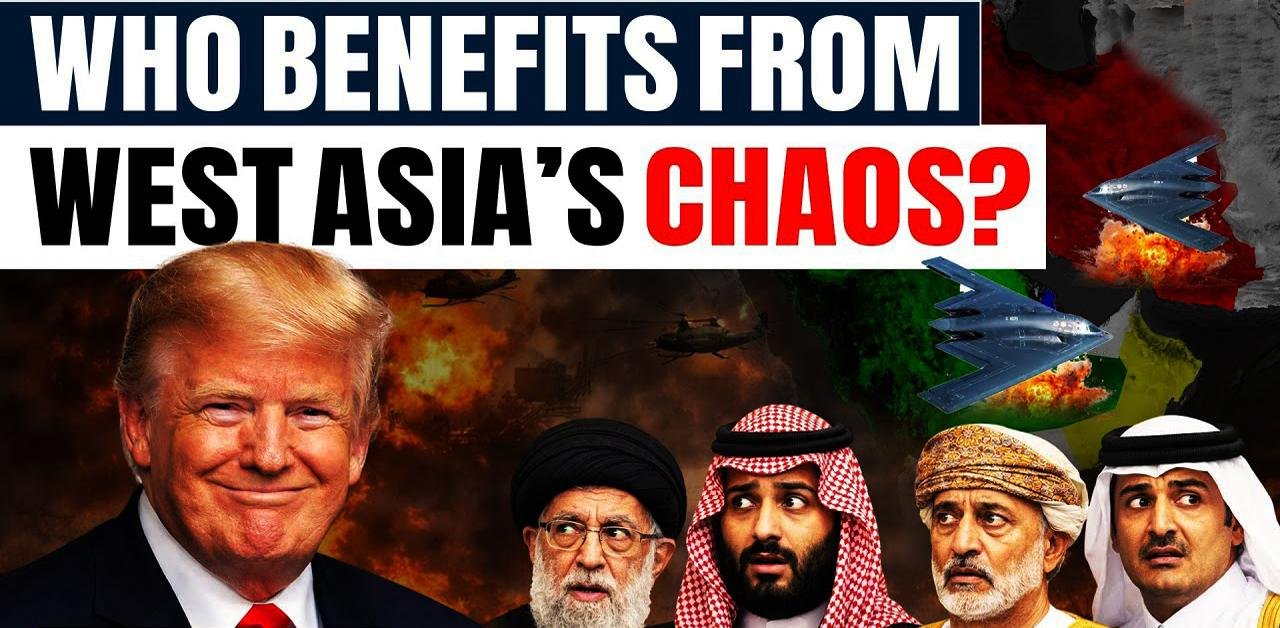
In one year, military attacks on seven countries, kidnapping the Venezuelan president from his home, dozens of countries facing sanctions, cheap leadership, and rudeness – Donald Trump did all this within a year of taking the oath of office. The question is, why is Trump doing all this? Is it his whim, or is he trying to increase his power in the world? Let’s look at the complete record of Trump’s decisions. First, let’s see what Trump did in the last year. He showed the door to many from the White House. This month, he mocked the British Prime Minister, the South African President, and Indian PM Narendra Modi. Besides being rude to global leaders, he was also in the news last year for increased deportations and breaking alliances.
Immediately after taking the oath on January 20th, in January, millions of illegal immigrants, including Indians, were deported like criminals, handcuffed and transported on military aircraft like the C-17 Globemaster. On April 2, 2025, Trump started implementing a tit-for-tat policy. He imposed a 25% tariff on India for buying oil from Russia, a 25% higher tariff on countries trading with Iran, and a 10% higher tariff on those opposing the US in Greenland. And that’s not all. While Trump claims to have stopped 8 wars in a year, he also attacked 7 countries in the same year. Operation Ro Rider: The US attacked more than a thousand Houthi targets with missiles and drones. Iraq Air Strike: On March 13, the US conducted an airstrike in the Al Anbar province of Iraq. Operation Midnight: On June 22, 125 US soldiers were deployed to Somalia. Record 111: Within a year, Trump conducted a record 111 attacks on Somalia. Syrian Operation: On December 19, the US conducted airstrikes on 70 Islamic State targets.
Nigeria Christmas Tree: On Christmas Day, the US struck terrorist targets. Venezuela Operation Southern Sphere: Venezuela was accused of drug smuggling. Starting on September 2nd, we began in the Caribbean Sea, then launched a drone attack in Venezuela. In January, the president did what he did in Greenland, Iran, Mexico, Colombia, Panama, and Canada. Furthermore, the whole world witnessed how Trump is using tariffs as a weapon. It’s also interesting to know why Trump is doing all this. The world’s Eastern Hemisphere and Western Hemisphere include the continents of North and South America, which are considered half the world. The US, with its large GDP, has to pay over $1 trillion in interest every year. Considering these aspects, Trump is using tariffs as a source of revenue. But what will be the effect of all of Trump’s actions? Is the world heading towards a third world war? John Hoffman, an American foreign policy expert at the American think tank Cato Institute, says that first, he wants to maintain American dominance in any complex problem, but certainly not war. Regarding the exercise called “2026,” Russia is currently busy fighting a war with Ukraine and is not openly confronting the US. China’s entire focus is also on strengthening its economy and security. In this situation, it would be correct to say that Trump’s actions are an attempt to save the declining economy of the superpower America.
PM Modi receives an invitation to Trump’s ‘Board of Peace’; Will India have to pay 9,000 crore rupees for this? What are the risks of refusal?
US President Donald Trump has created a Board of Peace for peace in Gaza, and India’s Prime Minister Narendra Modi has also been invited to become a member. According to a New York Times report, permanent membership in this board would cost the country one billion dollars, or approximately 9,000 crore rupees. However, PM Modi has not yet confirmed his participation.
What exactly is Trump’s Board of Peace? Will India join it by paying this much money? And what are the risks if it refuses? We will explore this in today’s analysis. To establish peace, the US has created a 20-point peace plan. In November 2025, the United Nations Security Council (UNSC) approved it. Trump has launched the second phase of this plan, for which the Board of Peace has been created. This will be an internal body, with Trump as its lifelong chairman. However, the charter of this board, created for peace in Gaza, does not even mention Gaza. This has led to speculation that this board will also address other conflicts around the world. It will be an alternative to the UN, where the US will have dominance.

The New York Times claimed in its report that becoming a permanent member of the Board of Peace would require paying one billion dollars, or approximately 9,000 crore rupees. Trump has said that this money will be used for the reconstruction of Gaza. However, it is also possible to become a member of this board without paying, but that membership would expire in three years. So far, about 60 countries have been invited to join the board. These include France, Germany, Italy, Hungary, Austria, Canada, Pakistan, and several countries from the Middle East. However, only Hungary has officially confirmed its participation in this board so far. There are three major strategic reasons: First, India’s need to appease Israel. Israel is not happy with Trump’s Board of Peace, especially its inclusion of Qatar and Turkey. Former Indian diplomat Gauri Shankar Gupta says that India has good relations with both Israel and Palestine. In such a situation, India can play a special strategic role in establishing peace there. Second, securing funding from the world’s fourth-largest economy, India. 4.18 The world’s fourth-largest economy can afford the cost of rebuilding Gaza. Amitabh Singh, a professor of International Relations at JNU, says the term’s objective is not to collect one billion dollars from each country. This is why India has been given a leadership role. Thirdly, after the Nobel Peace Prize went to someone else, Trump still harbors the desire to win a Nobel Prize. He is including so many countries on the board so that these countries will nominate him for the Nobel Prize in the future. So, what are the challenges? Let’s discuss them.
Firstly, India may get a three-year temporary membership on the board, but will it become a permanent member by paying 9000 crore rupees? Secondly, working with Pakistan at the international level will be challenging for India. Thirdly, Israel is not happy with this board. In such a situation, India will have to manage this diplomatically as well. Fourthly, if America asks India to deploy troops in Gaza, will India be ready for it? And the fifth challenge is America’s control over the border. Also, no member from Palestine is included in this board. How will India handle this? Former Indian diplomat Kamal says India should not join this board. It has been established without UN approval, and its functioning will face many difficulties. However, Trump takes his ego very seriously. If he feels offended that PM Modi did not heed his advice, he might take actions like increasing tariffs on India.
Military bases are located in 80 countries, and 88% of the world’s payments are made in dollars. Why does American “bullying” prevail in the world, and is everything about to change?
An anti-Trump atmosphere has developed at the World Economic Forum in Davos, Switzerland. French President Emmanuel Macron openly criticized Trump’s threats of imposing tariffs and his plan to acquire Greenland. Canada has even gone so far as to say that the old global order, led by the US, is over, and that we are undergoing a major transformation. What exactly is the US-led global order? Is it about to change due to these developments, and what will the world be like after the end of this leadership?

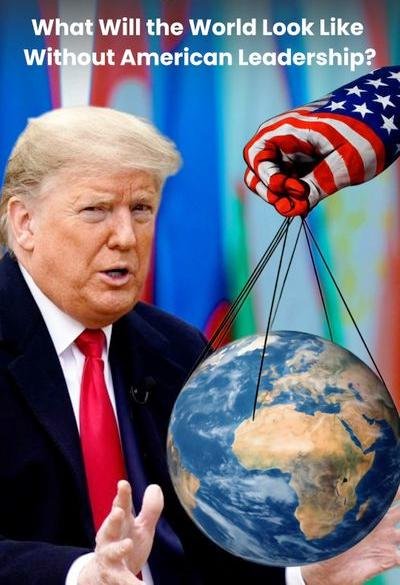
The global world order refers to things like which country holds power and how countries behave towards each other. The US has been the leader of this world order for the past seven or eight decades. There are four main reasons for this: Firstly, America’s military power. In 2024, the US defense budget was approximately 81 trillion rupees, which is 39% of the world’s defense budget. The US has more than 750 military bases in about 80 countries. It is the leader of NATO, the world’s strongest military alliance. Secondly, the dominance of the US dollar. The US is the world’s largest economy with a GDP of $27 trillion. Also, 88% of international payments worldwide are made in dollars. Whenever the US imposes economic sanctions on a country, its payments are halted. Thirdly, control over the world’s oil trade. The US controls the world’s largest oil reserves. It buys oil at low prices from countries like Saudi Arabia in the Middle East, refines it, and sells it to the world. And the fourth reason is its leadership in technology and research. Eight of the world’s top ten richest tech companies are based in the US. These include companies like Apple, Google, Meta, Amazon, and Microsoft. So, is the world order about to change, and will the US no longer be its leader? Canadian PM Justin Trudeau said at Davos that American dominance existed, but this system is no longer sustainable. Experts believe that several aggressive decisions by Trump are behind this, such as making institutions like the UN and WTO anti-American by reducing their funding, and imposing tariffs on more than 90 countries, including many US allies like India, Britain, Japan, Canada, and Mexico.
Giving orders for military action in various regions, recently having the Venezuelan president Maduro kidnapped from his home, and issuing an ultimatum regarding the American occupation of Greenland – these actions have angered US allies worldwide, including NATO members. Now the question arises: if not the US, then who will be the world leader? Trump’s decisions have allowed China to strengthen its global position. Adam Tooze, a professor at Columbia University, says that the next world order will be determined by energy and technology. China has coal, is focusing on solar energy, and could become the green energy king in the future. However, it lacks a proven track record in this area. Therefore, experts believe that if US leadership declines, the world order will become multipolar, leading to instability, chaos, and even the threat of nuclear conflict. India’s foreign policy has always been one of non-alignment. Since 2000, India has maintained a balance between the US and Russia. If the global order changes, it will create new security and trade challenges for India. However, it will also be a good opportunity for India to strengthen its current position.
Why did Trump change his stance on Greenland overnight? He said – I will not use force; Is he afraid of Europe’s threat, or is there some hidden reason?
Regarding Greenland, US President Donald Trump used to say that he would achieve it at all costs, even take military action like the one in Venezuela, and not consider peace. But that has changed overnight. On January 21st, at the World Economic Forum, he announced that he would capture Greenland, but not by force. After Trump’s 75-minute speech, it is believed that the US will no longer use military force to capture Greenland. Why did he back down from attacking Greenland? In 5 points:
Just a day before the speech about America’s leadership in the global world order being threatened, Canadian PM Mike Pompeo had said that America’s dominance would improve, but this system will no longer last. We are going through a major change. Less powerful countries should form alliances with like-minded partners. Following this statement, speculation has been rife that the US, which maintains more than 750 military bases in 80 countries around the world, is in danger of losing its influence. It fears that Russia or China could replace it. These countries are trying to create new alliances and other global orders where all countries can look after their own interests. Second, the Trump atmosphere around the world. European Union countries are angry with Trump’s recent attitude. Immediately after Drónay’s speech on January 21st, the European Parliament began working on a deal with the EU and the US because Trump was repeatedly commenting on NATO.


At a banquet on January 20th, French President Emmanuel Macron also said, “I praise this. This cannot be acceptable, especially when praise is used to pressure a country’s land and sovereignty.” Trump’s victory in occupying Greenland has created anti-Trump sentiment worldwide. The third attack would be against the network and its rules. In fact, Greenland is a part of Denmark, while Denmark is a member of NATO. According to Article 5, an attack on one country is considered an attack on all network countries. Furthermore, the chart also states that unilaterally attacking and occupying a country’s sovereignty without wartime conditions is illegal. The fourth point is the danger of internal division within the network. There are a total of 32 countries within NATO, while the European Union has a total of 27. Out of these countries, except Austria, Cyprus, Ireland, and Malta, all other countries are members of the network. Apart from this, there are 99 European countries,s including Norway, Britain, and America. If America attacks the territory of the network country, Denmark, then all other European countries can come out of this agreement. According to the report of the American news channel, there is a danger of division in NATO and a big war due to the policy of the Trump administration. Now, the fifth and last point is the opposition to the policy of the Trump administration in America itself. According to the American think tank Council on Foreign Relations, Trump’s policy on Greenland is being opposed in America itself because it will worsen the relations with the European countries, which will also affect trade. This will cause a loss of dollars to America. Only 17% Americans support the thinking of the news agency.
Europe was built on 40 million corpses: How NATO was formed 76 years ago, and is its collapse now inevitable? Trump is hammering in the final nail.
On the evening of March 4, 2025, during a joint session of the US Congress in Washington D.C., Trump spoke from the stage, declaring that America must acquire Greenland at all costs. But Trump wasn’t joking. On January 14, 2026, Trump clearly told the Foreign Ministers of Denmark and Greenland that the US wanted Greenland. Otherwise… Trump’s statements caused a stir in European countries. Denmark deployed additional troops to Greenland. Germany, Sweden, France, Norway, the Netherlands, and Finland also showed a united front against the US. Canadian Prime Minister Justin Trudeau, in a stern tone, declared, “Friends, the time has come to unleash our power.” For the first time in NATO’s 76-year history, its members were attacking each other, even though the foundation of this military alliance was the principle of “an attack on one is an attack on all.” What is NATO and how did it begin? On April 4, 1949, 12 countries laid the foundation of a military organization in Washington: the North Atlantic Treaty Organization, or NATO. NATO’s first Secretary-General and current British General, Lord Ismay, described the alliance’s purpose: “To keep the Russians out, the Americans in, and the Germans down.” This is called the Ismay Doctrine. Its soul was Article 5. This was the era when, after the death of 36.5 million people in World War II, Europe had become a graveyard. Power in the Soviet Union had fallen into communist hands. On June 24, 1948, the Soviets began the blockade of Berlin. West Berlin was plunged into hunger and darkness. The US then saved lives by airlifting food and water. Europe understood that the Soviets would force European countries to their knees one by one. It was out of this necessity that NATO was born. If Europe were attacked, would the US intervene? The US was never entirely confident about Article 5, the soul of NATO. Americans feared that this agreement might drag the US into a war from which there would be no return. Therefore, Article 5 clearly stated that each country would take whatever action it deemed necessary. This is the true picture of this world. In 1949, during negotiations for the agreement, US Under Secretary of State Robert Lovett was asked if an attack on London would be considered an attack on Washington. Lovett replied, “No.” This answer reveals the weakness of the alliance. Today, Donald Trump is exploiting this contradiction politically. NATO’s goal was achieved, but a promise was broken. On December 26, 1991, the Soviet Union broke up into several countries. With this, the 40-year-long Cold War between the US and the Soviet Union ended. It seemed as if NATO’s work was done, but instead of becoming a part of history, the alliance began to expand. This was called “mission creep,” an operation to reach Russia’s doorstep by creeping forward. This was, in a way, a breach of promise because on February 9, 1990, it was agreed between US Secretary of State James Baker and Soviet President Mikhail Gorbachev that Soviet troops would withdraw from Germany, and in return, NATO would not advance an inch towards Russia’s border. When NATO expanded to Eastern Europe between 1999 and 2004, Moscow called it a historical betrayal. After that, one by one, countries became part of NATO. Then came 2014. As soon as a pro-Western government came to power in Ukraine, Putin annexed Crimea to Russia. This marked the beginning of a proxy war between NATO and Russia. The US and NATO countries started supplying weapons to Ukraine, and Russia began looking for opportunities for war. NATO had become brain-dead. In 2017, upon becoming president, Trump told NATO allies that they would have to spend money on their security. For him, NATO was not an ideology but a business deal. After this statement, Europe began to wonder whether America could be trusted in difficult times. That same year, on May 25, during the inauguration of the NATO headquarters in Brussels, Trump did not utter the sentence from Article 5, which was part of a tradition: “An attack on one is an attack on all.” Because of this omission, German Chancellor Angela Merkel said that evening, “Now we have to take our destiny into our own hands.” In October 2018, Trump said that if a small NATO country gets into a conflict with Russia, the US… He will have to think about this with his help. Later, in November 2019, French President Emmanuel Macron said the network was branded. This was after the US had withdrawn its troops from Syria without consulting NATO. On January 21, 2020, at the World Economic Forum, Macron, responding to Trump regarding the Greenland issue, said that such a world is dangerous where international law has no importance, where powerful countries do whatever they want, and weaker countries are forced to endure everything. On this, Canadian Prime Minister Justin Trudeau also said that the American-dominated global order is now over. The world is not moving towards change but towards disintegration. In “Constructed Peace,” it is written that alliances often don’t break with a bang; they gradually become hollow. Everything will look the same from the outside, but in reality, everything will become merely symbolic. Political scientist John Mearsheimer says that if NATO survives, it will not be the same as before; it will be more European and less American. If it breaks down, the world will become safer. The great British political commentator said that there is only one thing worse than fighting among allies, and that is fighting the enemy without your allies.
Trump had a blue mark on his hand, forgot the name of Greenland, and said, “China will take away our garba (Indian dance form).” Is Trump seriously ill?
On January 21st, a large, deep blue bruise was visible on Trump’s left hand at a dinner. A similar mark had appeared on his right hand the previous day. This reignited speculation about Trump’s serious illness. The rumors intensified when he repeatedly referred to Greenland as Iceland in his speech. He meant to say Greenland, but Garba is an Indian dance form. Is Trump really very ill, and is the White House hiding it, or are these just rumors being spread?

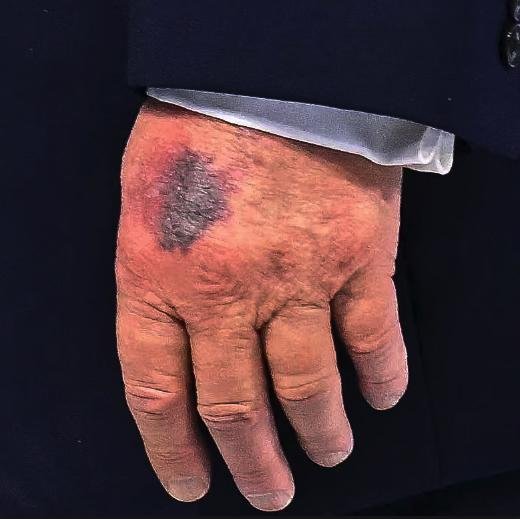
Since the 2016 US presidential election campaign, there have been speculations about Trump’s health. His opponent, Hillary Clinton, said he had a mental illness and needed therapy. An article in Vice magazine claimed that Trump had dementia. In August 2025, Trump was not seen in public for several days. Rumors of his death circulated on social media. Then Vice President Mike Pence said that Trump’s health was fine, but if anything happened, he was prepared for the presidency due to his 200 days of training. In December 2025, Washington State University Professor Bruce Davidson said in a podcast that Trump had a stroke on the left side of his brain in 2025. He was dragging his leg, and his face was drooping. There have long been rumors that Trump has difficulty remembering things, mispronounces people’s names, and makes nonsensical statements. This is consistent with Alzheimer’s disease, a condition in which a person forgets even small things, and in severe cases, cannot remember their own name or address. Trump’s father, Fred Trump, also died of Alzheimer’s. According to the Alzheimer’s Association, if someone in the family has Alzheimer’s, the risk increases for future generations. However, Trump recently stated that he is perfectly fine and has passed the Alzheimer’s test for the third time. Another possibility is deep vein thrombosis (DVT). DVT is a condition in which blood clots form in the veins of the body. The initial symptoms are often mild, such as swelling in the leg or arm. Symptoms include pain or heaviness, a feeling of warmth around the vein, redness or blueness of the skin, and increased pain when walking or standing. These symptoms have been observed in Trump on several occasions, leading to speculation that he has deep vein thrombosis (DVT), a condition where blood clots form in the veins. If DVT is not treated promptly, it can be fatal. However, on July 17, 2025, Trump’s press secretary, Carolyn Leavitt, stated that the president suffers from chronic venous insufficiency and that there is no evidence of DVT. She also mentioned a mark on his hand. In 1919, the American president contracted the flu at the Paris Peace Conference in France. People were told it was a minor cold, while one side of his face was drooping. He suffered a second stroke, but he remained in office, and the condition was concealed. In 1921, Franklin D. Roosevelt contracted polio, but intelligence agencies kept his illness a secret. The illnesses of John F. Kennedy, Tyson, and Ronald Reagan were also concealed. So, could there be a conspiracy behind the claims of Trump’s illness? The American presidency is a very powerful position, and information about the president’s health directly impacts domestic politics and the global order. Therefore, such information is often concealed, while rival countries try to make it public. In this context, there could be a conspiracy behind the rumors of poor health.